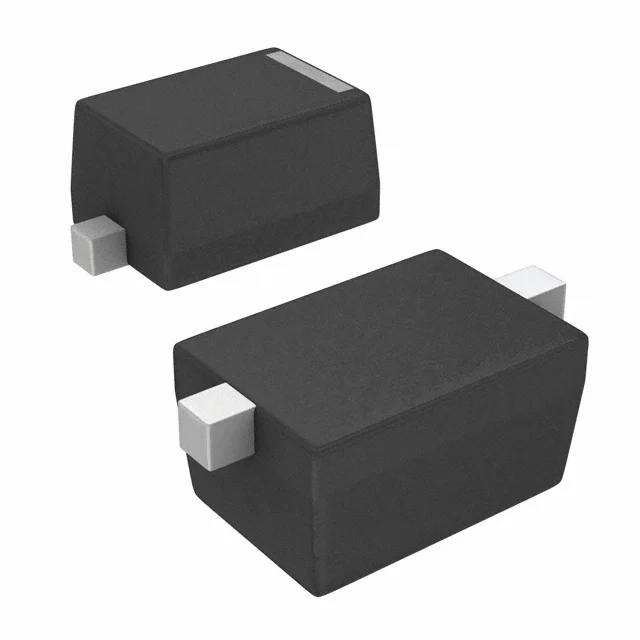

DRV5053PAELPGMQ1
Brand: Texas Instruments
Texas Instruments DRV5053PAELPGMQ1 is a power management component designed for AI Servers & Low-Altitude Economy (Drone and UAV) and related applications. In stock at Superb Automation — request a quote for competitive pricing and fast delivery.
Product Specifications
DRV5053PAELPGMQ1
Texas Instruments — Power Management & Signal Chain
Product Overview
The DRV5053PAELPGMQ1 from Texas Instruments is a power management / signal chain IC delivering high efficiency, precision regulation, and robust protection. Texas Instruments (TI) is a global leader in analog ICs, power management solutions, and embedded processors.
Superb Automation partners with leading brands including Qorvo, TI, ADI, XILINX, NVIDIA, Intel, ST, MACOM, Renesas, and Coilcraft to provide complete BOM and supply-chain solutions.
Key Features
- High-efficiency power conversion with low quiescent current
- Wide input voltage range with precision output regulation
- Integrated over-current, over-temperature, and short-circuit protection
- Small footprint packaging for space-constrained designs
- AEC-Q100 qualified options available for automotive applications
- Flexible sequencing and soft-start control
Key Specifications
| Input Voltage | V |
| Output Voltage | V |
| Output Current | A |
| Switching Frequency | kHz |
| Efficiency | % |
| Quiescent Current | µA |
| Topology | — |
| Package | — |
| Operating Temp | °C |
| Protection | — |
Applications
Industrial Automation
Automotive Electronics
Telecom Infrastructure
Server & Data Center Power
Medical Devices
Consumer Electronics
Request Quote — In Stock, 100% New & Original, Full Warranty
DRV5053PAELPGMQ1: the 23 mV per mT analog sensor with automotive marking
The DRV5053PAELPGMQ1 combines the PA sensitivity with the E temperature grade, the TO-92 body, the ammo pack and a Q1 automotive suffix. PA is the 23 mV per mT option, a middle setting that gives roughly 20 mT of travel on either side of the 1 V quiescent point before the output reaches its limit.
The E grade extends operation to minus 40 C to plus 150 C, which is the reason this string exists at all: a sensor in an engine bay or near a brake caliper sees more than the 125 C that the Q grade covers. The rest of the electrical behaviour is common to the family, including the 2.5 V to 38 V supply and the chopper stabilised sensing element.
Being in a TO-92 body, the part suits a sensor that is fitted to a bracket and wired back to a controller, which is common in aftermarket and retrofit work. The 3000 piece ammo strip is the packing of a production order; a single prototype will usually arrive as a cut strip.
Key data for the DRV5053PAELPGMQ1
| Output | Analog, 0.2 V to about 1.8 V, 1 V at zero field |
| Sensitivity | Minus 23 mV per mT, negative slope |
| Field range | About 35 mT before the output reaches its limit at either end |
| Supply | 2.5 V to 38 V, no regulator, reverse protection to 22 V |
| Supply current | 2.7 mA typical at 25 C across the family |
| Temperature | Minus 40 C to plus 150 C on the E grade in the code |
| Bandwidth | 1.8 kHz, which covers mechanical motion with margin |
Body, packing and marking data
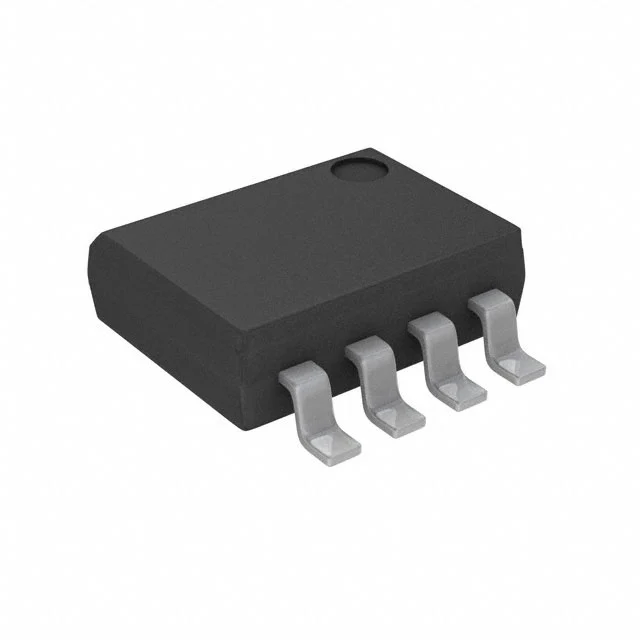
| Body | TO-92, three pins, LPG outline |
| Packing | 3000 pieces in ammo pack on the M suffix |
| Finish | Tin lead finish, moisture level not applicable to the through-hole body |
| Status check | Not printed as a row on the industrial addendum, so the string has to be confirmed with the vendor |
The gap between the code and the addendum
Every field of this string decodes: DRV5053 family, PA sensitivity, E temperature, LPG body, M ammo, Q1 automotive. What the current data sheet does not do is print a row that combines the E grade with the Q1 suffix in the TO-92 body. The addendum lists the industrial rows in both bodies and the automotive rows under their own part numbers, and the two lists do not meet at this string.
That is a purchasing problem before it is an engineering one. The part may exist as a special release, or the catalogue entry may have been built by combining two codes that were never issued together. Either way, an engineer should not write the string into a released bill of materials until a vendor confirmation or a customer purchase order shows it.
If the 150 C rating is what the application really needs, there is a second route: use the industrial E grade part and carry the automotive qualification as a separate program decision, since AEC-Q100 status and temperature grade are independent attributes of the part.
Where the PA sensitivity fits
Pedal and throttle position, suspension travel, and any mechanism with 10 to 30 mT of field swing at the sensor face are the cases where 23 mV per mT fills the output range without clipping it. It is the middle option, and middle options are usually chosen when the magnet is already fixed by the mechanical team.
For a program that has to keep an obsolete analog sensor alive, the obsolete part cross reference hub is the place to start, and the last time buy and LTB planning page covers how much stock to hold while a replacement is qualified.
Questions we get on this code
Does the E grade change the sensitivity? No. The sensitivity and its 10 percent tolerance are specified over the wider temperature window, so a part that is accurate at 125 C is still accurate at 150 C, and the drift budget is what gets harder rather than the nominal figure.
Is a TO-92 part suitable for a potted assembly? It is, provided the potting compound is compatible with the package and the leads are strain relieved. A rigid pot around a three pin body transmits every thermal expansion into the lead frame, and a cracked lead is a failure that only appears after a few hundred cycles.
A third question is about the E grade supply. The part runs to 38 V, so a 24 V rail with load dump transient is inside the rating without a clamp, and the 22 V reverse protection covers a jump start with the leads crossed. What it does not cover is a sustained overvoltage, which needs an external clamp whatever the grade.
The last point is the harness. A TO-92 on a flying lead picks up noise on the analogue output that a board mounted part never sees, and the output impedance of 2.3 mA of sink capability is not enough to drive a long unshielded cable cleanly. A twisted pair with the return taken back to the controller ground, or a small RC at the controller end, is what keeps a 90 mV per mT signal readable in a vehicle.