
BQ24610RGER
Brand: Texas Instruments
Texas Instruments BQ24610RGER is a power management component designed for AI Servers & Low-Altitude Economy (Drone and UAV) and related applications. In stock at Superb Automation — request a quote for competitive pricing and fast delivery.
Product Specifications
BQ24610RGER
Texas Instruments — Power Management & Signal Chain
Product Overview
The BQ24610RGER from Texas Instruments is a power management / signal chain IC delivering high efficiency, precision regulation, and robust protection. Texas Instruments (TI) is a global leader in analog ICs, power management solutions, and embedded processors.
Superb Automation partners with leading brands including Qorvo, TI, ADI, XILINX, NVIDIA, Intel, ST, MACOM, Renesas, and Coilcraft to provide complete BOM and supply-chain solutions.
Key Features
- High-efficiency power conversion with low quiescent current
- Wide input voltage range with precision output regulation
- Integrated over-current, over-temperature, and short-circuit protection
- Small footprint packaging for space-constrained designs
- AEC-Q100 qualified options available for automotive applications
- Flexible sequencing and soft-start control
Key Specifications
| Input Voltage | V |
| Output Voltage | V |
| Output Current | A |
| Switching Frequency | kHz |
| Efficiency | % |
| Quiescent Current | µA |
| Topology | — |
| Package | — |
| Operating Temp | °C |
| Protection | — |
Applications
Industrial Automation
Automotive Electronics
Telecom Infrastructure
Server & Data Center Power
Medical Devices
Consumer Electronics
Request Quote — In Stock, 100% New & Original, Full Warranty
BQ24610RGER: 1 to 6 cell synchronous buck charge controller from a 5 to 28 V adapter
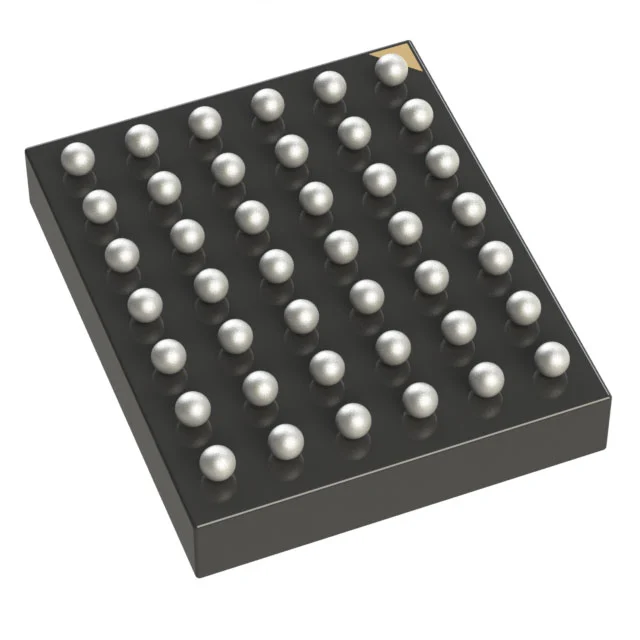
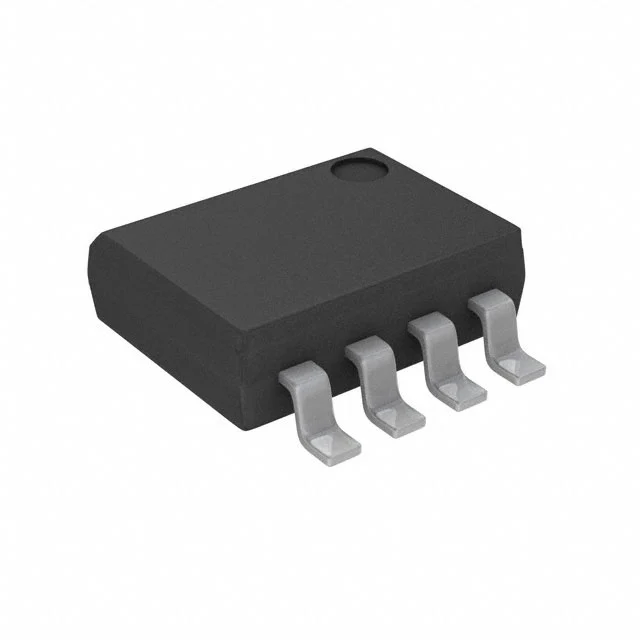
BQ24610RGER is a stand-alone synchronous buck battery charge controller in a VQFN body of 24 pins. It converts an adapter between 5 V and 28 V into a controlled charge current for one to six Li-ion, Li-polymer or lead-acid cells and regulates cell voltage, charge current and adapter current from the same control loop. The RGER order code is the 24-pin VQFN on a 3000 piece reel.
Order code and package
| Order code | BQ24610RGER |
| Package | 24-pin VQFN, 3.5 mm by 3.5 mm body, exposed pad |
| Packing | tape and reel, 3000 pieces |
| Cell count | 1 to 6 cells in series |
| Adapter input | 5 V to 28 V on VCC, 24 V ceiling on the BQ24617 variant |
| Power stage | external N-channel buck, 600 kHz fixed frequency |
| Sensing | charge current on SRP and SRN, adapter current on ACP and ACN |
Electrical parameters that decide the application
| Feedback regulation | VFB 2.1 V, plus or minus 0.5 percent |
| PWM frequency | 600 kHz nominal, 510 kHz to 690 kHz over temperature |
| Charge current set | 5 A per volt on ISET1 with a 10 milliohm shunt |
| Precharge and termination set | 1 A per volt on ISET2 with a 10 milliohm shunt |
| Precharge threshold | VLOWV 1.55 V on VFB, 73.8 percent of the regulation point |
| Recharge threshold | 50 mV below regulation, 35 mV to 65 mV window |
| Under voltage lockout | 3.65 V to 4.0 V rising on VCC |
| Sleep drain | 15 microampere total into VCC, BTST and the sense pins |
Family variants and how they differ
| BQ24610 | one to six cells, 5 V to 28 V input, this order code |
| BQ24617 | one to five cells, 5 V to 24 V input, same family |
| BQ24610RGET | same part in a 250 piece tube instead of a 3000 piece reel |
| BQ24650 | solar input variant with input regulation, a different part |
Points to check before this part goes on a BOM
The controller drives external FETs, so the reel is not a charger on its own. A working 4 A stage also needs a high-side and a low-side N-channel FET, an inductor, a 10 milliohm shunt, a bootstrap diode and a 6 V REGN capacitor, and the gate drive comes from the internal 6 V regulator, so the FETs have to be logic level parts rather than standard threshold devices.
ISET1 transfers 5 A of charge current per volt across a 10 milliohm shunt, which puts the 2 V programming ceiling at 10 A. That same 10 A through the 10 milliohm shunt dissipates 1 W, so a 5 milliohm shunt halves the loss and doubles the current per volt to 10 A, and a 2 A charger is better served by a 20 milliohm shunt where 500 mV of ISET1 sets the limit and 80 mW is spent.
The precharge threshold sits at 73.8 percent of the regulation point. On a four cell pack set to 16.8 V the transition happens near 12.4 V, or 3.1 V per cell, so a pack that has been stored flat receives the 1 A per volt ISET2 current until every cell is above that line, which is the behaviour a deeply discharged Li-ion pack needs and the reason a pack below 8.4 V must not be charged at the full ISET1 rate.
Feedback accuracy of 0.5 percent is 21 mV on a 4.2 V cell and 84 mV on a four cell pack. Cell makers commonly specify a 1 percent limit at the top of charge, so the pack divider has a real budget: 0.1 percent resistors contribute about 17 mV of that 84 mV, and the remainder belongs to the reference and to the tolerance of the divider ratio rather than to the cells.
The data sheet requires a series resistor into VFB when the pack can exceed 16 V, because the top leg of the divider then sees the whole pack voltage and the feedback pin is not rated for it. Any pack of five or six cells falls in that group, and the resistor has to be added on the board rather than assumed inside the module.
Adapter current regulation through ACSET is what keeps a fixed wattage adapter out of overload. It moves 5 A per volt across a 10 milliohm shunt on ACP and ACN and takes over from the charge loop when the combined system load and charge current exceeds the set point, so the charge current falls and the system rail keeps its voltage instead of the adapter collapsing.
Driver loss inside the controller is the gate charge of the two FETs at 600 kHz from the 6 V REGN rail, which is about 72 mW per FET at 20 nC. The conduction loss and the inductor loss live outside the package, so the 24-pin VQFN stays cool while the FETs carry the thermal question and the copper under them is what sets the current a board can hold.
The TS pin expects a negative temperature coefficient thermistor in the pack with a divider from VREF, and the TTC pin disables the safety timer when it is pulled low. Leaving TTC low removes the backup timeout, which means a cell that never reaches termination current is charged until the pack thermistor or the operator intervenes.
Packing changes the moisture floor. The RGER reel is a 3000 piece carrier and the RGET is a 250 piece tube, and a tube that has been opened and left on a bench absorbs moisture that the reflow profile then turns into popcorning. A repair order of five pieces is better served by a sealed partial reel than by an opened tube.
Adapter current regulation is set separately from charge current and the two interact. When the system load rises, ACSET reduces the charge current first, so a 90 W adapter feeding a 60 W system leaves 30 W of charging rather than dropping the system rail. A build that expects full charge current while the load is high will see the current taper and should be told so.
Where this order code fits
The part is used in mobile workstations, medical carts, portable instruments and battery backup units where a single adapter feeds both the system and the pack. Teams comparing it with a neighbouring part start from our Power Management Cross Reference page, and teams replacing a part that has gone end of life start from the Component Lead Time Solutions page.
Questions buyers ask
Can the 24-pin VQFN replace a BQ24617 board? No. The BQ24610 is rated to six cells and 28 V, the BQ24617 to five cells and 24 V, and the two are not interchangeable at the top of their input range even though the pinout is the same family.
What happens when the adapter is removed? The part enters sleep when VCC falls below SRN, drawing about 15 microampere, and the ACFET and BATFET control pins turn the two pass devices around so the pack feeds the system without back feeding the adapter input.
Is a 10 milliohm shunt always the right choice? It sets both current transfer and loss. At 10 A the shunt burns 1 W, and a 0603 body cannot take that, so higher current builds move to a wider shunt or a 5 milliohm part and accept the doubled current per volt.
SUPERB holds and sources this line for production and repair demand, quoted against the exact ordering string with date codes, packing and country of origin stated on the offer. When a part is moving, the BOM Shortage Recovery page sets out the checks that keep a substitute from failing on the bench.