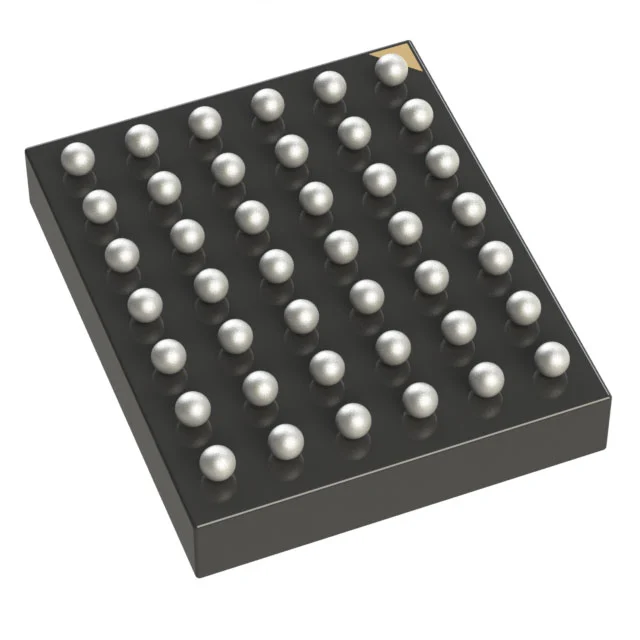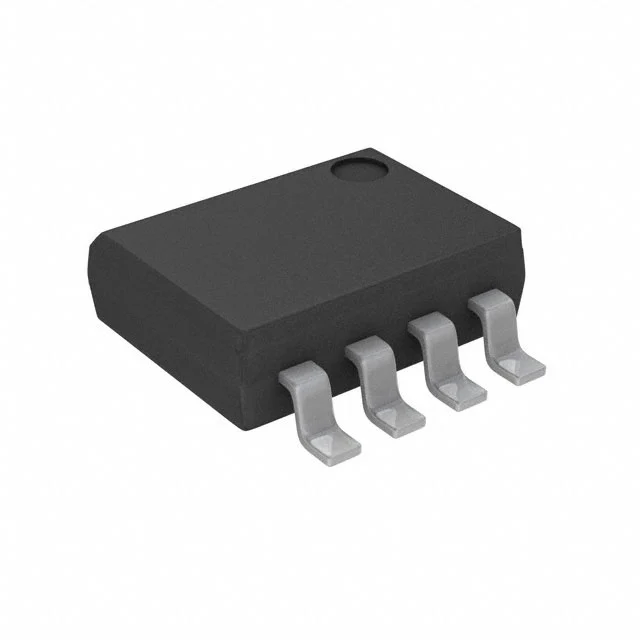

INA2134UA/2K5
Brand: Texas Instruments
Texas Instruments INA2134UA/2K5 is a power management component designed for AI Servers & Low-Altitude Economy (Drone and UAV) and related applications. In stock at Superb Automation — request a quote for competitive pricing and fast delivery.
Product Specifications
INA2134UA/2K5
Texas Instruments — Power Management & Signal Chain
Product Overview
The INA2134UA/2K5 from Texas Instruments is a power management / signal chain IC delivering high efficiency, precision regulation, and robust protection. Texas Instruments (TI) is a global leader in analog ICs, power management solutions, and embedded processors.
Superb Automation partners with leading brands including Qorvo, TI, ADI, XILINX, NVIDIA, Intel, ST, MACOM, Renesas, and Coilcraft to provide complete BOM and supply-chain solutions.
Key Features
- High-efficiency power conversion with low quiescent current
- Wide input voltage range with precision output regulation
- Integrated over-current, over-temperature, and short-circuit protection
- Small footprint packaging for space-constrained designs
- AEC-Q100 qualified options available for automotive applications
- Flexible sequencing and soft-start control
Key Specifications
| Input Voltage | V |
| Output Voltage | V |
| Output Current | A |
| Switching Frequency | kHz |
| Efficiency | % |
| Quiescent Current | µA |
| Topology | — |
| Package | — |
| Operating Temp | °C |
| Protection | — |
Applications
Industrial Automation
Automotive Electronics
Telecom Infrastructure
Server & Data Center Power
Medical Devices
Consumer Electronics
Request Quote — In Stock, 100% New & Original, Full Warranty
INA2134UA/2K5: dual audio differential line receiver at unity gain
The INA2134UA/2K5 is a dual audio differential line receiver built from two op amps with laser trimmed 25 kohm input and feedback resistors on the die, giving a fixed gain of 0 dB, or 1 V/V, with no external gain components. Distortion is 0.0005 percent at 1 kHz, slew rate is 14 V per microsecond, settling to 0.01 percent takes 3 us and common mode rejection is 90 dB. It runs from a split supply of plus and minus 4 V to plus and minus 18 V and draws 2.9 mA maximum quiescent current per package.
The on chip resistors are the point. A discrete difference amplifier needs four resistors matched to better than 0.01 percent to reach 90 dB of rejection, and those resistors drift with temperature unless they are a network. Trimming them inside the package removes that problem and removes four placements, which is why the part appears in balanced audio inputs, in summing nodes and as a ground loop breaker between two chassis that sit at different potentials. The UA suffix is the SOIC 14 body, the dual version with two independent channels.
Key data for the INA2134UA/2K5
| Gain | 0 dB, 1 V/V fixed, set by trimmed 25 kohm resistors inside the package, no external components |
| Distortion | 0.0005 percent at 1 kHz, with 14 V per microsecond slew rate and 3 us settling to 0.01 percent |
| Input | Differential input with 90 dB common mode rejection, plus and minus 4 V to plus and minus 18 V supplies |
| Supply | Split supply operation, 2.9 mA maximum quiescent current for the dual package |
| Channels | Two independent channels in the 14 pin body, one in the 8 pin single version |
| Temperature | Minus 40 C to 85 C on the published rows, a narrower range than the current sense families |
Body, marking and reel data
| Body | D, SOIC 14 pin for the dual version, with 14 pin DIP and the 8 pin single version as the other options |
| Reel | 2500 pieces on a large reel for the 2K5 string, 50 pieces in a tube for the plain UA string |
| Finish | NIPDAU, moisture level 3 at 260 C with a 168 hour floor life, so a bake is needed after a week open |
| Marking | The addendum prints INA2134PA against the UA row, a marking field artefact that does not change the body |
| Grade | Minus 40 C to 85 C industrial, no automotive row in this document |
Where a fixed gain receiver beats a discrete difference amplifier
Two chassis connected by a cable share a signal reference only if someone made them share it. Where they do not, the cable shield carries a current and the receiver sees the resulting voltage as signal. A differential receiver with 90 dB of rejection removes most of it, and a trimmed one keeps removing it over temperature and over years. The INA2134 also suits a summing node, a pseudo ground generator and a voltage controlled current source, all of which are listed in its application table and all of which depend on the same matched resistor pair.
The limits are the supply and the bandwidth. A split supply of at least plus and minus 4 V rules out a single 3.3 V rail, and 90 dB rejection is good but not the 120 dB of a transformer. Where a product is replacing a discontinued line receiver, our obsolete part cross reference hub lists the audio receiver families by gain and supply, and the amplifier cross reference covers the instrumentation and difference amplifiers that share the same footprint family.
Buyer questions on the INA2134UA/2K5
Can the gain be changed externally? Not without adding components around the internal network. The 0 dB gain is set by trimmed resistors, and a different gain means a different part rather than a resistor change.
Why is the moisture level 3? The SOIC 14 body is rated at 260 C with a 168 hour floor life, so an open bag has a week before a bake is needed. The tube version of the same part carries the same rating.
Does it work on a single 5 V supply? No, the input stage needs a split supply of at least plus and minus 4 V because the internal network refers to both rails. Single supply audio receivers are a different family.
Availability and ordering notes
The 2K5 string is active at 2500 pieces on a large reel with NIPDAU and moisture level 3, 168 hour floor life, while the plain UA string ships 50 pieces in a tube for bench work. Both are the SOIC 14 body. The marking column in the addendum prints a PA code against the UA row, which is a documentation artefact rather than a body change: the suffix decides the package, and the reel label carries the suffix. We confirm the package and the moisture history before shipping, and the record goes on the date code management note.