
VBA1102N
Brand: VBsemi
VBsemi VBA1102N is a discrete semiconductors component designed for AI Servers & Low-Altitude Economy (Drone and UAV) and related applications. In stock at Superb Automation — request a quote for competitive pricing and fast delivery.
Product Specifications
VBA1102N
VBsemi — Discrete & Power Semiconductors
Product Overview
The VBA1102N from VBsemi is a discrete power semiconductor delivering efficient switching and power conversion. VBsemi (微碧半导体) specializes in discrete MOSFETs, power transistors, and protection devices for power supplies, motor control, and consumer electronics.
Superb Automation partners with leading brands including Qorvo, TI, ADI, XILINX, NVIDIA, Intel, ST, MACOM, Renesas, and Coilcraft to provide complete BOM and supply-chain solutions.
Key Features
- Low Rds(on) for minimal conduction losses in power switching
- Fast switching speed with low gate charge for high-frequency operation
- Avalanche-rated for robust operation under inductive load conditions
- High junction temperature rating for demanding environments
- Logic-level gate drive compatible for simplified design
- RoHS and AEC-Q101 qualified options available
Key Specifications
| Vds / Vce | V |
| Id / Ic | A |
| Rds(on) / Vce(sat) | mΩ |
| Qg | nC |
| Technology | — |
| Package | — |
| Configuration | — |
| Mounting | — |
Applications
Switch-Mode Power Supplies
Motor Drives & Inverters
Battery Management Systems
DC-DC Converters
Load Switching
Automotive Power Distribution
Request Quote — In Stock, 100% New & Original, Full Warranty
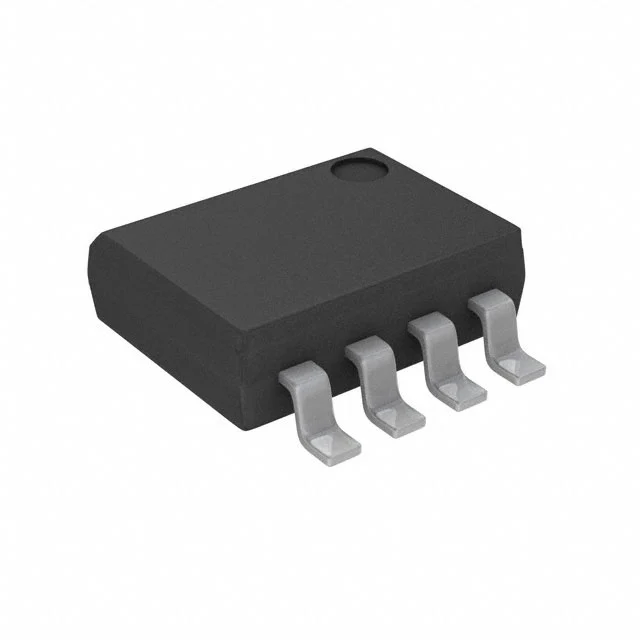
VBA1102N: a 100 V logic level die in an SOP8
The VBA1102N is a single N channel MOSFET in an SOP8 body, 100 V drain to source, a plus or minus 20 V gate window, a threshold of 1.8 V, a drain current of 10.4 A, and an on resistance of 27 milliohm at a 4.5 V gate and 20 milliohm at 10 V.
This is the logic level member of the 100 V SOP8 family. A 1.8 V threshold means a 5 V gate drive gives 3.2 V of overdrive and lands near the published 27 milliohm, which is a real number for a real circuit rather than a table entry that only holds at 10 V.
The price of the low threshold is current: 10.4 A rather than the 16 A of the standard level part in the same body, because the die is optimised differently and the resistance is twice as high at the 10 V point.
Key data for the VBA1102N
| Configuration | Single N channel |
| Package | SOP8, surface mount, eight leads |
| VDS | 100 V |
| VGS | Plus or minus 20 V |
| Vth | 1.8 V |
| ID | 10.4 A |
| RDS(on) at 4.5 V | 27 milliohm |
| RDS(on) at 10 V | 20 milliohm |
| Technology | Trench |
| Gate charge | Not published on the catalogue page |
| Thermal limit | About 1 to 1.5 W with the leads on copper |
| Body diode | Intrinsic, anode at source |
Ten amps at 20 milliohm, and what the SOP8 can pass
At 10.4 A and 20 milliohm the loss is 2.2 W, which is the same order as the 16 A part in the same body. So the current rating is not generous, it is matched to the package: two parts with the same body and the same thermal limit end up at the same dissipation, one at 16 A and 9 milliohm and one at 10.4 A and 20 milliohm.
That is a useful sanity check on catalogue tables. When two parts in the same body publish currents that give the same loss, the vendor was honest about the thermal limit, and the working current is a fraction of the rating for both.
With a good copper area, the SOP8 sits near 45 to 60 degrees per watt, so 1.7 to 2.2 W is available at a 100 C rise. At 27 milliohm, a 5 V gate drive and 8 A, the loss is 1.7 W, which is at the top of that window. At 6 A it is 972 milliwatt and comfortable.
A 1.8 V threshold at 100 V, and the switching consequences
A low threshold die at high voltage is a compromise that shows up in switching. The thinner gate oxide that gives the low threshold also gives a higher gate charge per unit area, and the Miller plateau sits lower, which makes the part more susceptible to spurious turn on from drain noise.
In a bridge that matters. When the opposite switch turns on, the drain of this part moves 100 V in tens of nanoseconds, and the displacement current through the gate to drain capacitance pulls the gate up. A 1.8 V threshold means that current only has to lift the gate 1.8 V to start conduction, which produces shoot through. A pull down resistor of 10 k or less at the gate, and a driver that sinks well, are what prevent it.
In a simple low side switch the same effect is harmless, and the low threshold is a straight advantage because a 5 V logic output can drive the part to 27 milliohm.
Choosing between this and the standard level part in the same body
Pick this one when the available gate drive is 5 V and the current is under 6 A. Pick the 9 milliohm part when a 10 V drive exists and the current is 8 to 12 A. Do not pick this one for a 10 V drive at 10 A and then wonder why it runs hotter than the other, because that is the trade the two dice were built around.
Both parts share the SOP8 body and the pin assignment, so a board can be built for one and changed to the other late, which is worth knowing on a programme where the gate drive is not finalised. Our obsolete part cross reference hub covers how a candidate is found when the original goes away, and a 100 V SOP8 is exactly the kind of line that gets substituted late in a project.
The sourcing side of this part is covered on the last time buy and LTB planning. For a 100 V die that a programme holds for years, that page covers how a final order quantity is set.
Questions we get on this code
Will it work at 3.3 V gate drive? With 1.5 V of overdrive it will conduct, but the resistance is not published at 3.3 V and should be assumed well above 27 milliohm. Use it at 5 V or above.
What is the difference from the 16 A part? Twice the resistance at the 10 V point and a threshold 0.7 V lower. Same body, same footprint, different die.
Can it be used in a synchronous rectifier? At 48 V output and low current, yes. Check the body diode recovery and add a dead time, because the catalogue page does not publish the recovery charge.
How is it packed? SOP8 normally ships on 2500 or 3000 piece reels. We confirm the size on the quotation.