


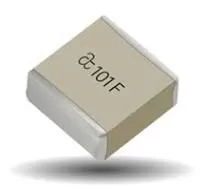

SPB339150
Brand: Superb Automation
Superb Automation SPB339150 is a amplifiers & comparators component designed for Signal Conditioning & Filtering and related applications. In stock at Superb Automation — request a quote for competitive pricing and fast delivery.
Product Specifications
SPB339150
Superb Automation — Amplifiers & Comparators
Product Overview
The SPB339150 from Superb Automation is a precision amplifier / comparator delivering high gain, wide bandwidth, and low distortion for signal conditioning. Superb Automation supplies this part with incoming inspection, test records and lot traceability.
Superb Automation partners with leading brands including Qorvo, TI, ADI, XILINX, NVIDIA, Intel, ST, MACOM, Renesas, and Coilcraft to provide complete BOM and supply-chain solutions.
Key Features
- High gain-bandwidth product for wideband signal amplification
- Low input offset voltage and drift for precision DC applications
- EMI-hardened design for robust operation in noisy environments
- Rail-to-rail input/output for maximum dynamic range
- Low quiescent current for power-sensitive designs
- Unity-gain stable with capacitive load drive capability
Key Specifications
| Channels | — |
| GBWP | MHz |
| Slew Rate | V/µs |
| Vos | µV |
| Iq per Channel | µA |
| Input Type | — |
| Supply Voltage | V |
| Operating Temp | °C |
| Package | — |
Applications
Signal Conditioning & Filtering
Current Sensing & Monitoring
Data Acquisition Systems
Audio & Video Processing
Sensor Interface Amplifiers
Industrial Control Loops
SPB339150: one die covering 6 to 18 GHz instead of two narrower parts
Most X-band and Ku-band chains use two drivers, one for 8 to 13 GHz and one for 12 to 18 GHz. The SPB339150 covers 6 to 18 GHz in a single die with 17 dB of gain, plus or minus 0.75 dB flatness and 20 dBm of output at the 1 dB compression point, and the flatness figure is the reason the part exists.
Published values
| Parameter | Value |
|---|---|
| Frequency range | 6 to 18 GHz |
| Small signal gain | 17 dB, flatness plus or minus 0.75 dB |
| Output P-1dB | 20 dBm |
| Noise figure | 5 dB |
| Input and output VSWR | 1.5:1 both ports |
| Supply | +6 V at 80 mA |
| Form | Bare die |
Flatness is the specification that matters here
Plus or minus 0.75 dB over 12 GHz of bandwidth is a tight figure for a single stage. It means a chain built from this part does not need a gain equaliser in front of the final amplifier, and it means the level at the output stays inside the input window of the stage that follows. With 20 dBm at compression, that window is narrow, so a 1.5 dB peak to peak variation is the difference between driving the next stage and compressing it.
DC and drive
+6 V at 80 mA is 0.48 W. 20 dBm is 0.100 W of RF, so about 21 percent of the DC input leaves as RF at compression. Reaching 20 dBm with 17 dB of gain takes 3 dBm at the input, a level a mixer or a DAC output can deliver directly in most 6 to 18 GHz upconverters.
Where it sits in a chain
This is a driver, not a power stage. Its output level suits the input of a GaN or GaAs power amplifier that needs a few dBm of drive, and its 5 dB noise figure keeps it out of the first position in a receive path. Between an upconverter and a power stage, in a test instrument levelling loop, or ahead of a switched attenuator, the flatness and the 1.5:1 match on both ports do most of the work.
Two questions buyers ask
Does it really cover the whole band with one bias point? The vendor publishes a single operating point of +6 V at 80 mA with one flatness figure across the full range, so yes by the datasheet. Confirm the band edges on your own fixture, since 6 GHz and 18 GHz are where a single stage normally gives up first.
Die or packaged? The F3 packaged version of this part publishes 18 dB of gain and 18 dBm of output instead of 17 dB and 20 dBm. If output headroom drives your budget, the die version is the stronger part; if assembly cost drives it, take the F3 and accept 2 dB less output.
SUPERB supplies the SPB339150 as die with datasheet and lot traceability, and can quote the F3 alongside it so the trade is visible on one sheet. For an out of production part in this band, start with obsolete RF part replacement. Parameter comparison against other 6 to 18 GHz drivers is in the amplifier cross reference hub.
The series index sits on the amplifiers and comparators page.
SPB339150: one 6 to 18 GHz die against the two drivers it replaces
X band and Ku band are usually covered by two parts and a crossover, because a single stage rarely holds gain and match from 8 to 18 GHz. This die claims 6 to 18 GHz with 17 dB and plus or minus 0.75 dB flatness, which is a credible single stage at 80 mA from 6 V. The case for it is not only the part count: it is the crossover that disappears, and the flatness that no longer has to be equalised.
What a crossover costs when the band is split
Two drivers in one chain need either a switch, a diplexer or two separate paths with a combiner, and each of those contributes insertion loss at the point where the signal is weakest. A switch contributes 0.5 to 1 dB, a diplexer 1 to 2 dB at the band edges, and both contribute their own match and their own part to qualify. With 17 dB of gain and a 20 dBm compression point, one part across the band removes that loss and removes the calibration step that goes with it. The trade is 0.75 dB of flatness across 12 GHz against the 0.3 to 0.5 dB a narrower part would publish, and against the 1 to 2 dB of crossover loss the narrow parts would need. On the arithmetic the single part wins, provided the edges hold.
| Approach | Gain in the chain | Loss added | Parts to qualify |
|---|---|---|---|
| Two narrowband drivers plus a switch | 18 to 20 dB each | 0.5 to 1 dB plus edge effects | three |
| Two narrowband drivers plus a diplexer | 18 to 20 dB each | 1 to 2 dB at the edges | three |
| One 6 to 18 GHz driver | 17 dB flat | none | one |
The two edges are where a single stage gives up first
A 6 to 18 GHz cell is 3 to 1, and distributed or feedback stages usually pay for that at the ends. The published flatness is plus or minus 0.75 dB, which is a good number and almost certainly measured across the whole band rather than at the edges alone. What a buyer should confirm is the gain at 6 and at 18 GHz with the bias fixed, because those two points decide whether the part can be the only driver in the chain. If the part is 1.5 dB down at 18 GHz, the link budget at the top of the band is 1.5 dB short, and the answer is a pad at the low end or a different allocation of the band rather than a different part.
Eighty milliamps is the reason it fits a module
6 V at 80 mA is 0.48 W, and 20 dBm is 0.100 W of RF, so the stage converts 21 percent at compression. In a module with four or eight channels that arithmetic decides the supply: eight channels is 3.84 W and 0.8 W of heat spread across the module rather than concentrated in one place. The alternative, a higher current driver with 27 to 28 dBm of output, is the right part when the chain needs the power, and the wrong part when the chain needs the gain and the following stage is already a power amplifier with 20 dB of its own.
What the split band costs in parts that are not amplifiers
Two narrowband drivers mean two bias networks, two sets of decoupling, twice the board area and twice the test time, and the switch or diplexer between them has its own control line and its own insertion loss. Counted as components the single part replaces three or four devices and removes a controlled element from the path. Counted as engineering time it removes one thing that is hard to see in a bill of materials: the crossover frequency, which is where each narrowband part is at its worst and where the calibration has to be checked on every unit. That is the part of the case that does not appear on a datasheet and does appear on a build schedule.
Two questions buyers ask
Is 3 dBm of drive all it needs? Yes at compression: 20 dBm out with 17 dB of gain needs 3 dBm in. That is within reach of a mixer output or a DAC with a buffer, and it means the part can be the first amplifier after the upconverter. Keep 3 dB of margin, because the drive at the band edges may need to be higher if the gain drops there.
What about the packaged version? It publishes 18 dB of gain and 18 dBm, so it trades 2 dB of output for 1 dB of gain and a reflow assembly. The comparison is set out on amplifier cross reference, the die attach and handling question is covered on defense grade components, and the wider family is on RF component sourcing.
Request Quote — In Stock, 100% New & Original, Full Warranty