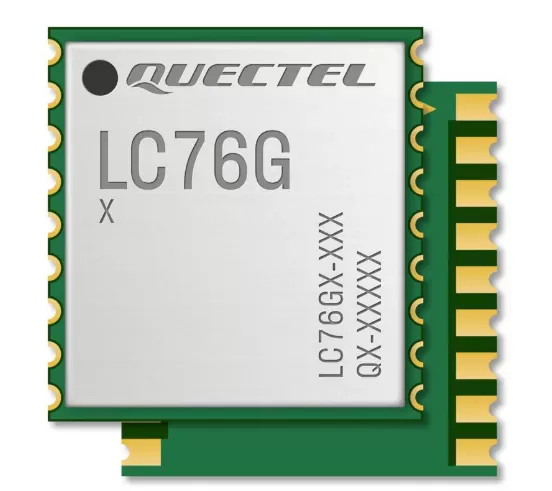


An end-of-life notice for an RF part rarely arrives at a convenient moment. The board is in production, the qualification file is closed, and the part that took a year to characterise is suddenly available only for as long as stock lasts. On a program with a ten or twenty year support window, that notice starts a clock.
Replacing an obsolete RF part is not the same as replacing a logic gate. The parameters that matter sit close to the design margin, the package often carries the thermal path, and a part that measures the same on a bench can behave differently once it is soldered into the board. This guide sets out the four routes out of an EOL situation, what each one costs, and how SUPERB PCBA handles the replacement before a build is released.
Why the replacement decision cannot wait for the shortage
Every route out of an EOL problem gets more expensive with time. A last-time buy is a purchase decision while the part is still on the shelf, but a scramble purchase in the open market is a verification project with a certification risk attached. On RF boards the problem is amplified because the same die is often offered in several packages, grades and screening levels, and the marking does not always tell you which one you are holding.
The practical rule is to act as soon as the notice lands: calculate the quantity you need for the remaining life of the product, decide whether the design can take a pin to pin part, and start the sample checks while there is still stock to compare against.
The four routes out of an obsolete RF part
The table compares the options, including the work each one creates inside your own team. Most programs end up using two of them: a last-time buy to cover the existing design, and a qualified alternative for everything after that stock runs out.
| Route | What it is | When it works | What to manage |
|---|---|---|---|
| Last-time buy | Buy the remaining life of the product in one order | Quantities are forecastable and storage is controlled | Storage conditions, solderability over years, cash in inventory, one lot to re-verify at the end |
| Verified excess lot | Same part number from an excess or franchise lot, checked before use | The exact part is required and a genuine lot can be found | Date code age, marking and die verification, moisture level, supplier paperwork |
| Pin to pin alternative | Another maker's part with the same footprint and function | Package and pinout match and the parameter deltas are acceptable | Gain, noise, bias and thermal behaviour, firmware or control assumptions, written approval |
| Board level change | Respin the RF section around an available part | Nothing else holds, or two EOL notices arrive together | Matching and layout rework, retest, requalification on the customer side |
The least expensive option on the day is often the one with the largest hidden cost. A verified excess lot protects a running build, but it does not create a source for next year, and it should never be treated as a solution for the life of the program.
How SUPERB PCBA handles an obsolete RF part
Start from the BOM and the remaining build plan. We calculate the last-time buy quantity from your build forecast plus agreed attrition, source the exact part number while it is still available, and hold it against the plan rather than shipping it into the first order. That quantity calculation is done with you, because the right number depends on the product life your customer has contracted, not on today's schedule.
Where a last-time buy is not possible, the alternative path is verified stock plus a replacement proposal. Excess lots are checked by X-ray reel counting, opened and inspected at package and die level where the risk justifies it, and released only with date code and lot traceability and a 730 day warranty on components. A pin to pin alternative is proposed in writing with its parameter differences listed, and no substitution enters a build without your approval. On the assembly side SUPERB Assembly can run a small verification build first, so the alternative is proven on the board before it is released to volume on FCT and ICT fixtures.
The long life sectors are where this work concentrates. Medical instrument and defense radar boards stay in service long after the semiconductor market has moved on, and SUPERB Tech keeps the same part under review for the life of the build rather than only at the first order. Board support runs alongside the component work: 500 MHz to 77 GHz with lines down to 0.05/0.05 mm, up to 68 layers, impedance to plus or minus 5 percent, and Rogers RO4003C, RO4350B plus Taconic RF-35 and TLY-5 laminates available through established supply channels.
Background reading: sourcing hard to find and obsolete components, how lots are verified, component inspection and counterfeit detection, and defense radar board assembly.
Obsolete RF part questions
How is the last-time buy quantity calculated?
From the remaining build plan, the product life your customer has contracted, and an attrition figure agreed with you for handling and test losses. Too little coverage means a second scramble later, so it is a joint calculation rather than a default multiplier.
Is a used or excess part acceptable in a new build?
An excess lot is new and unused material that was never shipped; it is not a pulled part. Date code, lot and packaging are checked before it is released, and pulled or refurbished material is not offered for production builds.
How much retest does a pin to pin part need?
Enough to prove the parameters that carry design margin at the frequency you use, plus a functional check on the board. That is why a sample verification build is useful: it tests the part in the circuit rather than on a bench.
Can you find replacements for parts with no second source?
Often yes, but not always as a drop-in. Where the die is single sourced, the honest answer is a last-time buy plus a redesign path, and we say that on the first reply rather than after a purchase order.
Next step
Send the obsolete part number, the remaining build plan and any samples you still hold. You get a reply that names the coverage quantity, the stock position, the replacement options with their parameter differences, and the verification steps that will be applied before anything is released to a build.