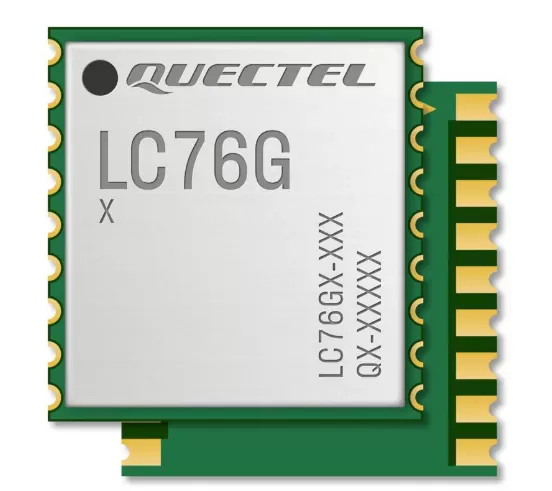


Most RF builds have one part that decides the schedule: a power transistor, a low noise amplifier, a synthesizer or a filter that only one supplier still makes. When it goes short, the production order waits behind it, and the line that looked least expensive on paper is the one that stops.
RF component sourcing is not the same job as buying passives and logic. The parts are narrow, the die behind them is often single sourced, one die ships in several packages and grades, and the honest answer to "is there a second source?" is often no. This guide covers what to check on each RF part family, and how SUPERB PCBA handles the category when a line is short.
Why RF parts go short faster than the rest of the BOM
Two things drive it. RF silicon and RF power devices come from a small number of fabs and packages, so when a line closes the part gets an end-of-life notice and stock does not come back. RF parts are also tested at frequency, and that test cost keeps inventory thin, so a 12 week lead time can become a 30 week allocation inside one quarter.
The buyer is then pushed into the open market, where a part number can arrive as a genuine excess lot, a re-marked lower grade, or a die screened differently. The only protection is to know which parameters matter for the board, and to verify the lot before it reaches the line.
What to verify on each RF part family
The table below covers the families that appear most often on RF and microwave boards, and the parameters that decide whether a part is usable on your design.
| Part family | Where it sits | What to verify before ordering | Sourcing note |
|---|---|---|---|
| RF power transistor (LDMOS, GaN, bipolar) | Final stage of a power amplifier in radar | Supply and bias ratings, gain and efficiency at the operating frequency, thermal resistance, package outline, screening grade | One die ships in ceramic and plastic packages with different ratings; the package code sets the price level |
| Low noise amplifier or gain block | Receiver front end, telemetry links, test instruments | Noise figure at the frequency you use, intercept point, bias network, stability with the actual source impedance | Noise figure is quoted at one frequency; a part that is quiet at 1.9 GHz can be unusable at 10 GHz |
| RF switch or digital attenuator | Transmit and receive module, switching matrix | Isolation and insertion loss over band, switching speed, control logic levels, hot switching rating | Control logic families are not interchangeable; check drive levels against your gate driver |
| Synthesizer, PLL or VCO | Local oscillator for up and down conversion | Phase noise at the offset that matters, lock time, reference and divide range, loop filter values | Phase noise moves with loop bandwidth; compare parts at the same offset and loop setting |
| Mixer, balun or coupler | Up and down conversion, balanced front ends | Conversion loss, oscillator drive level, intercept point, port to port isolation, matching | Passive and active mixers are not drop in replacements at the same drive level |
| Filter (SAW, BAW, ceramic, cavity) | Channel selection, harmonic rejection, front end protection | Centre frequency and tolerance, bandwidth, rejection at the image frequency, drift over temperature, matching | Centre frequency tolerance is the most common mismatch; measure a sample before releasing the build |
Temperature grade and screening are the trap that catches most teams. The same base part number with an industrial, extended or military suffix can differ in burn in, solder temperature and screening record, and the suffix is exactly what an excess lot is most likely to get wrong. When a part appears at a large discount, ask which grade the marking corresponds to.
How SUPERB PCBA runs an RF sourcing order
An order starts with your released BOM. Send the part numbers with reference designators, the build quantity, the target date, and the alternates your engineering team has already approved. From that list we reply line by line with stock position, date code, lead time, price breaks, and the cross reference options for lines that cannot be covered from stock.
Verification happens before anything ships. Reels are counted by X-ray, suspect lots are opened and checked at die level, and every line keeps a date code and lot trail with a 730 day warranty on components. A substitution never enters a build on our own decision; a pin to pin alternative is offered with its parameter differences listed and used only after your written approval. The same rule covers obsolete parts, where the choice is usually a last time buy, a verified excess lot, or a qualified alternative.
The sourcing side is joined to the board and assembly side. SUPERB PCB supports RF and microwave boards from 500 MHz to 77 GHz, lines down to 0.05/0.05 mm, up to 68 layers, impedance to plus or minus 5 percent, and Rogers RO4003C, RO4350B plus Taconic RF-35 and TLY-5 laminates available through established supply channels. SUPERB Assembly runs fine pitch SMT down to 01005 with 3D AOI and X-ray in 2D and CT mode, under IPC-A-610 Class 2 and Class 3, ISO 9001, and ISO 13485 for medical builds. SUPERB Tech carries a customer from a first prototype lot to volume, so a sourcing question and a process question usually get answered in one reply.
Useful at the buying stage: the component sourcing and supply overview, the guide on how to verify that components are original, the RF and microwave device range, and the RF microwave board assembly pages.
Questions we get on RF sourcing
Can you quote from a BOM alone?
Yes. A part number list with quantities and a target date is enough for a line by line reply. Adding the reference designator and your approved alternates shortens the loop when a line is short.
Do you take prototype and low volume quantities?
Yes. Prototype and low volume lots are quoted with the same traceability as volume orders, because the parts in a prototype end up in the qualification results a customer later relies on.
What happens when the exact part cannot be sourced at all?
You get the options rather than a substitution: a verified excess lot with a known date code, a pin to pin part with a parameter comparison, or an input for your own engineering team. Nothing changes on the BOM without written approval.
How do you confirm a lot is genuine?
Reel counting by X-ray, package and die level inspection on suspect lots, marking and date code checks, and lot traceability on the paperwork.
How do you handle temperature grade differences?
The ordering suffix is read as part of the part number, not after the fact. If the grade you asked for is not available, the alternative is offered with the difference named, so the decision stays with whoever owns the design margin.
Next step
Send your RF BOM with quantities and a target date, or send the Gerber and assembly drawing if the question is tied to a build. You get a line by line reply covering availability, cross reference options, lead time and price, and the same list carries straight into a quote for assembly and test.