
TJA1028T/5V0/20/1
Brand: NXP Semiconductors
NXP Semiconductors TJA1028T/5V0/20/1 is a mcu & embedded component designed for AI Servers & Low-Altitude Economy (Drone and UAV) and related applications. In stock at Superb Automation — request a quote for competitive pricing and fast delivery.
Product Specifications
TJA1028T/5V0/20/1
NXP Semiconductors — MCU & Embedded Processors
Product Overview
The TJA1028T/5V0/20/1 from NXP Semiconductors is a microcontroller / embedded processor engineered for real-time control, signal processing, and connectivity. NXP Semiconductors provides secure connectivity solutions, embedded processors, and automotive-grade MCUs for edge computing.
Superb Automation partners with leading brands including Qorvo, TI, ADI, XILINX, NVIDIA, Intel, ST, MACOM, Renesas, and Coilcraft to provide complete BOM and supply-chain solutions.
Key Features
- ARM Cortex / RISC-V / proprietary core with high-performance real-time processing
- Integrated flash memory and SRAM for efficient code execution
- Rich peripheral set: UART, SPI, I2C, ADC, timers, PWM
- Low-power modes for battery-operated and energy-sensitive applications
- Hardware security features: secure boot, crypto accelerator, TRNG
- Extensive development ecosystem with IDE, HAL, and RTOS support
Key Specifications
| Core | — |
| Max Frequency | MHz |
| Flash | KB |
| SRAM | KB |
| GPIO | — |
| ADC | bits |
| Interfaces | — |
| Supply Voltage | V |
| Operating Temp | °C |
| Package | — |
Applications
Industrial Motor Control
IoT Edge Nodes
Consumer Electronics
Automotive Body Control
Smart Home & Appliances
Medical Portable Devices
Request Quote — In Stock, 100% New & Original, Full Warranty
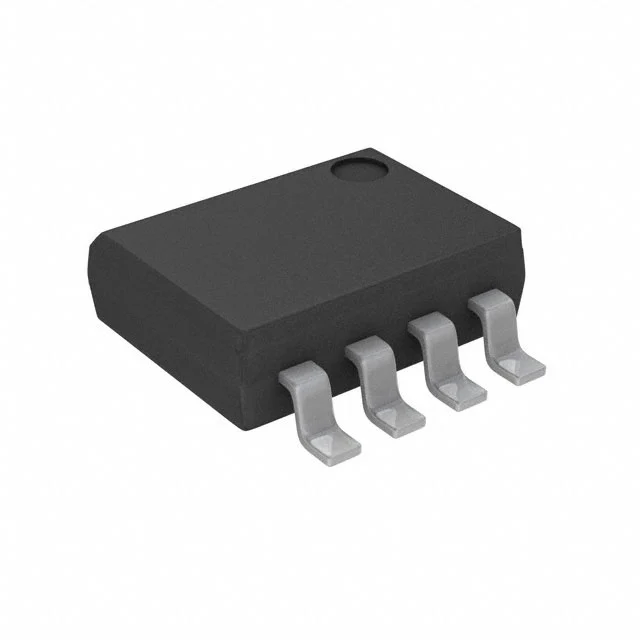
TJA1028T/5V0/20/1: SO8 LIN transceiver with a 5 V regulator at 20 kBd
TJA1028T/5V0/20/1 is the SO8 LIN transceiver with an integrated 5 V regulator and the normal 20 kBd slope in the TJA1028 LIN transceiver with integrated voltage regulator, described by Rev 5 of 30 January 2023. It puts a LIN transceiver and a 5 V low dropout regulator in one SO8 body, so a small node can be built from this part and a microcontroller with no separate regulator. The regulator delivers up to 70 mA at 2 percent accuracy and reports undervoltage with a reset output.
Order code and package
| Order code | TJA1028T/5V0/20/1 |
| Variant function on pin 5 | SLP_N input with an INH output; the 5V0 field is the regulator output and the 20 field is the slope |
| Package | SO8, 3.9 mm body width, 8 pins |
| Protocol | LIN 2.0, 2.1, 2.2, SAE J2602 and ISO 17987-4:2016 (12 V) on the A to D codes |
| Maximum data rate | 20 kBd on the /20 codes and 10.4 kBd on the /10 codes |
| Supply voltage on VCC | 5.5 to 28 V on VBAT |
| Logic supply on VIO | the regulator itself delivers 5.0 V or 3.3 V at up to 70 mA with 2 percent accuracy |
| Temperature range | minus 40 to plus 150 C virtual junction |
| Qualification | AEC-Q100 |
| Datasheet | Rev 5 of 30 January 2023 |
Electrical parameters that decide the application
| Bus fault voltage | minus 40 to plus 40 V on LIN and VBAT as a limiting value |
| Supply current | Standby 45 microamps typical and sleep 12 microamps typical with LIN wake-up still armed |
| Electrostatic discharge | plus or minus 8 kV IEC 61000-4-2 on LIN and VBAT |
| Thermal resistance | 88 K/W junction to ambient in the SO8 body, 59 K/W for the HVSON8 body |
| Wake and diagnostic pins | SLP_N input, INH output, LIN bus wake-up, regulator undervoltage detection with a reset output, and thermal protection |
| Bus pins | CANH and CANL, differential, with the recessive level set by the on chip driver or by a SPLIT output where the code carries one |
| Logic levels | logic pins compatible with the regulator output and with 3.3 V and 5 V controllers |
| Behaviour with the supply off | the transceiver disengages from the bus so an unpowered node does not load the network |
| Protection | TXD dominant time-out, undervoltage detection and thermal shutdown are named in every document in this family |
| Ordering string | the suffix after the slash carries the body, the packing and the variant, so it has to be quoted in full on a purchase order |
Points to check before this part goes on a BOM
The regulator is the reason to take this part over the TJA1021. At 12 V in and 5 V out with 70 mA it dissipates 490 mW, which is a 43 C rise at 88 K/W and puts the junction at 128 C in an 85 C ambient. At 18 V in the same load is 910 mW, an 80 C rise, and 165 C is outside the 150 C limit.
That arithmetic is the real constraint on this part: it is a regulator for a node that draws tens of milliamps from a 12 V rail, not a general purpose supply for a board that also drives relays.
Undervoltage detection on the regulator output has a reset output, so the microcontroller is held in reset until the rail is valid. That removes an external supervisor from a small node and is the second reason the part exists.
The /20 slope is the normal 20 kBd setting; the /10 code is the low slope part for SAE J2602 at 10.4 kBd. The trailing digit in the ordering string is the packing suffix, so a purchase order that quotes TJA1028T/5V0/20 without it still identifies the same electrical part.
Standby current is 45 microamps and sleep current 12 microamps, both typical, with LIN wake-up still armed in sleep. Across a year that is 394 mAh in standby against 105 mAh in sleep, so the sleep state is worth reaching and the difference is a firmware decision.
Bus pins carry plus or minus 8 kV IEC 61000-4-2 on LIN and VBAT and are protected against ISO 7637 transients, which is one step above the 6 kV of the plain LIN line and matches a node mounted in the harness rather than behind a connector.
The HVSON8 body reduces the board area by more than 70 percent per the document and drops the thermal resistance to 59 K/W. On the regulator arithmetic above that is a 25 K saving at 490 mW, which is the difference between 128 C and 103 C in the same ambient.
Where this order code fits
It is the part for a compact LIN node that needs its own 5 V rail, such as a seat switch, a mirror module or a small sensor cluster, and it removes a regulator and a supervisor from the board. Boards weighing one CAN transceiver against another start from our CAN Bus Transceiver Selection page, and boards replacing a part that has gone end of life start from the BOM Consolidation page.
Questions buyers ask
How much current can the regulator deliver? Up to 70 mA at 5 V with 2 percent accuracy, which is enough for a microcontroller and its low power peripherals and not enough for relays or a display backlight.
How hot does it run at 12 V input? At 70 mA the part dissipates 490 mW, which is a 43 C rise at 88 K/W and a 128 C junction in an 85 C ambient. At 18 V in it exceeds the 150 C limit at the same load.
Does it need an external reset supervisor? No. The regulator has undervoltage detection with a reset output, so the controller can be held in reset until the rail is valid.
SUPERB holds and sources NXP interface lines including this order code for production and repair demand, quoted against the exact ordering string with date codes, packing and country of origin stated. When a line is changing, the How to Reduce Component Cost page sets out the checks that keep a substitute from failing on the bench.