


ADRV9009BBCZ
Brand: ADI
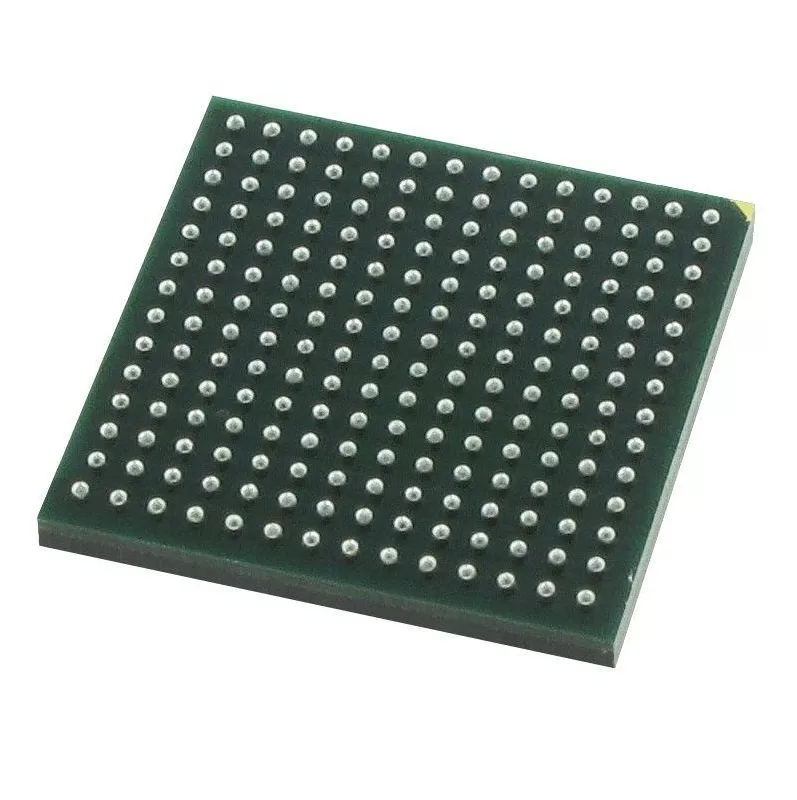
The ADRV9009BBCZ is a highly integrated dual RF transceiver from Analog Devices, combining dual independent transmitters, dual receivers, and dual observation receivers in a single 196-CSPBGA package. Covering 75 MHz to 6 GHz with up to 200 MHz receiver bandwidth and 450 MHz ORx bandwidth, it delivers the RF performance and integration needed for 3G/4G/5G base stations, TDD active antenna systems, and wideband phased-array applications. Integrated fractional-N synthesizers, DPD-ready observation paths, and JESD204B serial interface up to 12.3 Gbps simplify system design while maximizing power amplifier efficiency.
Product Specifications
ADRV9009BBCZ - ADI Integrated Dual RF Transceiver with Observation Path
Analog Devices Inc. - Dual Tx, Dual Rx, Dual ORx, 75MHz-6GHz, JESD204B, DPD Support
MFR Part #: ADRV9009BBCZSuperb SKU: SUP-ADRV9009BBCZ
In Stock - Ready to Ship
The ADRV9009BBCZ is a highly integrated dual RF transceiver from Analog Devices, combining dual independent transmitters, dual receivers, and dual observation receivers in a single 196-CSPBGA package. Covering 75 MHz to 6 GHz with up to 200 MHz receiver bandwidth and 450 MHz ORx bandwidth, it delivers the RF performance and integration needed for 3G/4G/5G base stations, TDD active antenna systems, and wideband phased-array applications. Integrated fractional-N synthesizers, DPD-ready observation paths, and JESD204B serial interface up to 12.3 Gbps simplify system design while maximizing power amplifier efficiency.
Request QuoteContact Sales
Key Performance Highlights
Frequency Range
75 MHz - 6 GHz
Rx Bandwidth
200 MHz (max)
ORx Bandwidth
450 MHz (max)
JESD204B Max Rate
12.3 Gbps
Tx Output Power
9 dBm (typical)
Channel Count
2T + 2R + 2ORx
Technical Specifications
| Manufacturer | Analog Devices Inc. |
| Part Number | ADRV9009BBCZ |
| Type | Integrated Dual RF Transceiver with Observation |
| Frequency Range | 75 MHz to 6000 MHz (6 GHz) |
| Transmitter Channels | 2 (dual independent transmitters) |
| Receiver Channels | 2 (dual independent receivers) |
| Observation Rx Channels | 2 (dual ORx for DPD) |
| Max Rx Bandwidth | 200 MHz |
| Max ORx Bandwidth | 450 MHz (IQ rate 491.52 MHz) |
| Tx Output Power | 9 dBm (typical) |
| DPD Support | Yes (via integrated observation path) |
| Digital Interface | JESD204B (up to 12.3 Gbps per lane) |
| Control Interface | 4-wire SPI + JTAG |
| Integrated Synthesizers | Fractional-N PLLs for all Tx/Rx/ORx channels |
| Duplex Modes | TDD and FDD |
| Supply Voltage | 1.3V / 1.8V / 1.89V (multi-rail) |
| Operating Temperature | -40C to +85C (Industrial) |
| Package / Case | 196-LFBGA, CSP-BGA |
| Mounting | Surface Mount (SMT) |
| RoHS | RoHS Compliant |
Product Details
Device Architecture
The ADRV9009BBCZ is a complete RF-to-bits solution integrating dual independent transmitters, dual independent receivers, and dual observation receivers with on-chip fractional-N frequency synthesizers in a single 196-CSPBGA package.
Dual Transmitters: Direct-conversion architecture with 9 dBm typical output power per channel. Each Tx includes programmable attenuation, quadrature error correction, and LO leakage suppression.
Dual Receivers: Direct-conversion with 200 MHz max bandwidth per channel. Features include independent AGC, DC offset correction, quadrature correction, and digital decimation filtering.
Dual Observation Receivers: Wide 450 MHz bandwidth for DPD feedback. Enables closed-loop pre-distortion to linearize external power amplifiers, dramatically improving system efficiency and reducing adjacent channel leakage.
Key Applications
3G/4G/5G Macro Base Stations - Multi-carrier, multi-band RRH/AAU systems
TDD Active Antenna Systems - Massive MIMO, beamforming arrays
Phased Array Radar - Multi-channel coherent Tx/Rx with DPD
Electronic Warfare - Wideband jamming, SIGINT, ELINT receivers
Military Communications - Software-defined tactical radios
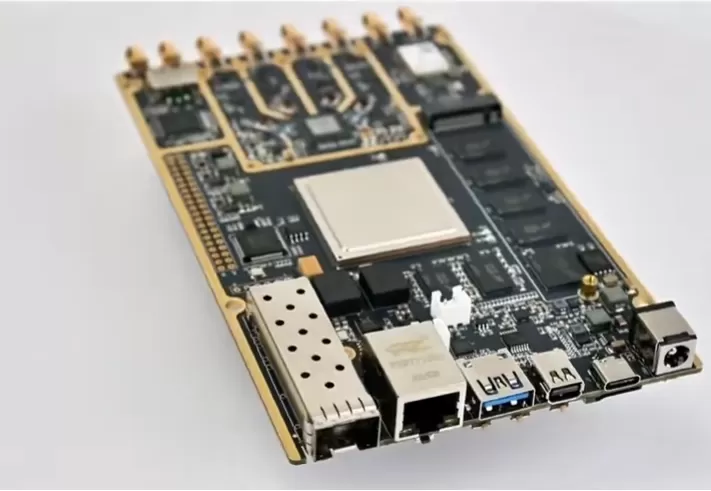
Wideband SDR Platforms - FPGA-based RF FMC modules (ADRV9009 + Zynq)
Repeaters & DAS - Multi-band distributed antenna systems
ADRV900x vs AD936x Comparison
| Feature | ADRV9009BBCZ | ADRV9008-2 | AD9361BBCZ |
|---|---|---|---|
| Frequency Range | 75 MHz - 6 GHz | 75 MHz - 6 GHz | 47 MHz - 6 GHz |
| Rx Bandwidth | 200 MHz | 200 MHz | 56 MHz |
| ORx / DPD Path | Yes (dual, 450 MHz) | Yes (dual, 450 MHz) | No |
| Digital Interface | JESD204B (12.3 Gbps) | JESD204B (12.3 Gbps) | CMOS/LVDS (parallel) |
| Tx Output Power | 9 dBm | 9 dBm | 8 dBm |
| Receiver Channels | No | No | Yes (2 Rx) |
| Package | 196-CSPBGA | 196-CSPBGA | 144-CSPBGA |
| Target Application | 5G Base Station / Radar | Tx-only DPD Systems | Femtocell / SDR |
Why Source ADRV9009BBCZ from Superb Automation?
Base Station BOM Expertise - ADRV9009 + clock tree + PLL/VCO + PA bias + power management - one PO
JESD204B PCB Design - 12.3 Gbps differential routing, length matching, impedance control for SerDes lanes
SMT Assembly + X-Ray - 196-ball CSP-BGA reflow with X-ray void detection
DPD System Knowledge - We understand the Tx-to-ORx feedback loop; layout for best PA linearization results
25 Years Trusted - Electronic components + PCBA partner since 2000; 4 offices across China + HK
Genuine Parts - Direct from trusted channels, full lot traceability, counterfeit-free guarantee
Frequently Asked Questions
What is the ADRV9009BBCZ used for?
The ADRV9009BBCZ is an integrated dual RF transceiver with dual observation receivers designed for 3G/4G/5G macro base stations, TDD active antenna systems (massive MIMO), phased array radar, and electronic warfare. It provides 2T+2R+2ORx channels covering 75 MHz to 6 GHz with JESD204B digital interface.
What is the Observation Receiver (ORx) used for?
The dual ORx channels are dedicated feedback paths for Digital Pre-Distortion (DPD). By sampling the PA output and feeding it back through the ORx path (up to 450 MHz bandwidth), the ADRV9009 enables closed-loop DPD algorithms that dramatically improve transmitter linearity and power amplifier efficiency.
What digital interface does ADRV9009BBCZ use?
JESD204B high-speed serial interface supporting up to 12.3 Gbps per lane. This is significantly faster than the parallel CMOS/LVDS interfaces on earlier AD936x transceivers. Control and configuration is via 4-wire SPI. JTAG boundary scan is also supported.
How does ADRV9009 compare to AD9361?
ADRV9009 is a higher-performance, base-station-class device with 200 MHz Rx BW (vs 56 MHz), JESD204B serial interface (vs parallel CMOS/LVDS), integrated DPD observation path (vs none), and 9 dBm Tx output (vs 8 dBm). AD9361 targets femtocells/SDR; ADRV9009 targets macro base stations and wideband defense systems.
Does ADRV9009BBCZ support TDD massive MIMO?
Yes. The ADRV9009 is designed explicitly for TDD active antenna systems and massive MIMO arrays. Its fast Tx/Rx switching, integrated synthesizers, and JESD204B interface enable dense multi-transceiver deployments with coherent phase alignment across channels.