
TPS7A0315PDBVR
Brand: Texas Instruments
Texas Instruments TPS7A0315PDBVR is a power management component designed for AI Servers & Low-Altitude Economy (Drone and UAV) and related applications. In stock at Superb Automation — request a quote for competitive pricing and fast delivery.
Product Specifications
TPS7A0315PDBVR
Texas Instruments — Power Management & Signal Chain
Product Overview
The TPS7A0315PDBVR from Texas Instruments is a power management / signal chain IC delivering high efficiency, precision regulation, and robust protection. Texas Instruments (TI) is a global leader in analog ICs, power management solutions, and embedded processors.
Superb Automation partners with leading brands including Qorvo, TI, ADI, XILINX, NVIDIA, Intel, ST, MACOM, Renesas, and Coilcraft to provide complete BOM and supply-chain solutions.
Key Features
- High-efficiency power conversion with low quiescent current
- Wide input voltage range with precision output regulation
- Integrated over-current, over-temperature, and short-circuit protection
- Small footprint packaging for space-constrained designs
- AEC-Q100 qualified options available for automotive applications
- Flexible sequencing and soft-start control
Key Specifications
| Input Voltage | V |
| Output Voltage | V |
| Output Current | A |
| Switching Frequency | kHz |
| Efficiency | % |
| Quiescent Current | µA |
| Topology | — |
| Package | — |
| Operating Temp | °C |
| Protection | — |
Applications
Industrial Automation
Automotive Electronics
Telecom Infrastructure
Server & Data Center Power
Medical Devices
Consumer Electronics
Request Quote — In Stock, 100% New & Original, Full Warranty
TPS7A0315PDBVR: 1.5 V at 200 mA from a 200 nA regulator
The TPS7A0315PDBVR is the 1.5 V fixed member of the TPS7A03 family from Texas Instruments, the 200 nanoamp branch of the nanopower line, supplied in the five pin SOT-23 body coded DBV. It ships 3000 pieces per reel at moisture level 1 with the marking 21UF, delivers 200 mA, and holds the output inside 1 percent at 25 degrees and 1.5 percent over the full temperature range.
The family relationship is simple and worth stating plainly. The TPS7A03 uses the same electrical table as the TPS7A02 for accuracy, dropout, current limit, rejection and noise, and differs in the quiescent current: 200 nanoamps typical here against 25 nanoamps there. Both are specified to 200 mA, both are stable with a 1 uF output capacitor, and both keep a low ground current in dropout. The 7A03 document is the newer revision, SBVS375D, dated July 2026.
Key electrical data for the 1.5 V point
| Output voltage | 1.5 V fixed, plus or minus 1 percent at 25 C and 1.5 percent over -40 to 125 C |
| Output current | 200 mA continuous, current limit 240 mA to 750 mA |
| Input range | 1.5 V to 6.0 V, 2.06 V needed at 200 mA over the full temperature range |
| Quiescent current | 200 nA typical at 25 C, 250 nA maximum, 300 nA maximum to 85 C |
| Dropout | 490 mV maximum at 200 mA to 85 C in the 1.5 V to 1.8 V band, 560 mV over the full range |
| Rejection and noise | 55 dB at 1 kHz and 30 mA, 130 uV RMS at 0.8 V over 10 Hz to 100 kHz |
Package, marking and reel data
| Body | SOT-23 DBV, 5 pins, 2.9 mm by 2.8 mm |
| Reel | 3000 pieces, large tape and reel |
| Finish and moisture | NIPDAU or tin depending on the row, level 1, unlimited floor life |
| Marking | 21UF |
| Thermal resistance | 181.9 C per W junction to ambient in the five pin body |
Where a 1.5 V rail at 200 mA is used
1.5 V is a core and memory voltage in low power products and a bias voltage in sensor front ends that were written around a single cell. The interesting case is the one where the rail has to come from a 1.5 V or 3 V source and stay alive on microamps: a meter, a detector, a wearable or a battery backed sensor. At 200 nanoamps the regulator is still small against the self discharge of a lithium cell, and the dropout band of 490 mV maximum means a 1.5 V rail needs 2.06 V at full load, which is why a 3 V cell works but a 1.5 V cell only works at light load.
At light load the part is a pass element with a very low ground current. A 1.5 V rail from a 1.5 V cell sits in dropout, the output follows the cell down, and the load sees the cell voltage minus a few tens of millivolts, which is often the intended behaviour in a product that runs until the cell is flat. A buyer who needs regulation at 1.5 V output from a 1.5 V input does not need this part, and the honest answer is that no linear regulator can do it.
The thermal picture is easy at this voltage. At 200 mA from 3.3 V to 1.5 V the dissipation is 0.36 W and the rise is 65 degrees on the SOT-23 body, which is at the edge of comfort in a warm enclosure. From 2.5 V the same current is 0.2 W and a 36 degree rise, which is the intended operating point for a 1.5 V rail.
Buyer questions on this order code
What differs from the TPS7A02 at the same voltage? The quiescent current, 200 nA against 25 nA, and the document revision. Accuracy, dropout, current limit, rejection and noise are the same rows, so a substitution between the two families changes the sleep budget and nothing else.
Does the part regulate from a 1.5 V cell? No. At 1.5 V output the dropout of 560 mV means the input has to be about 2.06 V at full load. From a 1.5 V cell the part is in dropout and passes the cell voltage through with a small ground current, which is a valid but different behaviour.
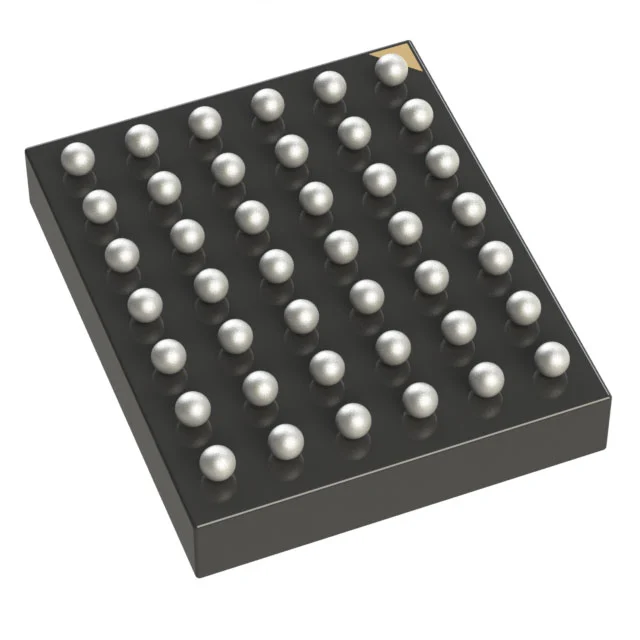
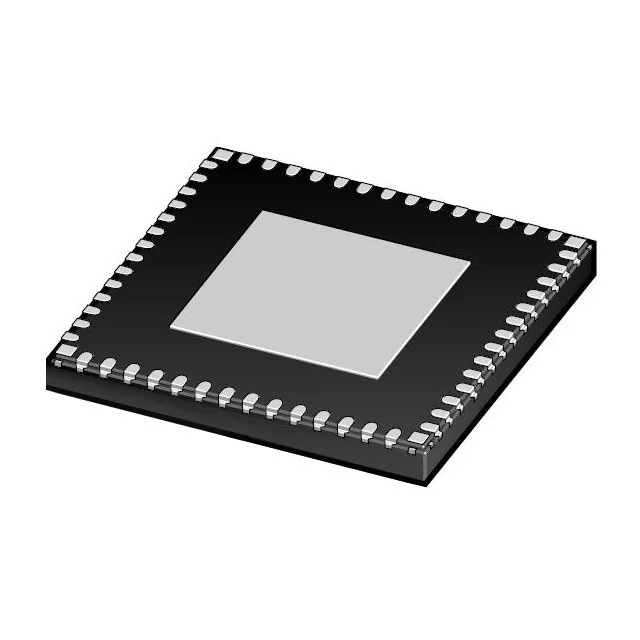
Is the SOT-23 body the only option? No, the same voltage is offered in the X2SON and DSBGA bodies in this family. The SOT-23 is the one that can be handled and inspected visually, and its thermal resistance is 181.9 C per W.
Sourcing the TPS7A0315PDBVR through SUPERB
SUPERB quotes this order code against the 1.5 V trim in the SOT-23 body, with the marking, the finish and the moisture class stated in the offer. The 21UF marking is checked on receipt against the reel label and the certificate of conformance.
For a rail that has to be compared against the 25 nA branch of the same family, the power management cross reference page lists both, and supplier quality audit covers how we qualify the source behind a part like this. Send the sleep budget and the quantity and the answer follows.