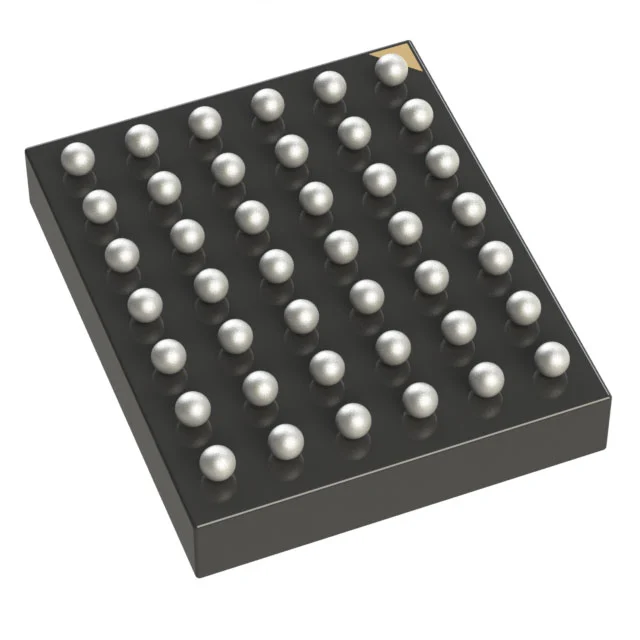

TPS7A0233PDBVR
Brand: Texas Instruments
Texas Instruments TPS7A0233PDBVR is a power management component designed for AI Servers & Low-Altitude Economy (Drone and UAV) and related applications. In stock at Superb Automation — request a quote for competitive pricing and fast delivery.
Product Specifications
TPS7A0233PDBVR
Texas Instruments — Power Management & Signal Chain
Product Overview
The TPS7A0233PDBVR from Texas Instruments is a power management / signal chain IC delivering high efficiency, precision regulation, and robust protection. Texas Instruments (TI) is a global leader in analog ICs, power management solutions, and embedded processors.
Superb Automation partners with leading brands including Qorvo, TI, ADI, XILINX, NVIDIA, Intel, ST, MACOM, Renesas, and Coilcraft to provide complete BOM and supply-chain solutions.
Key Features
- High-efficiency power conversion with low quiescent current
- Wide input voltage range with precision output regulation
- Integrated over-current, over-temperature, and short-circuit protection
- Small footprint packaging for space-constrained designs
- AEC-Q100 qualified options available for automotive applications
- Flexible sequencing and soft-start control
Key Specifications
| Input Voltage | V |
| Output Voltage | V |
| Output Current | A |
| Switching Frequency | kHz |
| Efficiency | % |
| Quiescent Current | µA |
| Topology | — |
| Package | — |
| Operating Temp | °C |
| Protection | — |
Applications
Industrial Automation
Automotive Electronics
Telecom Infrastructure
Server & Data Center Power
Medical Devices
Consumer Electronics
Request Quote — In Stock, 100% New & Original, Full Warranty
TPS7A0233PDBVR: 200 mA nanopower LDO, 3.3 V fixed, 25 nA quiescent current, SOT-23-5
TPS7A0233PDBVR is a fixed 3.3 V linear regulator rated 200 mA with a quiescent current of 25 nanoamp that holds even when the input has fallen to the output voltage in a SOT-23 body of 5 pins. This is the five pin version of a family built for equipment that spends almost all of its life asleep. The quiescent current stays at 25 nanoamp in dropout, which is the case that usually ruins a sleep budget on an ordinary regulator, and the transient response is fast enough for a radio that wakes for a few milliseconds and draws 50 mA.
Order code and package
| TPS7A0233PDBVR | Active, SOT-23-5, 3000 pieces on a large reel, NIPDAU or NIPDAUAG finish, marking 21FF |
| TPS7A0233DQNR | Active, the 1 mm by 1 mm X2SON body, four pins, no enable brought out |
| TPS7A02 family | fixed outputs from 0.8 V to 5.0 V in 50 mV steps, and a 0.64 mm square die scale body |
| Column caution | the addendum prints the package column shifted by one row on this family, so the body has to be read from the suffix, DBV is SOT-23-5 and DQN is X2SON-4 |
| Temperature range | minus 40 to 125 degrees junction on every row |
Electrical parameters that decide the application
| Input voltage | 1.5 V to 6.0 V |
| Output | 3.3 V fixed on this string, 200 mA |
| Quiescent current | 25 nanoamp typical, held in dropout as well |
| Shutdown current | 3 nanoamp typical |
| Dropout | 270 mV maximum at 200 mA for the 3.3 V option |
| Output accuracy | 1.5 per cent over temperature |
| Transient response | settling under 10 microsecond, 100 mV undershoot for a 1 mA to 50 mA step |
| Output capacitor | stable with 1 microfarad or larger |
Family variants and how they differ
| DBV body | SOT-23-5 with the enable pin brought out, the string on this page |
| DQN body | X2SON-4 at 1 mm square, enable tied internally, for the smallest board area |
| YCH body | die scale, 0.64 mm square, for die level assembly |
| Smart enable | an internal pulldown keeps the part off when the enable pin floats |
| Fixed options | 0.8 V to 5.0 V in 50 mV steps, so a core rail can be matched exactly |
Points to check before this part goes on a BOM
Twenty five nanoamp changes what a battery budget looks like. A coin cell of 200 milliamp hour loses 2.2 microamp hour a year to this regulator at no load, which is nothing. A conventional regulator at 5 microamp loses 44 milliamp hour a year, which is a fifth of the cell. That difference is why the part exists and why it is chosen for detectors and meters that are expected to run for a decade.
The quiescent current holds in dropout, which is the unusual part. Most regulators increase their own consumption when the input falls below the regulation point, because the pass element saturates and the control loop loses authority. Here the figure is specified to hold in dropout, which matters at the end of a battery discharge when the input is below 3.3 V and the load is still drawing current.
270 mV dropout at 200 mA sets the input floor. A 3.3 V output needs 3.57 V at the pin at full load. From a 3.6 V lithium cell that leaves almost nothing, and the rail will follow the cell down for the last part of the discharge. That is acceptable for a microcontroller with a wide supply range and not acceptable for a radio that needs a clean 3.3 V.
The 1.5 per cent figure covers temperature. That is tighter than the two or three per cent typical of a low quiescent regulator, and it matters when the rail is also the reference for a measurement. On a meter the regulator error appears directly in the reading unless the measurement is ratiometric.
Transient response is quoted for a specific step. The 1 mA to 50 mA step with 100 mV undershoot and 10 microsecond settling is what a radio transmit burst looks like. A larger step, or a load with a long cable, will produce a deeper dip, and the output capacitor is the only tool available to reduce it.
The smart enable pulldown removes a resistor. When the enable pin floats the internal pulldown keeps the regulator off, so a board does not need an external 100 k resistor to define the state during power up. That saves a part and, more importantly, removes a path that would leak through the pin on a board that sits in storage.
Package choice decides whether enable is available. The four pin X2SON has no enable pin, so the part is on whenever the input is present. On a board that needs to switch the rail off, the five pin SOT-23 on this page is the right body. Swapping to the smaller body during a shortage removes a function, not just a package.
A one microfarad output capacitor is enough, and more is not always better. The part is stable from 1 microfarad upwards, but a very large capacitor on a nanoamp regulator takes a long time to charge through the current limit at power up, which shows as a slow ramp rather than a fault. On a sleep focused board the smallest stable capacitor is usually the right answer.
Verify the suffix, not the family, when a reel arrives. The addendum prints the package column shifted by one row for this family, so a reading that takes the package from the wrong row produces a SOT-23 part number with an X2SON body. The suffix is the reliable field: DBV is the five pin SOT-23, DQN is the four pin X2SON, YCH is the die scale body.
What to confirm before this part goes on a purchase order
Confirm the fixed voltage and the body in one line. The same family covers 0.8 V to 5.0 V in 50 mV steps across three bodies, and two of those bodies do not bring the enable pin out. A quote that names only the family cannot be checked against a board.
For long life equipment ask for the date code and the packing, and keep the reel sealed until the line is ready. The part itself has no floor life issue in the SOT body, but a re-reeled quantity from a broker loses the traceability that a ten year product needs.
Where this order code fits
It keeps a 3.3 V rail alive in a smoke detector, a gas meter or a wearable, where the sleep current decides whether the cell lasts five years or two. Teams comparing it with a neighbouring part start from our Power Management Cross Reference page, and teams replacing a part that has gone end of life start from the Pin to Pin Cross Reference page.
Questions buyers ask
Is 25 nanoamp the current with the output loaded? No, it is the no load figure. It rises with load as the pass element carries current, but the increase is small compared with a conventional regulator. The number to use in a sleep budget is the no load figure, because that is the state the board is in for most of its life.
Can it supply a radio that draws 100 mA pulses? The 200 mA rating covers the pulse, and the transient response is specified for a 1 mA to 50 mA step. A 100 mA pulse from a low quiescent state will produce a deeper dip than the data sheet curve, so the output capacitor and the trace impedance to the radio have to be checked on the board rather than assumed.
What is the difference between this part and the 3.0 V option? Only the fixed output voltage. Both sit in the same family, both hold 25 nanoamp in dropout, and both come in the same three bodies. The suffix decides the voltage, and a reel label that names the family rather than the voltage is not enough to build a board.
SUPERB holds and sources this line for production and repair demand, quoted against the exact ordering string with date codes, packing and country of origin stated on the offer. When a part is moving, the OEM Procurement page sets out the checks that keep a substitute from failing on the bench.