
TPS70933DRVR
Brand: Texas Instruments
Texas Instruments TPS70933DRVR is a power management component designed for AI Servers & Low-Altitude Economy (Drone and UAV) and related applications. In stock at Superb Automation — request a quote for competitive pricing and fast delivery.
Product Specifications
TPS70933DRVR
Texas Instruments — Power Management & Signal Chain
Product Overview
The TPS70933DRVR from Texas Instruments is a power management / signal chain IC delivering high efficiency, precision regulation, and robust protection. Texas Instruments (TI) is a global leader in analog ICs, power management solutions, and embedded processors.
Superb Automation partners with leading brands including Qorvo, TI, ADI, XILINX, NVIDIA, Intel, ST, MACOM, Renesas, and Coilcraft to provide complete BOM and supply-chain solutions.
Key Features
- High-efficiency power conversion with low quiescent current
- Wide input voltage range with precision output regulation
- Integrated over-current, over-temperature, and short-circuit protection
- Small footprint packaging for space-constrained designs
- AEC-Q100 qualified options available for automotive applications
- Flexible sequencing and soft-start control
Key Specifications
| Input Voltage | V |
| Output Voltage | V |
| Output Current | A |
| Switching Frequency | kHz |
| Efficiency | % |
| Quiescent Current | µA |
| Topology | — |
| Package | — |
| Operating Temp | °C |
| Protection | — |
Applications
Industrial Automation
Automotive Electronics
Telecom Infrastructure
Server & Data Center Power
Medical Devices
Consumer Electronics
Request Quote — In Stock, 100% New & Original, Full Warranty
TPS70933DRVR: a 150 mA, 30 V linear regulator with a 1 microamp quiescent current and a fixed 3.3 V output
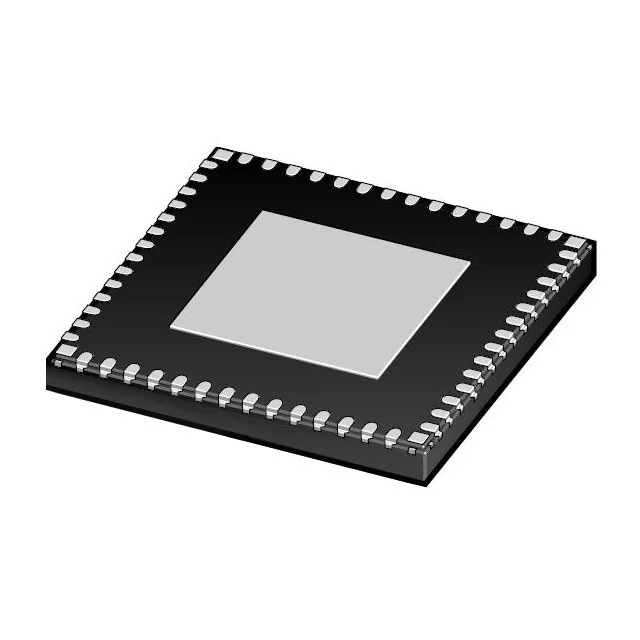
TPS70933DRVR is an ultra low quiescent current low dropout regulator with reverse current protection in a WSON (DRV) body of 6 pins. It holds a fixed 3.3 V output from an input as high as 30 V while drawing 1 microamp of quiescent current, which is the figure that decides whether an always on module survives a year on a battery. Shutdown current is 150 nanoamp, accuracy is 2 per cent over temperature, and the pass element blocks reverse current so a charged output cannot feed back into a dead input rail.
Order code and package
| TPS70933DRVR | WSON body of 6 pins measuring 2.00 mm by 2.00 mm, 3000 pieces on a large reel, nickel palladium gold finish, moisture level 1 at 260 C with unlimited floor life, marking SDG, active status in the addendum |
| Addendum alignment | the plain row prints the SOT-23 body at 250 pieces while the DRV suffix is the 2 mm WSON at 3000 pieces on a large reel, so the row and the suffix disagree and the suffix is the reliable one |
| TPS70933DBVR | the same die in a 5 pin SOT-23 body measuring 2.90 mm by 1.60 mm, 3000 pieces on a large reel, for boards that cannot take a 2 mm quad footprint |
| Fixed voltage options | the family covers fixed outputs from 1.2 V to 6.5 V, so the 33 in the string is the 3.3 V member rather than a grade or a revision |
| A and B prefix members | the 709A and 709B members are different fixed voltages in the same body, not revisions of this part |
| Body size | 2.00 mm by 2.00 mm for the WSON, with the thermal pad tied to ground |
Electrical parameters that decide the application
| Input voltage | 2.7 V to 30 V, which is the window that lets the part run straight from a 24 V industrial rail or a 12 V battery line |
| Output voltage | 3.3 V fixed on this string, with the family covering 1.2 V to 6.5 V |
| Output current | 150 mA rated, with the data sheet noting that the part continues to operate between 150 mA and 200 mA while some parameters fall outside their specification |
| Accuracy | 2 per cent over temperature, which includes the reference drift and the load regulation together |
| Quiescent current | 1 microamp typical, and the ground pin current is tabulated at 50 mA and at 150 mA so the rise with load is visible rather than assumed |
| Shutdown current | 150 nanoamp typical with the enable pin at or below 0.4 V, which is what a module that must sit idle for a year needs |
| Dropout | specified per voltage option at 50 mA and at 150 mA, and valid only when the output is at 2.8 V or above because of the minimum input voltage of the part |
| Current limit | an internal limit in the region of 350 mA, which protects the pass element during a fault without latching the rail off |
| Reverse current | 10 nanoamp flowing out of the input and 100 nanoamp flowing into the output with the output at 3 V and the input and enable at ground, which is the blocking behaviour that protects a dying rail |
| Output noise | 190 microvolt rms over 10 Hz to 100 kHz at 10 mA on the 1.2 V member, which is the figure to scale from for an analog rail |
| Start-up time | 200 to 600 microsecond to 95 per cent of the output on outputs at or below 3.3 V, and 500 to 1500 microsecond above that |
| Enable thresholds | 0.9 V minimum to enable and 0.4 V maximum to disable, with 300 nanoamp of current into the enable pin, so a 1.8 V logic line drives it directly |
| Thermal shutdown | 158 C on the rising edge and 140 C on the falling edge, with the gap acting as hysteresis |
Options in the same family
| TPS70933 | the 3.3 V fixed member covered by this string, in a 5 pin SOT-23 or a 6 pin WSON, both specified over the same electrical table |
| Other fixed voltages | the family covers 1.2 V to 6.5 V, and the voltage is named by the digits after 709 on the fixed members rather than by a suffix letter |
| A and B members | 709A and 709B are different fixed voltages in the same body, not revisions of this part, so a BOM that names 709B33 is asking for a different output than 70933 |
| No active discharge | the part has no output pulldown, so a disabled rail falls at the rate of its own load rather than through an internal switch |
| Reverse current block | the pass element stops current flowing from the output back to the input, specified at 10 nanoamp out of the input and 100 nanoamp into the output with the output held at 3 V |
| Peak headroom | the data sheet notes that the part continues to operate between 150 mA and 200 mA, with some parameters outside their specification, which is a fault condition rather than a rating |
| Thermal hysteresis | shutdown at 158 C and recovery at 140 C, so a part that trips does not oscillate on and off at a single temperature |
Points to check before this part goes on a BOM
The 1 microamp figure is a no load figure. Ground pin current rises with load and the table gives separate rows at 50 mA and 150 mA. A budget that multiplies 1 microamp by the number of regulators on a board understates the idle draw of the ones that feed a real load.
Dropout is quoted per voltage option and has a precondition. The specification is only valid when the output is at 2.8 V or above, because the part needs 2.7 V of input to work at all. A 1.8 V rail from this family cannot be pushed into dropout on a 2.5 V input and still meet the number.
The pass element behaves like a resistor in dropout. The data sheet states that the dropout voltage scales with the output current, so a rail that is asked for 100 mA at 2.9 V from a 3.0 V input sits in the resistive region and the output follows the load rather than holding 3.3 V.
Reverse current protection is a specification, not a claim. With the input at ground and the output held at 3 V the part passes 10 nanoamp out of the input and 100 nanoamp into the output, so a charged bulk capacitor does not discharge back through the regulator.
The 30 V rating has no transient margin stated. The input range is 2.7 V to 30 V in the recommended table, so a 24 V rail with a load dump above 30 V needs a clamp in front of the regulator rather than reliance on the part.
Thermal shutdown is the last protection, not something to plan around. At 158 C the part turns off, and a board that reaches that temperature has already lost its specification, so the copper under the 2 mm body has to be sized for the dissipation at the ambient inside the enclosure.
Where a 1 microamp regulator changes a product
A smoke detector, a thermostat, a water meter or a battery pack sits idle for most of its life, and the regulator is the largest standing load in that state. Moving from a 10 microamp part to this one is the difference between a two year battery and a five year battery in the same enclosure, with no change to the rest of the circuit.
The same property matters on a mains powered board that has a standby requirement, because the idle current of the regulator sets the no load power that a certificate measures. A 3.3 V rail at 1 microamp of quiescent current is well under the milliwatt line that most standby rules draw.
Where this order code fits
a battery powered sensor, a smoke detector or an always on standby rail that has to hold 3.3 V from a 12 V or 24 V line Teams comparing it with a neighbouring part start from our Power Management Cross Reference page, and teams replacing a part that has gone end of life start from the Pin to Pin Cross Reference page.
Questions buyers ask
Can this part take 24 V directly? Yes, the recommended input range reaches 30 V, so a regulated 24 V rail is inside the window. A 24 V rail with a transient above 30 V needs a clamp, because the absolute maximum is not a transient rating.
What output current is available? 150 mA rated. The data sheet notes operation continues from 150 mA to 200 mA, but parameters such as dropout and regulation are no longer guaranteed in that band.
Does the part discharge the output when disabled? No. Shutdown current is the 150 nanoamp the part draws itself, and there is no active discharge, so a rail with a large capacitor falls at the rate of its own load after the enable goes low.
How much noise does it add to a 3.3 V rail? The noise figure is specified at 190 microvolt rms on the 1.2 V member over 10 Hz to 100 kHz at 10 mA, and the family table carries the figure per option. An analog rail that needs less needs a filter or a different regulator.
Is the WSON body the same die as the SOT-23? Yes, the fixed voltage and the electrical table are shared, and the difference is the body, the pin count and the thermal path. The reel quantities differ as well.
Can SUPERB supply a mixed quantity of both bodies? SUPERB quotes each ordering string separately with date codes, packing and country of origin, so a line that needs both bodies gets two strings on one offer rather than a substitution.
SUPERB holds and sources this line for production and repair demand, quoted against the exact ordering string with date codes, packing and country of origin stated on the offer. When a part is moving, the Medical Device Components page sets out the checks that keep a substitute from failing on the bench.