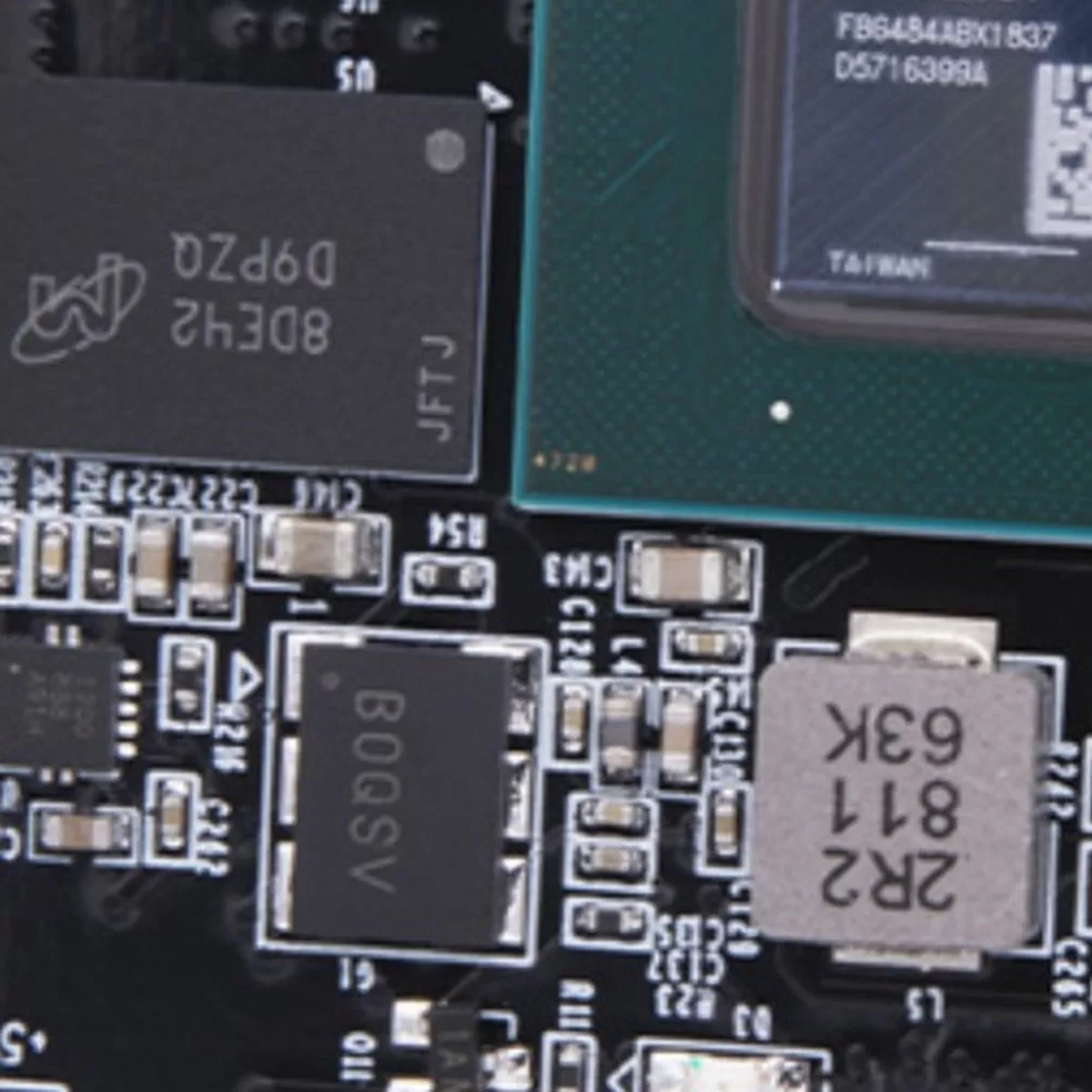

TPS61165DRVR
Brand: Texas Instruments
Texas Instruments TPS61165DRVR is a power management component designed for AI Servers & Low-Altitude Economy (Drone and UAV) and related applications. In stock at Superb Automation — request a quote for competitive pricing and fast delivery.
Product Specifications
TPS61165DRVR
Texas Instruments — Power Management & Signal Chain
Product Overview
The TPS61165DRVR from Texas Instruments is a power management / signal chain IC delivering high efficiency, precision regulation, and robust protection. Texas Instruments (TI) is a global leader in analog ICs, power management solutions, and embedded processors.
Superb Automation partners with leading brands including Qorvo, TI, ADI, XILINX, NVIDIA, Intel, ST, MACOM, Renesas, and Coilcraft to provide complete BOM and supply-chain solutions.
Key Features
- High-efficiency power conversion with low quiescent current
- Wide input voltage range with precision output regulation
- Integrated over-current, over-temperature, and short-circuit protection
- Small footprint packaging for space-constrained designs
- AEC-Q100 qualified options available for automotive applications
- Flexible sequencing and soft-start control
Key Specifications
| Input Voltage | V |
| Output Voltage | V |
| Output Current | A |
| Switching Frequency | kHz |
| Efficiency | % |
| Quiescent Current | µA |
| Topology | — |
| Package | — |
| Operating Temp | °C |
| Protection | — |
Applications
Industrial Automation
Automotive Electronics
Telecom Infrastructure
Server & Data Center Power
Medical Devices
Consumer Electronics
Request Quote — In Stock, 100% New & Original, Full Warranty
TPS61165DRVR: 3 V to 18 V white LED driver with a 40 V switch and one wire brightness control
TPS61165DRVR is a boost converter that drives LEDs in series and regulates the string current through a sense resistor in a WSON body of 6 pins. It steps a 3 V to 18 V rail up to a string of up to ten white LEDs, and the CTRL pin takes either a PWM signal or a one wire digital word without bursting the LED current.
Order code and package
| Order code | TPS61165DRVR, DRV package, 3000 pieces on a large reel, the WSON body with the thermal pad |
| Body | WSON, 2.0 mm by 2.0 mm by 0.8 mm, six pins with a thermal pad, the DBV SOT-23 body is a different order code |
| Feedback | 200 mV reference with 2 per cent accuracy, set by one resistor in series with the string |
| Dimming | PWM on the CTRL pin from 5 kHz to 100 kHz, or a one wire EasyScale word on the same pin |
| Protection | Open LED protection at 38 V, switch current limit, thermal shutdown |
| Compliance | Rated -40 C to 85 C ambient, not the 125 C of the power converters in this catalogue |
Electrical parameters that decide the application
| Input range | 3 V to 18 V operating, 20 V absolute maximum |
| Output | Up to 38 V before the open LED protection acts, so ten white LEDs at 3.5 V fit and twelve do not |
| Switch | 40 V rated N channel FET, 1.2 A typical current limit and 0.96 A minimum |
| Switching frequency | 1.2 MHz fixed, 1.0 MHz to 1.44 MHz across parts |
| Duty cycle | 93 per cent maximum, which is the limit on the step up ratio |
| Efficiency | Up to 90 per cent at the currents the device is built for |
| Quiescent current | 2.3 mA while switching with no load, 1 uA in shutdown |
| Soft start | Built in, with the switch current limit halved during the ramp |
| Thermal | 80.7 C/W junction to ambient in the WSON body, 210.1 C/W in the SOT-23 body |
| Control thresholds | 1.2 V high and 0.4 V low on CTRL, 800 kOhm of internal pull down |
Family variants and how they differ
| TPS61165DBVR | the same die in the six pin SOT-23 body, 210.1 C/W instead of 80.7 C/W, so it suits a lower string current |
| TPS610xx | boost converters without the LED current loop, for a rail rather than a string |
| TPS61252 | a boost with an adjustable input current limit, for a load that is a circuit rather than a diode string |
| TPS62130 | a step down part, not a substitute when the rail is below the load voltage |
| TPS56C215 | a twelve amp buck for the opposite direction of conversion |
Points to check before this part goes on a BOM
The 38 V open LED protection is what caps the string. Ten white LEDs at 3.5 V need 35 V, which leaves 3 V of headroom, and eleven need 38.5 V and will trip the protection on a cold string where the forward voltage is highest. An engineer who wants a longer string needs a different part, and one who wants the same string with margin should run it at a lower current so the forward voltage sits lower.
The 200 mV reference is small on purpose, because the sense resistor dissipates the reference voltage times the string current. At 350 mA that is 70 mW, and at 20 mA it is 4 mW. The small reference is also the weakness: 200 mV is the same order as the offset of the feedback amplifier and the leakage around the node, so a low current string has to be built with a clean sense node, short traces and a resistor with a low temperature coefficient.
The switch current limit is 0.96 A minimum and 1.2 A typical, and the LED current has to stay below it minus half the inductor ripple. With 30 per cent ripple that means about 0.8 A of LED current is the ceiling on a device whose typical limit is 1.2 A, and a 1 A string sits outside the minimum limit on a cold or high duty cycle start. The headline 1.2 A is a peak switch number, not an output current.
The maximum duty cycle of 93 per cent limits the step up ratio, and the limit binds at low input. A 3 V input driving 30 V of LEDs needs 90 per cent, which leaves 3 per cent of headroom for the switch drop and the inductor resistance, and any sag on the input pushes the loop into dropout with the string current falling out of regulation. The part works best at a ratio below about 8 to 1, which is a 3.6 V rail driving eight or nine LEDs.
Dimming has two routes on one pin. A PWM signal between 5 kHz and 100 kHz sets the reference in proportion to the duty cycle without bursting the current, so the output capacitor does not sing. The same pin also takes an EasyScale one wire word, which changes an internal register and gives finer steps. Below about 400 Hz of PWM the low time exceeds the 2.5 ms shutdown window, the part turns off between pulses, and the rail restarts on every cycle.
The two packages are not equivalent even though the die is. The WSON body with its thermal pad is 80.7 C/W and the SOT-23 body is 210.1 C/W, a factor of two and a half, so a 350 mA string that runs comfortably in the first will run hot in the second. The tape and reel suffix follows the body, DRV for the WSON and DBV for the SOT-23, and a purchasing substitution between them changes the thermal margin without changing the circuit.
The CTRL pin has an 800 kOhm internal pull down, which is what allows a simple open drain driver or an RC network to set a default brightness at power-up. It also means a floating pin produces full brightness rather than off, since the internal pull down is the low state and the regulator is not shut down. A board that must come up dark has to hold the pin low actively, not leave it unconnected.
The open LED protection acts on the switch node voltage, so a string that opens in the field stops the part instead of running the output to the absolute maximum of the switch. The distinction matters for a lamp that is serviceable: the driver survives, and the fault is reported by the light going out rather than by the driver failing short and taking the input rail with it.
Start-up halves the switch current limit until the output approaches regulation, which is what keeps inrush into the output capacitor from tripping the limit on the first cycles. That behaviour also means a string with a large output capacitor and a heavy load takes longer to reach full brightness than the soft start alone would suggest, and a build that measures start-up time on the bench should measure it cold, where the LED forward voltage is highest.
Where this order code fits
It belongs in a display backlight, a hand held terminal, a thermostat, a video camera, an exit sign or a machine panel, where a string of white LEDs runs from a 5 V or 12 V rail and the brightness comes from a microcontroller pin. Teams comparing it with a neighbouring part start from our Power Management Cross Reference page, and teams replacing a part that has gone end of life start from the BOM Shortage Recovery page.
Questions buyers ask
How many white LEDs can it drive? Ten at 3.5 V, because the open LED protection trips at 38 V. Eleven is over the limit on a cold string.
Can it run a 1 A string? The minimum switch current limit is 0.96 A and the LED current must stay below that minus half the ripple, so about 0.8 A is the practical ceiling.
Does PWM dimming make the output capacitor audible? No, because the part regulates the reference rather than bursting the current. The audible noise problem belongs to drivers that chop the output.
Is the SOT-23 version a drop in replacement? Electrically yes, thermally no. The SOT-23 body is 210.1 C/W against 80.7 C/W for the WSON, so the same string runs much hotter.
SUPERB holds and sources this line for production and repair demand, quoted against the exact ordering string with date codes, packing and country of origin stated on the offer. When a part is moving, the Component Lead Time Solutions page sets out the checks that keep a substitute from failing on the bench.