
TPS3808G01QDRVRQ1
Brand: Texas Instruments
Texas Instruments TPS3808G01QDRVRQ1 is a power management component designed for AI Servers & Low-Altitude Economy (Drone and UAV) and related applications. In stock at Superb Automation — request a quote for competitive pricing and fast delivery.
Product Specifications
TPS3808G01QDRVRQ1
Texas Instruments — Power Management & Signal Chain
Product Overview
The TPS3808G01QDRVRQ1 from Texas Instruments is a power management / signal chain IC delivering high efficiency, precision regulation, and robust protection. Texas Instruments (TI) is a global leader in analog ICs, power management solutions, and embedded processors.
Superb Automation partners with leading brands including Qorvo, TI, ADI, XILINX, NVIDIA, Intel, ST, MACOM, Renesas, and Coilcraft to provide complete BOM and supply-chain solutions.
Key Features
- High-efficiency power conversion with low quiescent current
- Wide input voltage range with precision output regulation
- Integrated over-current, over-temperature, and short-circuit protection
- Small footprint packaging for space-constrained designs
- AEC-Q100 qualified options available for automotive applications
- Flexible sequencing and soft-start control
Key Specifications
| Input Voltage | V |
| Output Voltage | V |
| Output Current | A |
| Switching Frequency | kHz |
| Efficiency | % |
| Quiescent Current | µA |
| Topology | — |
| Package | — |
| Operating Temp | °C |
| Protection | — |
Applications
Industrial Automation
Automotive Electronics
Telecom Infrastructure
Server & Data Center Power
Medical Devices
Consumer Electronics
Request Quote — In Stock, 100% New & Original, Full Warranty
TPS3808G01QDRVRQ1: a programmable delay supervisor with a 0.405 V adjustable threshold in a 2 mm WSON body
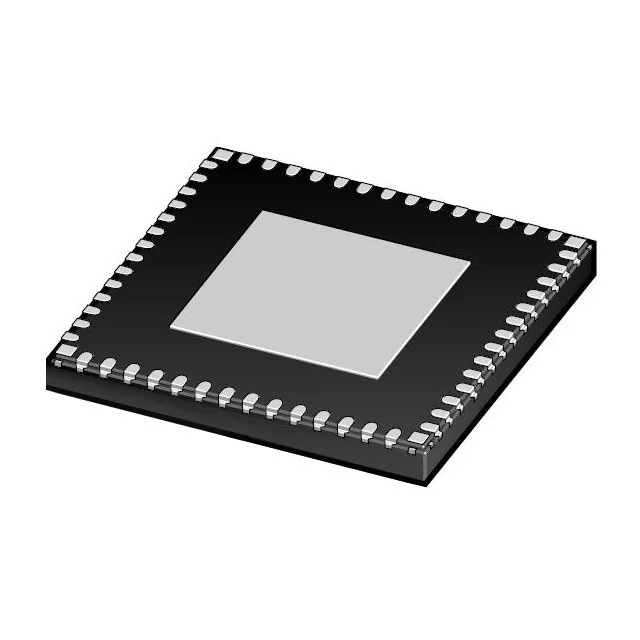
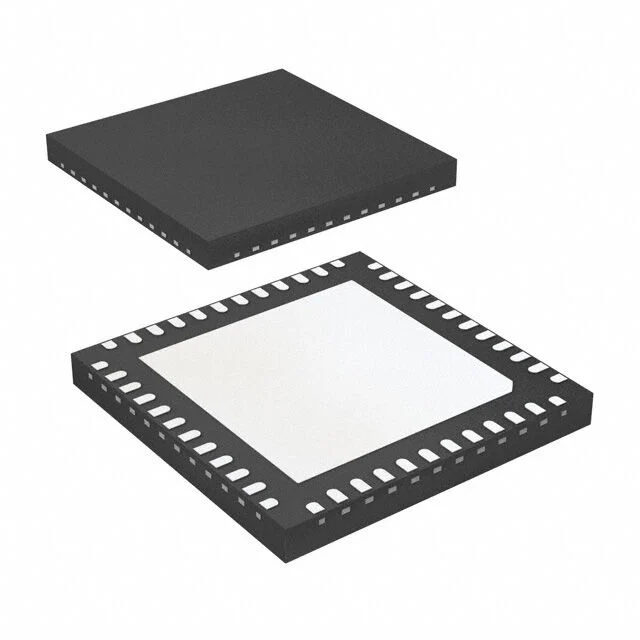
TPS3808G01QDRVRQ1 is an automotive supervisory circuit that watches one rail and drives an open drain reset in a WSON (DRV) body of 6 pins. It monitors a sense voltage from 0 V up to the supply, compares it against an adjustable 0.405 V threshold, and holds RESET low for a delay set by a capacitor on the CT pin from 1.25 ms to 10 s. Supply current is 2.4 microamp typical, threshold accuracy is 0.5 per cent typical on rails at or below 3.3 V, and the manual reset input is tied to the supply inside the part so it can be left open.
Order code and package
| TPS3808G01QDRVRQ1 | WSON body of 6 pins measuring 2.00 mm by 2.00 mm with a thermal pad, 3000 pieces on a large reel, nickel palladium gold finish, marking PSJQ, active status in the addendum dated 10 November 2025 |
| Moisture rows | the plain row lists level 1 at 260 C with unlimited floor life while the .B row of the same string lists level 2 at 260 C with one year, so the reel label decides which applies |
| TPS3808G01QDBVRQ1 | the same die in a 6 pin SOT-23 body measuring 2.90 mm by 1.60 mm, 3000 pieces on a large reel, which is the string used where the board has room for a leaded body |
| Fixed threshold members | G12, G125, G15, G18, G30, G33 and G50 are the factory set versions for 1.2 V, 1.25 V, 1.5 V, 1.8 V, 3.0 V, 3.3 V and 5.0 V rails |
| Thermal pad | present on the WSON body only, and it is connected to ground inside the package |
| Marking | PSJQ on the WSON string, which is how a loose part is identified when the reel label is gone |
Electrical parameters that decide the application
| Supply voltage | 1.8 V to 6.5 V at the VDD pin, which covers a 1.8 V, 2.5 V, 3.3 V or 5 V board supply directly |
| Sensed voltage | 0 V to VDD on the SENSE pin, with the adjustable member comparing against 0.405 V and a divider setting the trip point |
| Supply current | 2.4 microamp typical at 3.3 V with the reset not asserted, 2.7 microamp maximum on that row, and 6 microamp maximum at 6.5 V |
| Threshold accuracy | 0.5 per cent typical for thresholds at or below 3.3 V, which is the accuracy the adjustable member inherits from its internal reference |
| Reset delay | 20 ms with the CT pin open, 300 ms with a 40 kilohm to 200 kilohm resistor to VDD, and 1.25 ms to 10 s with a capacitor of 100 pF or more to ground |
| Reset output | open drain, capable of pulling below 0.3 V at 0.4 mA with a 1.3 V to 1.8 V supply and below 0.4 V at 1 mA with the supply at 1.8 V to 6.5 V |
| Manual reset | the MR pin is tied to VDD inside the part and driving it low asserts RESET, so an external pull-up is only needed when the pin is driven by an open drain source |
| Output pull-up | the reset pin tolerates a pull-up above VDD, which lets it drive a 5 V logic input from a 1.8 V supply |
| Response time | the sense comparator responds within the timing table rather than instantly, so a very short dip on the rail may not assert a reset at all |
| Thermal resistance | 178.1 C per watt junction to ambient for the DRV body, which is low enough for a 6 pin part with no load current |
| Qualification | AEC-Q100 grade 1, with operation specified from minus 40 C to 125 C junction |
| Supply ramp | no minimum slew rate is required beyond the power on reset behaviour, which is why the part works on a slow rising supply |
Fixed threshold members of the same family
| TPS3808G12 | fixed 1.12 V threshold for a 1.2 V rail, SOT-23 body, 3000 pieces on a large reel |
| TPS3808G125 and G15 | fixed 1.16 V and 1.4 V thresholds for 1.25 V and 1.5 V rails, which are the two options that catch a rail collapsing below its tolerance |
| TPS3808G18 and G30 | fixed 1.67 V and 2.79 V thresholds for 1.8 V and 3.0 V rails, both in the SOT-23 body |
| TPS3808G33 and G50 | fixed 3.07 V and 4.65 V thresholds for 3.3 V and 5.0 V rails, which are the two most common supervisor points on a mixed signal board |
| TPS3808G01 | this string, adjustable, with the same 0.405 V reference and a divider setting the trip point against any rail inside the supply window |
| Body choice | DBV is a 6 pin SOT-23 measuring 2.90 mm by 1.60 mm and DRV is a 6 pin WSON measuring 2.00 mm by 2.00 mm with a thermal pad, and only the WSON carries the pad |
| Pull-up freedom | the reset output tolerates a pull-up above the supply, so a 1.8 V supervisor drives a 3.3 V or 5 V logic input without a level shifter |
Points to check before this part goes on a BOM
The 0.405 V threshold is a reference, not a rail rating. The G01 member trips when SENSE falls below 0.405 V, so the monitored rail is set by a divider from that rail to SENSE. Accuracy of the divider adds directly to the 0.5 per cent of the part, and a 1 per cent resistor pair turns the whole supervision into a 1.5 per cent window.
The CT pin has three states, not one. Open gives 20 ms, a resistor to VDD between 40 kilohm and 200 kilohm gives 300 ms, and a capacitor gives an adjustable delay. A board that leaves the pin floating gets 20 ms whether or not that was the intent.
RESET is open drain, so the pull-up sets the logic level. The pin tolerates a pull-up above VDD, which is how a 1.8 V supervisor drives a 3.3 V or 5 V reset line. Leaving the pull-up out gives a reset line that never releases.
The MR pin is already pulled up inside. Driving it from an open drain source works without an external resistor, and driving it from a push pull source works as long as the source does not hold it above VDD.
A short dip may not be seen. The comparator has a response time and the sense pin has no glitch filter beyond that, so a rail that dips for a few hundred nanoseconds can pass through without a reset. A specification that demands catching those dips needs a part with a defined filtered response.
The thermal pad on the WSON body is ground. It is the return as well as the heat path, so a footprint that leaves it unconnected changes the ground impedance of a part that is meant to sit quietly on a supply rail.
Choosing between this and a fixed threshold member
An adjustable member is used while the rail is still a draft, because the divider can be changed on the bench. Once the rail is fixed at 1.8 V, 3.3 V or 5 V, the factory set members remove two resistors and the divider tolerance from the window, which is why production boards tend to carry the fixed strings.
The fixed thresholds sit below the nominal rail by the tolerance the rail is allowed to lose: 1.12 V for a 1.2 V rail, 1.67 V for 1.8 V, 2.79 V for 3.0 V, 3.07 V for 3.3 V and 4.65 V for 5.0 V. A rail that is specified tighter than that needs a different threshold rather than a tighter resistor pair.
Where this order code fits
a processor, FPGA or radar module that needs a defined reset window after power up and a manual reset for a test fixture Teams comparing it with a neighbouring part start from our Power Management Cross Reference page, and teams replacing a part that has gone end of life start from the Pin to Pin Cross Reference page.
Questions buyers ask
What delay does the part give with no components on CT? 20 ms. A resistor of 40 kilohm to 200 kilohm to VDD selects 300 ms, and a capacitor of 100 pF or more gives a delay from 1.25 ms to 10 s set by the capacitor value.
Can this supervise a 12 V rail? Not directly. The supply is limited to 6.5 V and the sense pin to the supply voltage, so a 12 V rail has to be divided down before it reaches SENSE, and the divider ratio sets the trip point against 0.405 V.
What happens if the supply falls below 1.8 V? The part is outside its specified supply range and the reset output is no longer guaranteed, so a supervisor for a 1.8 V rail needs a part specified below that rail or a supply that stays valid longer than the monitored rail.
Is the reset output push pull? No, it is open drain, which is what allows the pull-up to sit above VDD. The external pull-up value has to be chosen against the 0.4 mA sink current in the table.
Does the automotive grade cover the same temperature as the catalog part? The Q1 string is AEC-Q100 grade 1 and specified from minus 40 C to 125 C junction, so a build that needs the automotive window has to quote the Q1 string and not the plain TPS3808G01.
How does SUPERB handle date codes on a supervisor? SUPERB states the date code, the packing and the country of origin on the offer, which matters on a part that sits on a board for years before the board ships.
SUPERB holds and sources this line for production and repair demand, quoted against the exact ordering string with date codes, packing and country of origin stated on the offer. When a part is moving, the Incoming Inspection Plan page sets out the checks that keep a substitute from failing on the bench.