
TMS320VC5416PGE160
Brand: Texas Instruments
Texas Instruments TMS320VC5416PGE160 is a power management component designed for AI Servers & Low-Altitude Economy (Drone and UAV) and related applications. In stock at Superb Automation — request a quote for competitive pricing and fast delivery.
Product Specifications
TMS320VC5416PGE160
Texas Instruments — Power Management & Signal Chain
Product Overview
The TMS320VC5416PGE160 from Texas Instruments is a power management / signal chain IC delivering high efficiency, precision regulation, and robust protection. Texas Instruments (TI) is a global leader in analog ICs, power management solutions, and embedded processors.
Superb Automation partners with leading brands including Qorvo, TI, ADI, XILINX, NVIDIA, Intel, ST, MACOM, Renesas, and Coilcraft to provide complete BOM and supply-chain solutions.
Key Features
- High-efficiency power conversion with low quiescent current
- Wide input voltage range with precision output regulation
- Integrated over-current, over-temperature, and short-circuit protection
- Small footprint packaging for space-constrained designs
- AEC-Q100 qualified options available for automotive applications
- Flexible sequencing and soft-start control
Key Specifications
| Input Voltage | V |
| Output Voltage | V |
| Output Current | A |
| Switching Frequency | kHz |
| Efficiency | % |
| Quiescent Current | µA |
| Topology | — |
| Package | — |
| Operating Temp | °C |
| Protection | — |
Applications
Industrial Automation
Automotive Electronics
Telecom Infrastructure
Server & Data Center Power
Medical Devices
Consumer Electronics
Request Quote — In Stock, 100% New & Original, Full Warranty
TMS320VC5416PGE160: 160 MIPS fixed point DSP with 128K words of on-chip RAM in a 144-pin LQFP
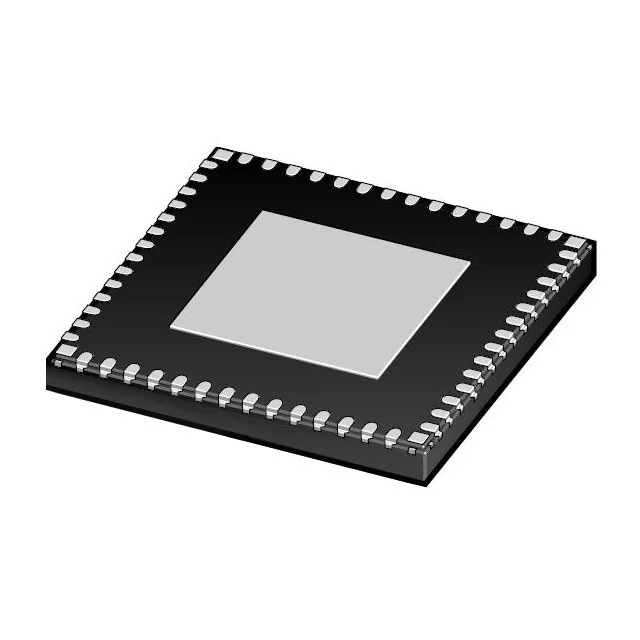
TMS320VC5416PGE160 is a fixed point digital signal processor from the C54x generation in a LQFP body of 144 pins. It runs at 160 MIPS from a 1.6 V core with 3.3 V input and output, and it carries 128K by 16 bits of on-chip RAM split evenly between dual access and single access blocks. The PGE160 order code is the 144-pin LQFP at the 160 MIPS speed grade.
Order code and package
| Order code | TMS320VC5416PGE160 |
| Package | 144-pin LQFP, PGE body |
| Packing | tray or reel according to the addendum line |
| Core | C54x fixed point DSP at 160 MHz, 160 MIPS |
| Memory | 64K words of dual access RAM and 64K words of single access RAM |
| Supply | 1.6 V core at 160 MIPS, 3.3 V input and output |
| Speed grade | 160 in the order code, the faster of the two grades |
Electrical parameters that decide the application
| Instruction cycle | 6.25 ns at 160 MHz |
| On-chip RAM | 128K by 16 bits in total, 64K DARAM and 64K SARAM |
| External bus | parallel interface for asynchronous memory and peripherals |
| Serial | two multichannel buffered serial ports and a time division multiplexed port |
| Host port | an 8-bit host interface for a controller |
| Timers | two timers plus a watchdog |
| Boot | loaders in ROM for host, serial and external memory boot |
Family variants and how they differ
| PGE160 | 144-pin LQFP at 160 MIPS with a 1.6 V core |
| PGE120 | the 120 MIPS grade at a 1.5 V core |
| VC5416 | the C54x generation with 128K words of RAM |
| VC5410 | the smaller memory member of the same generation |
Points to check before this part goes on a BOM
The 160 MIPS grade needs a 1.6 V core while the 120 MIPS grade runs at 1.5 V. The two grades are different order codes and the core regulator has to match: a board built for the 120 MIPS part with a 1.5 V supply will not run the faster device at its rated speed, and a 1.6 V supply on a part specified at 1.5 V shortens its life.
128K words of on-chip RAM is the reason this device was popular for audio and modem work: a signal processing buffer could live entirely on chip, with no external memory bus traffic and no wait states. Half of that RAM is dual access, which means the core can read and write in the same cycle, and that is where the tightest loops belong.
The C54x core is fixed point with a 40-bit accumulator, so products in this generation were written in assembly or with a fixed point library. Code from that era does not port to a C55x or C28x part without rework, which is why so many of these boards are maintained rather than replaced.
The host port interface lets a microcontroller or a small processor load the DSP and exchange data without taking over its bus. In a legacy product that is often the link to the system controller, and it is the part of the board most likely to be undocumented when the original engineers have moved on.
The boot loaders in ROM load code from the host port, from a serial port or from external memory at reset, selected by the state of the interrupt and flag pins. A board that boots from an external EPROM therefore depends on the strapping of those pins, and a replacement device with a different ROM revision can change the behaviour.
This generation is legacy and supply comes from allocation and the aftermarket. A lot with no traceable date code cannot be assumed to match the revision the firmware was validated on, and the C54x silicon revisions differ in the errata that affect the serial ports. Buyers should ask for the revision marking rather than the device number alone.
The 144-pin LQFP at 0.5 mm pitch is reworkable with hot air, which is why these boards are still repaired. The risk in a repair is not the package but the parts around it: the core regulator and the crystal circuit are usually the components that fail with the DSP, and replacing only the DSP can leave a board that still does not run.
Power sequencing matters here in a way it does not on later single rail parts. The 3.3 V input and output rail and the 1.6 V core have a specified order, and a board that brings them up together can draw excessive current at reset. Repair benches that power a bare board from a bench supply should follow the sequence in the data sheet.
The 40-bit accumulator in the C54x core is what made fixed point audio and control code practical without saturation logic on every operation. Code written for this generation relies on that width, and a port to a 32-bit core changes the scaling in every multiply accumulate chain.
The dual access RAM allows the core to read an operand and write a result in the same cycle, which is why the tightest filter loops are placed there. The single access RAM is larger and cheaper in silicon, and a buffer that lives in it costs one extra cycle per access, which matters only when the loop is already at the limit.
The host port interface is an 8-bit window into the DSP memory that a controller can read and write. On a legacy board it is usually the link to the system processor, and it is the part of the board that is least likely to be documented when the original team has moved on.
Speed grade and core voltage are coupled: 160 MIPS needs 1.6 V and 120 MIPS runs at 1.5 V. A repair that fits the faster device on a board built for the slower grade works, but only at the slower clock; a board built for the faster grade with the slower device fitted will fail at temperature or at once.
The generation is supported by an old tool chain, and a product that is still maintained needs the matching compiler version rather than the newest one. A rebuild with a different compiler can change the timing of hand tuned loops, so the tool version belongs in the product's configuration record. Repair benches that still support these boards should keep a known good board as a reference, because the failure modes of a 15 year old assembly are usually mechanical and thermal rather than a single dead device, and a comparison against a working board finds them faster than reading a drawing. The reference board also carries the working firmware, which is the item that is hardest to reconstruct once the original tool chain is gone.
Where this order code fits
It is used in legacy audio equipment, modems, instrumentation and industrial signal processing boards that were built around the C54x generation. Teams comparing it with a neighbouring part start from our MCU Cross Reference page, and teams replacing a part that has gone end of life start from the Obsolete Part Cross Reference Hub page.
Questions buyers ask
What speed is the 160 suffix? 160 MIPS at 160 MHz with a 6.25 ns instruction cycle and a 1.6 V core. The 120 suffix is the slower grade at 1.5 V.
How much RAM is on chip? 128K by 16 bit words, split 64K of dual access and 64K of single access RAM.
Can it be replaced by a C55x part? Not as a drop-in. The core, the instruction set and the peripherals differ, so a replacement is a firmware and board project rather than a part substitution.
Is it still available? It is a legacy device. Supply comes from allocation and the aftermarket, so a support plan should include a last time buy and a documented alternative.
SUPERB holds and sources this line for production and repair demand, quoted against the exact ordering string with date codes, packing and country of origin stated on the offer. When a part is moving, the Component Obsolescence Management page sets out the checks that keep a substitute from failing on the bench.