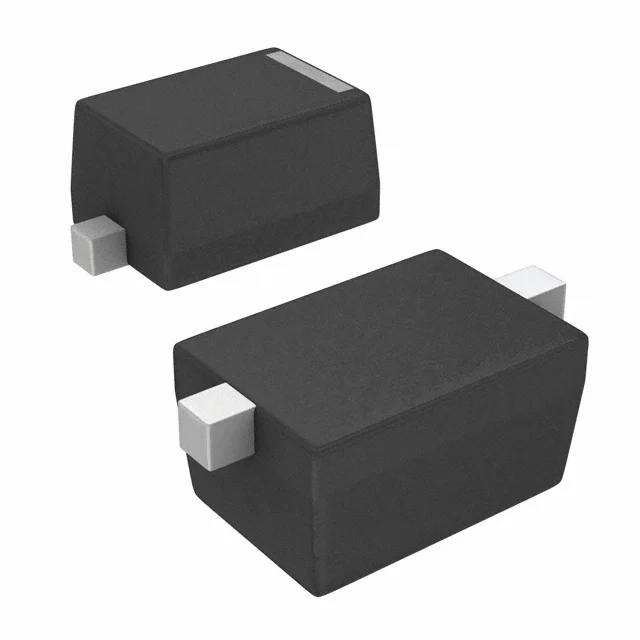

SN65HVDA1040BQDRQ1
Brand: Texas Instruments
Texas Instruments SN65HVDA1040BQDRQ1 is a power management component designed for AI Servers & Low-Altitude Economy (Drone and UAV) and related applications. In stock at Superb Automation — request a quote for competitive pricing and fast delivery.
Product Specifications
SN65HVDA1040BQDRQ1
Texas Instruments — Power Management & Signal Chain
Product Overview
The SN65HVDA1040BQDRQ1 from Texas Instruments is a power management / signal chain IC delivering high efficiency, precision regulation, and robust protection. Texas Instruments (TI) is a global leader in analog ICs, power management solutions, and embedded processors.
Superb Automation partners with leading brands including Qorvo, TI, ADI, XILINX, NVIDIA, Intel, ST, MACOM, Renesas, and Coilcraft to provide complete BOM and supply-chain solutions.
Key Features
- High-efficiency power conversion with low quiescent current
- Wide input voltage range with precision output regulation
- Integrated over-current, over-temperature, and short-circuit protection
- Small footprint packaging for space-constrained designs
- AEC-Q100 qualified options available for automotive applications
- Flexible sequencing and soft-start control
Key Specifications
| Input Voltage | V |
| Output Voltage | V |
| Output Current | A |
| Switching Frequency | kHz |
| Efficiency | % |
| Quiescent Current | µA |
| Topology | — |
| Package | — |
| Operating Temp | °C |
| Protection | — |
Applications
Industrial Automation
Automotive Electronics
Telecom Infrastructure
Server & Data Center Power
Medical Devices
Consumer Electronics
Request Quote — In Stock, 100% New & Original, Full Warranty
SN65HVDA1040BQDRQ1: an EMC optimised automotive CAN transceiver
The SN65HVDA1040BQDRQ1 is a high speed CAN transceiver built for automotive use, qualified to AEC-Q100 grade 0 at minus 40 C to 125 C ambient, and compliant with ISO 11898-2 and ISO 11898-5. It carries differential transmit and receive at rates up to 1 Mbps, includes a low current standby mode with bus wake up, and is published as GIFT/ICT compliant, which is the test suite the automotive industry uses for EMC behaviour.
The protection set is stated in the automotive vocabulary rather than the industrial one: HBM level 3A on all pins except the bus pins, level 3B on the bus pins, and CDM level C6. Standby current is under 12 uA maximum, undervoltage lockout and thermal shutdown are included, and the device is rated to work with common mode chokes without the choke and the bus lines fighting each other during a short.
Key data for the SN65HVDA1040BQDRQ1
| Qualification | AEC-Q100 grade 0, minus 40 C to 125 C ambient, the widest automotive grade in the family |
| Standards | ISO 11898-2 high speed CAN and ISO 11898-5, GIFT/ICT compliant for EMC |
| Rate | Signalling rates up to 1 Mbps, differential transmit and receive |
| ESD | HBM level 3A on the general pins and 3B on the bus pins, CDM level C6, rated per AEC Q100-002 |
| Standby | Low current standby with bus wake up, under 12 uA maximum, with undervoltage lockout and thermal shutdown |
| Supply | 5 V rail, recessive supply current in the tens of microamps, dominant drive per the ISO template |
Body, marking and reel data
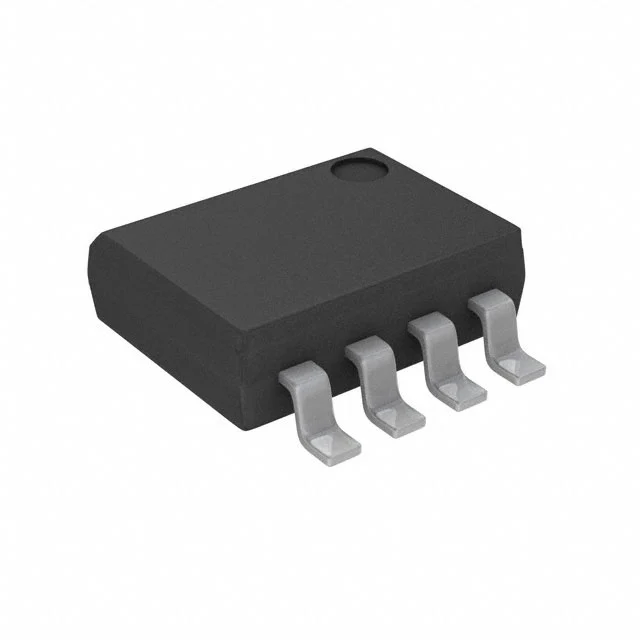
| Body | D, SOIC 8 at 4.90 mm by 3.91 mm, the CAN transceiver outline used across the automotive families |
| Reel | 2500 pieces on a large reel for the plain and .A rows, carrier tape 12.4 mm, 330 mm reel |
| Marking | A1040B on both published rows |
| Handling | Moisture level 1, 260 C peak, unlimited floor life on the .A row |
| Status | Both rows active and in production |
What the EMC specification buys a module team
A CAN transceiver that meets the electrical standard still has to pass the vehicle EMC tests, and those tests are run on the harness, not on the die. The GIFT/ICT compliance and the 1040B revision's edge shaping are what let a module pass radiated emissions and immunity without a choke in every case, and with a defined behaviour when a choke is present and the bus is shorted to a DC level. The datasheet states the tested short condition with a choke fitted, which is the detail a module integrator needs. The loop delays published for the recessive to dominant and dominant to recessive paths matter when a module also carries a watchdog that times the bus. A node that measures the round trip against a fixed number has to include those two figures, and they are printed per direction rather than as a single number.
The standby behaviour matters for parked vehicles. A module that draws milliamps through a long park drains the battery, so the transceiver has to sit under 12 uA and still wake on the first bus frame. The wake up path is part of the transceiver, not the controller, because the controller is asleep and its supply may be off. The wake filter rejects short glitches so a discharge on the harness does not bring a whole network out of sleep, and the same filter sets the shortest valid wake pulse the module can rely on.
Questions we get when this code is on a BOM
The first question is about grade. Grade 0 at 125 C ambient is the top of the range and covers most under bonnet positions except the hottest ones. The same family also publishes lower grade members, and a build that mixes them across a network is electrically fine but not equal in temperature margin. We ask where the module sits before confirming the grade.
The second question is about the standby pin polarity and the wake filter. The STB pin is active high on this device, and the wake detection has a filter that rejects short bus glitches. A controller that expects a different polarity will either never sleep or never wake, and both failures look like a software fault from the outside.
How SUPERB supports this line item
We quote the SN65HVDA1040BQDRQ1 with the grade, the marking and the reel quantity stated, and we hold the family so a grade change does not become a sourcing project. Customers selecting a CAN transceiver for a vehicle module can use our CAN bus transceiver selection page, which compares grade, standby current and wake behaviour across the parts we carry.
Where a module has to be re qualified after a part change, the date code management page describes how we present date codes and traceability so the qualification file stays complete.