
SN65HVDA100QDRQ1
Brand: Texas Instruments
Texas Instruments SN65HVDA100QDRQ1 is a power management component designed for AI Servers & Low-Altitude Economy (Drone and UAV) and related applications. In stock at Superb Automation — request a quote for competitive pricing and fast delivery.
Product Specifications
SN65HVDA100QDRQ1
Texas Instruments — Power Management & Signal Chain
Product Overview
The SN65HVDA100QDRQ1 from Texas Instruments is a power management / signal chain IC delivering high efficiency, precision regulation, and robust protection. Texas Instruments (TI) is a global leader in analog ICs, power management solutions, and embedded processors.
Superb Automation partners with leading brands including Qorvo, TI, ADI, XILINX, NVIDIA, Intel, ST, MACOM, Renesas, and Coilcraft to provide complete BOM and supply-chain solutions.
Key Features
- High-efficiency power conversion with low quiescent current
- Wide input voltage range with precision output regulation
- Integrated over-current, over-temperature, and short-circuit protection
- Small footprint packaging for space-constrained designs
- AEC-Q100 qualified options available for automotive applications
- Flexible sequencing and soft-start control
Key Specifications
| Input Voltage | V |
| Output Voltage | V |
| Output Current | A |
| Switching Frequency | kHz |
| Efficiency | % |
| Quiescent Current | µA |
| Topology | — |
| Package | — |
| Operating Temp | °C |
| Protection | — |
Applications
Industrial Automation
Automotive Electronics
Telecom Infrastructure
Server & Data Center Power
Medical Devices
Consumer Electronics
Request Quote — In Stock, 100% New & Original, Full Warranty
SN65HVDA100QDRQ1: an automotive LIN physical interface with wake up
The SN65HVDA100QDRQ1 is the LIN physical layer for a vehicle node: it turns the single wire LIN bus into a logic level RXD stream and drives the bus from TXD through a current limited, wave shaped output. It is AEC-Q100 grade 1 qualified, it meets LIN 2.0, 2.1, 2.2, 2.2A and the ISO 17987-4 electrical physical layer specification, and it operates from a supply between 5 V and 27 V, which covers a cranking battery and a load dump adjacent rail.
The LIN rate is 20 kbps at the top of the specification, with high speed receive capability beyond it, and the internal pull up is a 30 kohm resistor in series with a diode, so a responder node needs no external components on the bus. A commander node adds a 1 kohm pull up with its own diode, as the specification requires. Sleep mode keeps the wake up circuits alive at very low current and can be left by a bus edge, by the EN pin or by a wake request on RXD.
Key data for the SN65HVDA100QDRQ1
| Qualification | AEC-Q100 grade 1, minus 40 C to 125 C ambient, automotive release rather than an industrial equivalent |
| Standards | LIN 2.0, 2.1, 2.2, 2.2A and ISO 17987-4 electrical physical layer |
| Supply | 5 V to 27 V DC extended operation, with sleep mode current in the low microamp class |
| Bus | Internal 30 kohm pull up with series diode for responder nodes, 20 kbps transmit, high speed receive |
| Wake up | From the LIN bus edge, from the EN pin, and a wake request reported on RXD with source recognition on TXD |
| Interface | TXD and RXD compatible with 5 V and 3.3 V controllers, high electromagnetic compatibility |
Body, marking and reel data
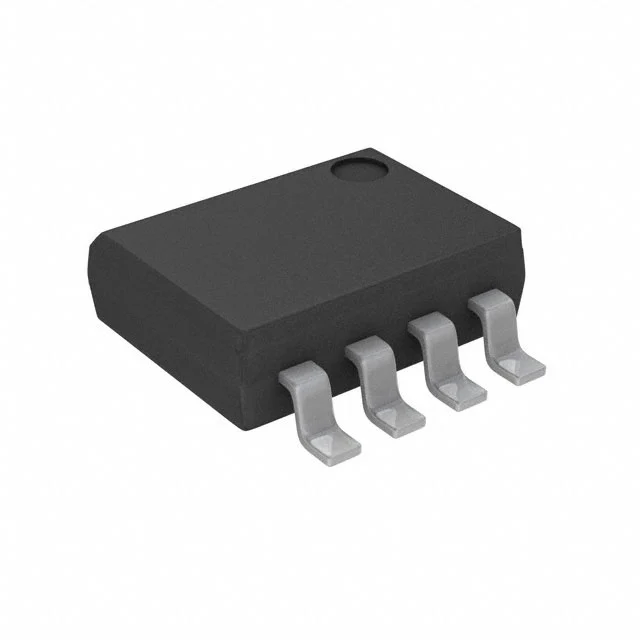
| Body | D, SOIC 8 at 4.90 mm by 3.91 mm, the standard LIN transceiver outline |
| Reel | 2500 pieces on a large reel for the plain, .A and .B rows, carrier tape 12.4 mm |
| Marking | A100Q on every published row of this string |
| Handling | Moisture level 2, 260 C peak, 1 year floor life, so an opened reel needs tracking |
| Status | All three rows are active and in production, which is worth stating because several older LIN parts are not |
What a LIN node needs and this part supplies
A LIN node is a small controller, a transceiver and a handful of passives on a two wire bus that also carries power in many harnesses. The transceiver has to shape its edges to pass the EMC limits of the vehicle, survive a short to battery, and go to sleep without losing the ability to wake on the next bus frame. The SN65HVDA100QDRQ1 does all three in an 8 pin body, and it reports which source woke it so the controller can decide whether to answer immediately or wait.
The 5 V to 27 V supply window is the detail that matters in a vehicle. A 12 V rail that sags to 5 V during a cold crank still lets the part transmit, and a jump start that pushes the rail to 27 V is inside the rated window rather than in the protection clamp. That is the difference between a node that survives a workshop visit and a node that comes back as a warranty claim. The wave shaping on the driver is the other half: a LIN edge that is too fast radiates and one that is too slow fails the bit timing, so the vendor shapes it inside the body and the module needs no series resistor to pass the EMC limits.
Questions we get when this code is on a BOM
The first question is about pull up components. A responder node in a LIN cluster uses the internal 30 kohm pull up and needs nothing external, while a commander node has to add a 1 kohm resistor and a diode. Boards copied from a commander reference sometimes carry the external resistor into a responder position, which loads the bus and shifts the recessive level. We ask which role the node plays before confirming the BOM line.
The second question is about the grade. This is a grade 1 part rated to 125 C ambient, which suits an engine bay adjacent module but not the exhaust side of the firewall. Where the ambient is higher, the answer is a different package and a different conversation, and we say so rather than quoting this part into a temperature it cannot hold.
How SUPERB supports this line item
We supply the SN65HVDA100QDRQ1 for automotive and transport builds with the qualification, the moisture level and the reel quantity stated on the offer. Customers building LIN nodes can combine the transceiver with the connector and the protection diodes through our one stop BOM sourcing route.
Where a node is being moved from an older LIN part that is no longer available, our obsolete part cross reference hub collects the pull up, wake up and supply window checks we run before proposing a replacement.