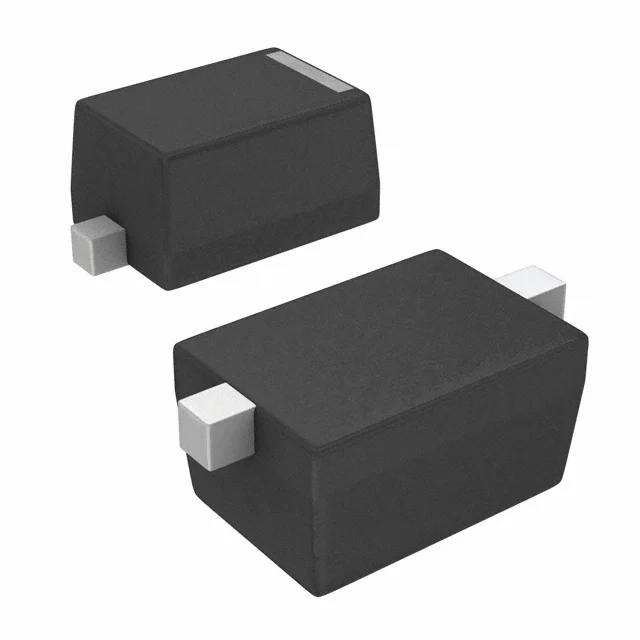

SN65HVD75DR
Brand: Texas Instruments
Texas Instruments SN65HVD75DR is a power management component designed for AI Servers & Low-Altitude Economy (Drone and UAV) and related applications. In stock at Superb Automation — request a quote for competitive pricing and fast delivery.
Product Specifications
SN65HVD75DR
Texas Instruments — Power Management & Signal Chain
Product Overview
The SN65HVD75DR from Texas Instruments is a power management / signal chain IC delivering high efficiency, precision regulation, and robust protection. Texas Instruments (TI) is a global leader in analog ICs, power management solutions, and embedded processors.
Superb Automation partners with leading brands including Qorvo, TI, ADI, XILINX, NVIDIA, Intel, ST, MACOM, Renesas, and Coilcraft to provide complete BOM and supply-chain solutions.
Key Features
- High-efficiency power conversion with low quiescent current
- Wide input voltage range with precision output regulation
- Integrated over-current, over-temperature, and short-circuit protection
- Small footprint packaging for space-constrained designs
- AEC-Q100 qualified options available for automotive applications
- Flexible sequencing and soft-start control
Key Specifications
| Input Voltage | V |
| Output Voltage | V |
| Output Current | A |
| Switching Frequency | kHz |
| Efficiency | % |
| Quiescent Current | µA |
| Topology | — |
| Package | — |
| Operating Temp | °C |
| Protection | — |
Applications
Industrial Automation
Automotive Electronics
Telecom Infrastructure
Server & Data Center Power
Medical Devices
Consumer Electronics
Request Quote — In Stock, 100% New & Original, Full Warranty
SN65HVD75DR: 3.3 V half duplex RS-485 transceiver at 20 Mbps with IEC level bus protection
SN65HVD75DR is a differential driver and receiver in an eight pin body, built for 20 Mbps over short cable runs with the bus pins rated for contact discharge and fast transient bursts in a SOIC body of 8 pins. It runs from a 3 V to 3.6 V supply, carries 20 Mbps, presents a load that allows more than 200 nodes, and survives 15 kV human body model, 12 kV of IEC contact discharge and 4 kV of fast transient burst on the bus pins. The receiver holds 80 mV of hysteresis, the quiescent current stays under 1 mA, standby falls below 2 uA, the logic inputs tolerate 5 V, and the temperature range reaches 125 degrees.
Order code and package
| SN65HVD75DR | SOIC D body, 8 pins, 2500 pieces on a large reel, Active in the addendum dated 10 August 2026, NIPDAU finish, moisture level 1 with no floor life limit, marking HVD75, minus 40 to plus 125 degrees |
| SN65HVD75D | the SOIC D body in a 75 piece tube, for the boards that were laid out around the wider body and for the sample orders that do not justify a reel |
| SN65HVD75DRBR | the VSSOP DRB body on a 2500 piece large reel, marking HVD75, for the boards that were laid out for the 3.00 mm by 3.00 mm body rather than the SOIC |
| SN65HVD72 and SN65HVD78 | the other two members of the same document, 250 kbps and 50 Mbps respectively, in the same eight pin bodies with the same protection, so the three strings differ in rate and nothing else |
| The G4 rows | the lead free declaration rows of the same reels, printed with the same finish and the same quantity, which is the string a material declaration has to name |
Electrical parameters that decide the application
| Signalling rate | up to 20 Mbps, which is the middle member between 250 kbps and 50 Mbps and the one for a cabinet internal link rather than a field bus |
| Bit time | 50 ns or longer, which is what a 20 Mbps link needs and what the cable and the termination have to be able to preserve |
| Unit loading | more than 200 nodes connected, which is what one eighth of a unit load allows and the number to quote against a multi drop harness |
| Driver differential output | 1.5 V minimum into a 54 ohm load, the RS-485 template, measured across the temperature range |
| Receiver hysteresis | 80 mV, which is the largest figure in this family and the reason the part is chosen for a noisy cabinet |
| ESD and transient | more than 15 kV human body model, more than 12 kV of IEC 61000-4-2 contact discharge and more than 4 kV of IEC 61000-4-4 fast transient burst on the bus pins and ground |
| Supply current | below 1 mA quiescent during operation, which is low for a transceiver and is what allows a port to stay powered between polls |
| Standby current | below 2 uA with the driver and the receiver disabled, so a battery backed node can sit in standby for months |
| Logic levels | inputs tolerant to 5 V while the device runs from 3.3 V, so a 5 V controller can drive it without a level shifter |
| Common mode | the wide common mode window the family is built around, which is what keeps a receiver working across a large ground potential difference on a long run |
| Power up behaviour | glitch free on the bus pins during power up and power down, so a hot plugged card does not put a false frame on the bus |
| Temperature | minus 40 to plus 125 degrees, which is the widest range in the RS-485 families here and the one that suits an enclosure without a fan |
Family variants and how they differ
| 75 against 72 | 20 Mbps against 250 kbps in the same body with the same protection. The slow member is for a long line, the fast one for a short link, and the two are not interchangeable on an existing cable |
| 75 against 78 | 50 Mbps against 20 Mbps, both in the same body. The faster member needs a shorter cable and a tighter termination, so the choice follows the channel rather than the data sheet |
| Against the HVD1477 family | full duplex at 50 Mbps with 30 kV of human body model protection, at a higher price and in a larger body. Two wire links that need the speed but not the second pair stay on this family |
| Against the HVD1794 | 70 V fault protection and a cable invert pin at 115 kbps. The protection is the differentiator, and a cabinet where a bus can meet a supply rail needs that part rather than this one |
| Against an isolated transceiver | an ISO3080 class part adds a barrier inside the package for a link between two grounds. The cost difference is four to six times, which is the price of removing the common mode problem entirely |
Points to check before this part goes on a BOM
The rate and the cable length are one specification. 20 Mbps into a 50 ns bit time needs an edge that arrives intact, and a 100 m run of ordinary twisted pair rounds that edge until the eye closes. The practical length for this member is tens of metres, and a customer who needs 500 m at 20 Mbps needs a repeater or the slower member rather than a different transceiver.
The 80 mV of hysteresis is the number that earns this part its place in a cabinet. Contactors, drives and relays put common mode noise on the bus, and a receiver with 50 mV of hysteresis produces an error per switching event where one with 80 mV does not. The difference is not visible on a quiet bench and is the whole story on a machine that runs a motor.
The protection ratings are for the bus pins and ground, and they are transient ratings rather than continuous ones. 12 kV of contact discharge is a service event and 4 kV of fast transient burst is a switching event; neither of them is a bus shorted to a supply for a minute. A cabinet where that can happen needs the fault protected member, and quoting this part into that slot is the substitution that fails in the field.
The 5 V tolerant logic inputs remove a level shifter from a mixed board, and they also mean the transceiver can be driven by a 5 V controller while the bus itself runs at 3.3 V levels. That combination is common in a retrofit, and it works because the differential bus levels do not depend on the supply. What has to be checked is the recessive common mode, which differs slightly between a 3.3 V and a 5 V node on the same bus.
The two packaging rows for the same silicon are a purchasing hazard. DRBR is a 2500 piece reel and DGKR is an 80 piece tube, and both are VSSOP. A purchase order that carries the wrong suffix gets the wrong quantity rather than the wrong part, which is a quieter and more expensive mistake. The reel count belongs in the offer.
Quiescent current under 1 mA and standby under 2 uA are the two figures that decide whether a node can be permanently powered. A 3.3 V rail with 200 mA available powers two hundred of these ports at the quiescent figure and far more in standby, which is the arithmetic a system architect wants before choosing the rail. It is worth putting in the offer rather than leaving to be discovered.
What changed between the older RS-485 parts and this family
The older parts needed an external transient array to reach 12 kV of contact discharge, and the array added capacitance to the bus. The integrated protection in this family reaches the same level with the capacitance of the pin itself, which is a smaller load and therefore more nodes or a longer cable for the same driver.
The second change is the quiescent current. A 5 V SN75176 draws around 40 mA where this part draws under 1 mA, and that difference is what lets a bus stay biased and monitored on a low power rail instead of being switched off between polls.
Reading the order code
SN65HVD75 reads as the family, HVD for the transceiver and 75 for the 20 Mbps member. The D at the end is SOIC, DRB is VSSOP on a reel, DGK is VSSOP in a tube. The rate is in the number rather than in a suffix, which is why a substitution between the 72, the 75 and the 78 is a substitution of part number and has to be quoted as one.
Where this order code fits
Factory automation, telecommunications infrastructure and motion control are the stated applications, and all three run a bus inside a cabinet where drives and contactors are the noise source. Teams comparing it with a neighbouring part start from our CAN Bus Transceiver Selection page, and teams replacing a part that has gone end of life start from the Pin to Pin Cross Reference page.
Questions buyers ask
How far can it run at 20 Mbps? Tens of metres on ordinary twisted pair. The 50 ns bit time does not survive hundreds of metres of cable, so a long run needs the slower member or a repeater.
Can a 5 V controller drive it directly? Yes. The logic inputs are tolerant to 5 V while the device runs from 3.3 V, so no level shifter is needed.
Does it survive a bus shorted to a supply? The ratings cover transient events, not a sustained short. A cabinet where that can happen needs the fault protected member.
SUPERB holds and sources this line for production and repair demand, quoted against the exact ordering string with date codes, packing and country of origin stated on the offer. When a part is moving, the Date Code Management page sets out the checks that keep a substitute from failing on the bench.