
BQ298019RUGR
Brand: Texas Instruments
Texas Instruments BQ298019RUGR is a power management component designed for AI Servers & Low-Altitude Economy (Drone and UAV) and related applications. In stock at Superb Automation — request a quote for competitive pricing and fast delivery.
Product Specifications
BQ298019RUGR
Texas Instruments — Power Management & Signal Chain
Product Overview
The BQ298019RUGR from Texas Instruments is a power management / signal chain IC delivering high efficiency, precision regulation, and robust protection. Texas Instruments (TI) is a global leader in analog ICs, power management solutions, and embedded processors.
Superb Automation partners with leading brands including Qorvo, TI, ADI, XILINX, NVIDIA, Intel, ST, MACOM, Renesas, and Coilcraft to provide complete BOM and supply-chain solutions.
Key Features
- High-efficiency power conversion with low quiescent current
- Wide input voltage range with precision output regulation
- Integrated over-current, over-temperature, and short-circuit protection
- Small footprint packaging for space-constrained designs
- AEC-Q100 qualified options available for automotive applications
- Flexible sequencing and soft-start control
Key Specifications
| Input Voltage | V |
| Output Voltage | V |
| Output Current | A |
| Switching Frequency | kHz |
| Efficiency | % |
| Quiescent Current | µA |
| Topology | — |
| Package | — |
| Operating Temp | °C |
| Protection | — |
Applications
Industrial Automation
Automotive Electronics
Telecom Infrastructure
Server & Data Center Power
Medical Devices
Consumer Electronics
Request Quote — In Stock, 100% New & Original, Full Warranty
BQ298019RUGR: a sibling code that shares a printed row
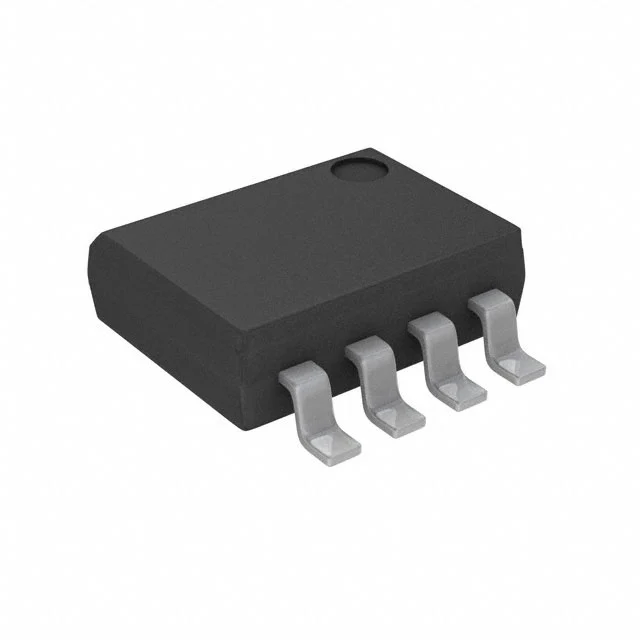
The BQ298019RUGR is a single cell high side protector in the same 8 pin X2QFN body as the rest of the BQ298xx family, and in the vendor comparison table it shares one printed row with the BQ298018. That row gives 4.500 V overvoltage with a 1.00 second delay, 2.900 V undervoltage with a 20 millisecond delay, minus 18 mV charge overcurrent, 30 mV discharge overcurrent and a 40 mV short circuit trip at 250 microseconds.
The shared row is worth understanding before a purchase order is raised. The table prints the two codes in one cell because they were added to the family at different revisions and their protection thresholds are the same; what differs is an internal option that the table does not print as a separate line. The addendum does separate them, by orderable string, by marking and by reel, and that is the record to use when the two have to be told apart on a line.
Everything else is the family: a charge pump driven high side NFET stage, a sense resistor down to 1 milliohm, plus or minus 1 mV on the overcurrent comparators, an overtemperature trip, and the CTR pin that can override the driver or take an external thermistor.
Key data for the BQ298019RUGR
| Function | Single cell high side protection with an integrated charge pump FET driver |
| Overvoltage | 4.500 V, 1.00 second delay, accuracy plus or minus 10 mV |
| Undervoltage | 2.900 V, 20 millisecond delay, accuracy plus or minus 20 mV |
| Charge overcurrent | Minus 18 mV, 8 millisecond delay, accuracy plus or minus 1 mV |
| Discharge overcurrent | 30 mV, 16 millisecond delay, accuracy plus or minus 1 mV |
| Short circuit | 40 mV, 250 microsecond delay, accuracy plus or minus 5 mV |
| Sense resistor | Down to 1 milliohm |
| Temperature protection | Fixed overtemperature trip, CTR pin for an external thermistor |
| Zero volt charging | Enabled on the BQ2980 members |
| Supply current | 4 microamps normal, 0.1 microamps maximum in shutdown |
| Package | X2QFN, 8 pins, 1.5 mm square body, 1.69 mm land pattern |
| Ordering | 3000 pieces on a large tape and reel, moisture level 1 at 260 C, marking 5I on the plain row |
What a buyer should put on the purchase order
Name the full orderable string, the reel size and the marking. The plain row of BQ298019RUGR is listed at 3000 pieces on a large tape and reel with marking 5I, and the .A row of the same string prints marking 15 with the status and quantity columns blank in the text extract. A distributor quoting from one row and shipping from the other is not a defect, and it is a difference the line will see on the reel label.
Ask for the revision history as well. The document records that the BQ298019 moved from preview to production data in a later revision, which means an older copy of the document in a supplier's file may describe it as a preview part. The current revision lists it as active and in production, and that is the status a purchasing decision should rest on.
If a build is being qualified against this code, qualify it against the actual string. A qualification report on the 018 does not transfer to the 019 automatically, because the internal option that separates them is exactly the kind of thing that changes behaviour at the edge of a threshold.
The family grid in the comparison table
The BQ298xx table prints its options as a grid with ranges at the bottom: overvoltage from 3.750 V to 5.200 V, undervoltage from 2.200 V to 3.000 V, charge overcurrent from minus 4 mV to minus 64 mV, discharge overcurrent from 4 mV to 64 mV, short circuit from 10 mV to 200 mV, overtemperature at a fixed 75 C or 85 C, and CTR or PTC pull up options of 1.5, 5 or 8 megohms. Each orderable code selects one combination.
That range explains why two codes that look similar on the first four rows can behave differently in a product. A 4 mV discharge overcurrent trip with a 1 milliohm sense resistor is 4 A, and a 64 mV trip is 64 A, and both are in the same family with the same body. The code is the specification.
It also explains why substituting one code for another on the basis of the first row is a mistake. The overvoltage numbers may match, and the current numbers may not.
Where it fits in a build
Single cell products with fast charging and a fixed system ground: handsets, tablets, power banks and wearables. The high side arrangement keeps the protection invisible to the rest of the board, and the 1 milliohm sense option keeps the loss low at high charge current.
When the pack carries this protector and the incoming inspection has to prove the marking and the reel match the purchase order, the incoming inspection plan page covers the checks we run at the receiving dock.
The sourcing side of this part is covered on the purchase order follow up. For a string that prints two rows with different markings, that page covers how the order is tracked and confirmed.
Questions we get on this code
Is the 019 a drop in replacement for the 018? The body and the pinout match, and the protection thresholds printed in the table match. The internal option does not, so treat it as a different part and confirm the behaviour on the bench rather than on the family name.
Which marking should the reel show? 5I on the plain row and 15 on the .A row, as printed. A reel that shows neither is worth a query before it goes on the line.
Does the part support 0 volt charging? The BQ2980 members do, and this code is one of them. A pack that must not revive a deeply discharged cell needs a BQ2982 member instead.
Can it drive two FETs in parallel? The driver is sized for one gate. Two FETs in parallel double the gate charge, and the charge pump has to be checked against that before the arrangement is used.