
VBI1202K
Brand: VBsemi
VBsemi VBI1202K is a discrete semiconductors component designed for AI Servers & Low-Altitude Economy (Drone and UAV) and related applications. In stock at Superb Automation — request a quote for competitive pricing and fast delivery.
Product Specifications
VBI1202K
VBsemi — Discrete & Power Semiconductors
Product Overview
The VBI1202K from VBsemi is a discrete power semiconductor delivering efficient switching and power conversion. VBsemi (微碧半导体) specializes in discrete MOSFETs, power transistors, and protection devices for power supplies, motor control, and consumer electronics.
Superb Automation partners with leading brands including Qorvo, TI, ADI, XILINX, NVIDIA, Intel, ST, MACOM, Renesas, and Coilcraft to provide complete BOM and supply-chain solutions.
Key Features
- Low Rds(on) for minimal conduction losses in power switching
- Fast switching speed with low gate charge for high-frequency operation
- Avalanche-rated for robust operation under inductive load conditions
- High junction temperature rating for demanding environments
- Logic-level gate drive compatible for simplified design
- RoHS and AEC-Q101 qualified options available
Key Specifications
| Vds / Vce | V |
| Id / Ic | A |
| Rds(on) / Vce(sat) | mΩ |
| Qg | nC |
| Technology | — |
| Package | — |
| Configuration | — |
| Mounting | — |
Applications
Switch-Mode Power Supplies
Motor Drives & Inverters
Battery Management Systems
DC-DC Converters
Load Switching
Automotive Power Distribution
Request Quote — In Stock, 100% New & Original, Full Warranty
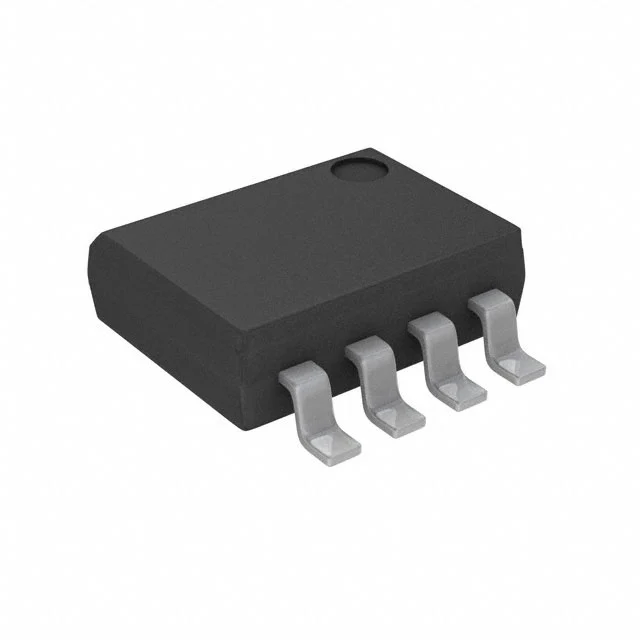
VBI1202K: 200 V and 1 A in a SOT89
The VBI1202K is a single N channel MOSFET in a SOT89 body, rated at 200 V drain to source, plus or minus 20 V on the gate, a 3 V threshold, 1 A of drain current and 1600 milliohm at a 10 V gate. The resistance is high and the current is low, and both are the point of the part.
200 V in a SOT89 is unusual. The tab is the drain and it sits close to the source lead, so the package is holding 200 V across a gap of about a millimetre of moulding. That is why the part is limited to an amp: the die is small to keep the package within its insulation, and a small die at 200 V has a high resistance.
The application is a startup circuit, a high voltage level shift, a small auxiliary supply, a piezo driver or a protection clamp on a 110 V rail. In each case the current is tens of milliamps to an amp, and the voltage is what makes the part necessary.
Key data for the VBI1202K
| Configuration | Single N channel |
| Package | SOT89, three leads and a drain tab |
| VDS | 200 V |
| VGS | Plus or minus 20 V |
| Vth | 3 V typical |
| ID | 1 A |
| RDS(on) at 10 V | 1600 milliohm |
| Technology | Trench |
| Loss at 0.2 A | 0.064 W through the channel |
| Loss at 1 A | 1.6 W through the channel |
| Creepage | 200 V across a sub millimetre gap, coat the assembly where humidity is high |
| Body diode | Intrinsic, cathode at the drain |
Why 1.6 ohm and 1 A belong together
At 1 A and 1600 milliohm the loss is 1.6 W, which a SOT89 tab cannot remove without a large pad. At 200 mA the loss is 64 mW and the part is comfortable on its own tab. That ratio is the working range: this is a few hundred milliamp part that can take an amp for a short time.
The resistance is the price of the voltage. A 200 V die needs an epitaxial layer thick enough to stand the field, and the drift region that gives the breakdown voltage is the same region that adds resistance. A die small enough to fit a SOT89 at 200 V therefore lands over an ohm, and no amount of gate drive changes that.
Where the current is higher, the answer is a bigger body: a 5 by 6 DFN at 200 V reaches tens of milliohms and tens of amps, and a TO252 at 250 V reaches 380 milliohm. The SOT89 part is for the small end, where board area is the constraint.
There is also a transient question at this voltage. A 200 V part on a 150 V bus with a fast edge sees a drain spike that depends on the leakage inductance of the startup path, and a small die has a small avalanche capability. Nothing on the catalogue page states the energy it can absorb, so a circuit that relies on the die to clamp the spike is relying on an unstated figure. A resistor and a capacitor across the switch, or a diode clamp, is the ordinary answer, and both are bigger than the part itself and carry their own leakage at this voltage plus a temperature coefficient over the range, which is worth saying before the part is chosen for its size, since a clamp network can easily be larger than the switch it protects.
High voltage in a small body: leakage and creepage
The pad sits at the switching node and the source and gate leads are next to it. At 200 V a surface film of flux residue or humidity can conduct a few microamps, which is enough to upset a startup circuit that is trying to hold a node down. Cleaning and, where the environment is damp, a coat are part of using this part.
The second leakage path is through the moulding itself, and it is why the current rating is low. A small die at high voltage has a small area, and the leakage through the passivation is a fraction that matters more at an amp than at a hundred amps.
The gate is also exposed. A 200 V node next to a gate trace couples charge, and a 3 V threshold part turns on with very little. A 10 kohm resistor from gate to source, close to the part, is the minimum to keep it off while the driver is not driving.
Where the part fits and where it does not
It fits a startup circuit that charges a bootstrap capacitor from a 150 V bus at a few milliamps, a high voltage level shift, an auxiliary supply at 100 mA, a piezo or electrostatic actuator driver, and a clamp on a control line. It does not fit a 110 V main after rectification where the node reaches 310 V, a power path above 300 mA, or a board where the assembly cannot be cleaned and the environment is damp.
For a high voltage part in a small body, the parameters that decide behaviour are the leakage and the gate coupling as much as the resistance. Our incoming inspection plan page covers what is measured when a reel arrives rather than after a board fails in the field.
The sourcing side of this part is covered on the last time buy and LTB planning. For a high voltage part in a long life product, that page covers how the last buy quantity is set before the family ends.
Questions we get on this code
Can it carry an amp continuously? It can pass the current, and the 1.6 W of loss will not leave a SOT89 without a large pad. Treat 200 to 300 mA as the continuous figure.
Does it need a coating? On a damp or dirty assembly, yes. The 200 V gap across the body is the reason.
Is 200 V enough for a 110 V bus? Yes with margin for a clamped transient. It is not enough for a rectified 220 V main.
What should a purchase order carry? Part number, SOT89, and the reel quantity. We confirm the packing on the offer.