


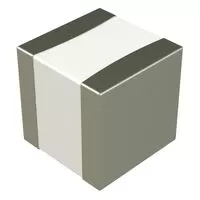

100E331KW3600X KYOCERA AVX RF Capacitor
Brand: ATC
The 100E331KW3600X is a RF/microwave ceramic capacitor manufactured by KYOCERA AVX., with high-Q, low-loss performance characteristics. Designed for ghz / microwave (series dependent) applications — suitable for rf matching / microwave / communication.
Product Specifications
PRODUCT SPECIFICATIONS
100E331KW3600X — KYOCERA AVX RF/Microwave Capacitor
Product Overview
The 100E331KW3600X is a RF/microwave ceramic capacitor manufactured by KYOCERA AVX., with high-Q, low-loss performance characteristics. Designed for ghz / microwave (series dependent) applications — suitable for rf matching / microwave / communication.
Technical Specifications
| Part Number | 100E331KW3600X |
| Manufacturer | KYOCERA AVX |
| Frequency Range | GHz / Microwave (Series Dependent) |
| Q Factor | High Q (Series Dependent) |
| RF Suitable | YES |
| High Q | YES |
| Low Loss | YES |
| Tolerance | Refer to datasheet |
| Package / Case Style | Refer to datasheet |
| Dielectric Material | Refer to datasheet |
| Temperature Coefficient | Refer to datasheet |
| Operating Temperature Range | Refer to datasheet |
| Termination Finish | Refer to datasheet |
| Mounting Type | Surface Mount (SMD/SMT) |
| RoHS Compliance | RoHS Compliant |
| REACH Compliance | REACH Compliant |
| Country of Origin | United States |
| Manufacturer Part Number | 100E331KW3600X |
| Data Confidence | Series Based |
| Verification Note | Requires ATC datasheet confirmation |
Key Features
- High Q Factor — Excellent quality factor for low-loss RF performance at operating frequency.
- Low ESR — Low Equivalent Series Resistance ensures minimal signal attenuation in RF paths.
- RF/Microwave Optimized — Designed for ghz / microwave (series dependent) frequency range with stable capacitance and high self-resonant frequency.
- Surface Mount Package — Compatible with standard SMT reflow soldering and automated PCB assembly.
- Rugged Construction — KYOCERA AVX capacitors manufactured in certified facilities with consistent batch performance.
Applications
- RF Matching — Impedance matching networks for RF power amplifiers in base stations, small cells, and repeaters.
- Microwave — Microwave circuit applications including couplers, filters, and resonant structures.
- Communication — Telecom equipment — 5G NR base stations, microwave backhaul, satellite communication systems.
- Medical — Medical electronics — MRI systems, RF ablation equipment, medical telemetry devices.
- Aerospace — Aerospace and defense — radar systems, electronic warfare, avionics, satellite payloads.
Compatible and Alternative Part Numbers
- Equivalent Manufacturers: Passive Plus, Presidio Components, Johanson Technology, Knowles/Dielectric Labs, Murata, TDK
- Same Series Alternatives: Other capacitance, voltage, tolerance, and package variants within the KYOCERA AVX product family
- Cross-Reference Guidance: When substituting, verify capacitance value, voltage rating, tolerance, package dimensions, dielectric type, and RF performance (Q factor, ESR, SRF)
About KYOCERA AVX
KYOCERA AVX capacitors are manufactured in ISO 9001 certified facilities and widely specified in reference designs from Analog Devices, Texas Instruments, MACOM, Qorvo, Broadcom, and other leading RF semiconductor manufacturers. Key applications include 5G NR base stations, satellite communication, military radar, MRI medical imaging, and automotive radar systems.
About Superb Automation — Trusted KYOCERA AVX Supplier
Superb Automation is a trusted electronic components supplier. We provide 100% genuine KYOCERA AVX capacitors with full warranty, lot traceability, and competitive pricing. Our service includes component sourcing, PCB manufacturing, PCBA assembly, and global logistics with engineering support.
Why Source 100E331KW3600X from Superb Automation?
- Trusted Supplier — 100% genuine, factory-original KYOCERA AVX products with full warranty and lot traceability.
- Competitive Pricing — Volume discounts available. Prototype and sample quantities supported.
- Fast Quotation — RFQs processed within hours. In-stock items ship same/next business day.
- Engineering Support — FAE team assists with capacitor selection, S-parameter simulation, and cross-reference.
- One-Stop Solution — Capacitors + PCB + PCBA assembly from a single supplier.
- Quality Assurance — ESD-protected handling, visual inspection, electrical verification before shipment.
- Global Logistics — International shipping with full export documentation.
Ordering Information
To order 100E331KW3600X or any KYOCERA AVX capacitor, contact us with: Part Number, Quantity, Target Price, Delivery Destination, Required Date. Contact: Info@superb-tech.com | www.superb-tech.com
100E331KW3600X: 330 pF at 3600 V in the case E body
Break 100E331KW3600X into its fields and nothing is left to read from a headline. The series is 100, the case is E, the capacitance code 331 gives 330 pF, the tolerance letter K gives plus or minus 10 percent, the termination letter W gives tin and lead solder plated over a nickel barrier, the voltage field is 3600 VDC, and the X field is laser marking.
Case E is the 9.65 mm square porcelain body carrying 330 pF with K tolerance at 3600 V, 4.32 mm maximum thickness with a 1.02 mm maximum termination overlap. The dielectric is P90 porcelain at plus 90 plus or minus 30 ppm per degree C, the series is rated minus 55 to plus 125 degrees C with no derating of the working voltage, and quality factor is published as greater than 10,000 at 1 MHz from 1 pF to 1000 pF, and at 1 kHz above that range for a 330 pF body. Marked at 330 pF and 3600 V, this code carries 1188 nanocoulomb at the rating.
The temperature coefficient is plus 90 plus or minus 30 ppm per degree C over minus 55 to plus 125 degrees C, so the 330 pF value behind the 2138 microjoule at 3600 V drifts by parts per million rather than by percent across the rating of the K part. Packing is not carried in the code 100E331KW3600X; the table gives tape and reel at 250 pieces or a tray of 24 or 96, and the count on the label has to match the count on the reel.
| Series and case | 100E, case E, 9.65 mm by 9.65 mm |
| Capacitance | 330 pF, code 331 |
| Tolerance | K, plus or minus 10 percent, a window of 297 to 363 pF |
| Working voltage | 3600 VDC, 2545 V RMS at 0.707 times the DC rating |
| Dielectric withstanding | 4320 V for five seconds, 120 percent of the working voltage |
| Life test | 3600 V for 2000 hours at 125 degrees C, 100 percent of the working voltage |
| Temperature coefficient | plus 90 plus or minus 30 ppm per degree C |
| Operating range | minus 55 to plus 125 degrees C with no derating of the working voltage |
| Insulation resistance | 10^5 Mohm minimum at 25 degrees C and 10^4 Mohm minimum at 125 degrees C, both measured at 500 VDC |
| Leakage floor | 36 nA at 3600 V and 360 nA at 125 degrees C, computed from those resistance floors |
| Stored energy | 2138 microjoule at the working voltage, from one half C V squared |
| Stored charge | 1188 nanocoulomb at the working voltage |
| Reactance at 150 MHz | 3.22 ohm nominal |
| Reactance at 500 MHz | 0.96 ohm nominal |
| Series resonance | plotted against capacitance for the series, read from that curve rather than quoted here |
| ESR | curves at 30, 150, 500 and 1000 MHz, printed at 10, 100, 1000 and 5100 pF for the series |
| Quality factor | Greater than 10,000 at 1 MHz from 1 pF to 1000 pF, and at 1 kHz above that range |
| Termination | W, tin and lead solder plated over a nickel barrier, a lead bearing finish |
| Marking and packing | laser marking; tape and reel at 250 pieces, or a tray of 24 or 96 pieces |
| Mounting pad | A .405, B .050, C .325 and D .425 inch on the normal density pad, .385, .030, .325 and .385 on the high density one |
What 330 pF does from 30 MHz to 1 GHz
At 30 MHz this 330 pF body presents 16.08 ohm, at 150 MHz 3.22 ohm, at 500 MHz 0.96 ohm and at 1 GHz 0.48 ohm. Above a few hundred picofarads the 330 pF part is a bypass and a DC block, so the useful question is how low the impedance stays at the top of the band, and 0.48 ohm at 1 GHz answers it better than the nominal capacitance does.
Tolerance is easier to judge in reactance than in picofarads. At 500 MHz the K window of 297 to 363 pF lands at 0.877 ohm at the top of the window and 1.072 ohm at the bottom, a spread of 0.195 ohm between the two ends against a 0.965 ohm nominal, which is 20.2 percent of that reactance. For a 330 pF part at 500 MHz the 20.2 percent spread is the number to quote to the circuit owner, and the K letter follows from that number rather than from habit.
For the 330 pF code in K tolerance the data sheet draws series resonance against capacitance and prints the points at 10, 100, 1000 and 5100 pF rather than a number for every value. Scaling the nearest published point of 365 MHz at 100 pF by the square root of the capacitance ratio gives about 201 MHz for 330 pF if the series inductance stayed put, and that is an estimate for a starting point, not a specification: the resonance curve is the document that decides, because the internal electrode pattern moves the inductance with the value.
Where a 330 pF case E part is chosen
Chosen above a few hundred picofarads, the capacitor is the low impedance element in the circuit: the return path behind a radio frequency power stage, the shunt leg of a filter, the reservoir at a bias feed and the DC block into a load. At 500 MHz its 0.96 ohm is 1.9 percent of the line, and the question at this value is current and self heating rather than tolerance.
High frequency power amplifiers, transmitters, antenna tuning, plasma chambers and magnetic resonance coils are the circuits the series lists, and all of them put radio frequency current through the body at a working voltage that leaves little room: a 330 pF part in K tolerance at 3600 V carries 1188 nanocoulomb per half cycle, so the current is set by the frequency and not by the capacitance alone.
A 330 pF part in K tolerance rated 3600 V is tested at 4320 V for five seconds and at 3600 V for 2000 hours at 125 degrees C, 120 and 100 percent of the rating. The 36 nA and 360 nA leakage figures for this 330 pF body follow from the insulation resistance floors and land as 360 mV on a 1 Mohm node at 125 degrees C.
Questions that arrive with a shortage quote
On a shortage, is a different tolerance letter a legal swap for the K code? The ceramic and the case do not change and the letter is a sort, so the question is only how much window the circuit absorbs. At 330 pF the K window is 297 to 363 pF, the next grade tighter is J at plus or minus 5 percent, and the next grade looser is M at plus or minus 20 percent. At 500 MHz those ends land at 0.877 ohm at the top of the window and 1.072 ohm at the bottom, a spread of 0.195 ohm against a 0.965 ohm nominal, so a match or a filter has to hold the K letter while a bypass position does not care. The order for 100E331KW3600X goes out with the tolerance letter we have confirmed, not the one that was asked for, and the shipping documents repeat it.
What proof comes with a K part? Three fields decide whether the lot is usable: a capacitance measurement at the frequency the series specifies, which for this value is 1 MHz, a withstanding record against 4320 V for five seconds, and the finish code, because W is tin and lead and a restricted build needs a deviation. The K letter has to be on the label as well, because a reel marked only with 330 pF does not say whether the window is 297 to 363 pF or a wider one.
Can this K letter be ordered with a different finish? Yes, the finish is a field of its own: for a 330 pF part in K tolerance W is tin and lead over nickel and is lead bearing, T is the RoHS compliant tin over nickel, P is a heavy tin and lead pellet, CA a gold chip, MS a microstrip style, and AR, AW and RW the leaded outlines. The body stays the same 330 pF at 3600 V, so the change is a compliance and mounting decision, and the packing still comes from the mechanical table at 250 pieces on tape and reel or 24 or 96 in a tray.
What to send with an enquiry
Four fields decide the price and the date: quantity, target date, the full order code 100E331KW3600X with the tolerance and termination letters, and the packing the line accepts. Give us the complete code 100E331KW3600X and the revision is checked before anything is priced, with date codes, packing and country of origin confirmed on the quotation itself. The RF Component Sourcing page sets out how a radio frequency bill is sourced and what a second source has to prove, the Incoming Inspection Plan page covers the route when a value is on allocation, and the Date Code Management page sets out the packing, kitting and inspection options a production line asks for.
