
TPS7A8300RGWT
Brand: Texas Instruments
Texas Instruments TPS7A8300RGWT is a power management component designed for AI Servers & Low-Altitude Economy (Drone and UAV) and related applications. In stock at Superb Automation — request a quote for competitive pricing and fast delivery.
Product Specifications
TPS7A8300RGWT
Texas Instruments — Power Management & Signal Chain
Product Overview
The TPS7A8300RGWT from Texas Instruments is a power management / signal chain IC delivering high efficiency, precision regulation, and robust protection. Texas Instruments (TI) is a global leader in analog ICs, power management solutions, and embedded processors.
Superb Automation partners with leading brands including Qorvo, TI, ADI, XILINX, NVIDIA, Intel, ST, MACOM, Renesas, and Coilcraft to provide complete BOM and supply-chain solutions.
Key Features
- High-efficiency power conversion with low quiescent current
- Wide input voltage range with precision output regulation
- Integrated over-current, over-temperature, and short-circuit protection
- Small footprint packaging for space-constrained designs
- AEC-Q100 qualified options available for automotive applications
- Flexible sequencing and soft-start control
Key Specifications
| Input Voltage | V |
| Output Voltage | V |
| Output Current | A |
| Switching Frequency | kHz |
| Efficiency | % |
| Quiescent Current | µA |
| Topology | — |
| Package | — |
| Operating Temp | °C |
| Protection | — |
Applications
Industrial Automation
Automotive Electronics
Telecom Infrastructure
Server & Data Center Power
Medical Devices
Consumer Electronics
Request Quote — In Stock, 100% New & Original, Full Warranty
TPS7A8300RGWT: 2 A with a 250 piece reel for the first build
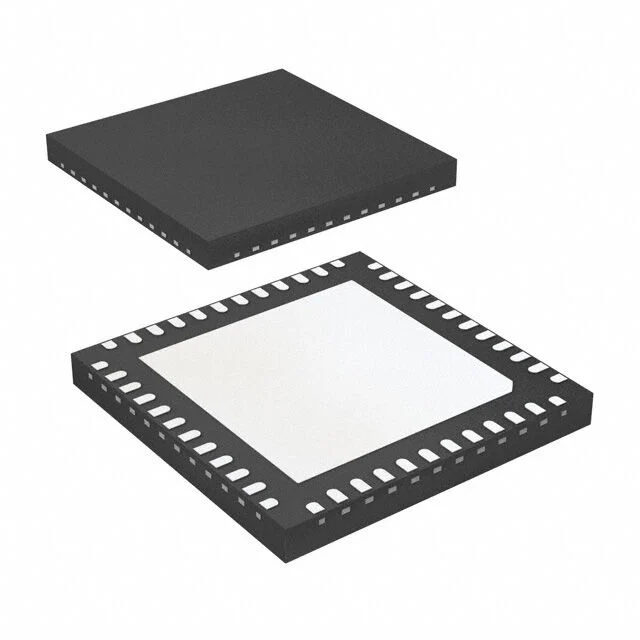
The TPS7A8300RGWT is a 2 A linear regulator with 6 uV RMS of output noise and 125 mV of maximum dropout at full load. The letters at the end matter as much as the die: RGW is the 5 mm by 5 mm twenty pin VQFN, and the T is a 250 piece small tape and reel on a 180 mm carrier, which is the packing a pilot build actually needs. The same part in the R body, 3.5 mm square, ships 3000 at a time and is a different order code.
The output is set without resistors. ANY-OUT straps on the board connect internal taps to give any voltage between 0.8 V and 3.95 V in 50 mV steps, and an external divider takes it to 5.0 V when a higher rail is needed. For a supply that feeds an FPGA core, a SerDes lane or an RF synthesiser, that removes two resistors from the noise path and makes the 1 percent accuracy over line, load and temperature a property of the part rather than of the divider tolerance.
Key electrical data for the 2 A part
| Input range | 1.4 V to 6.5 V without a bias rail, 1.1 V to 6.5 V with the bias supplied separately |
| Output range | 0.8 V to 3.95 V by board straps, 0.8 V to 5.0 V with an external divider |
| Output current | 2 A, current limit 2.8 A minimum and 4 A maximum |
| Dropout | 125 mV maximum at 2 A, which is the figure the part is chosen for |
| Noise and rejection | 6 uV RMS from 10 Hz to 100 kHz, 40 dB of rejection at 1 MHz |
| Accuracy | 1 percent over line, load and temperature, with remote sense at the load |
| Output capacitor | 22 uF ceramic is the stability condition, and the transient figures assume it |
Package, marking and reel data
| Body | VQFN RGW, 20 pins, 5.00 mm by 5.00 mm, thermal pad |
| Reel | 250 pieces, small tape and reel on a 180 mm carrier |
| Finish and moisture | NIPDAU, level 2, 260 C peak reflow, one year floor life |
| Marking | PZGM |
| Packing option | RGWR carries 3000 pieces on a 330 mm carrier for volume builds |
Where 2 A of quiet supply is spent
High end microprocessors, FPGAs, SerDes blocks and RF front ends all want the same thing: a rail that does not move when the load steps by an amp in a nanosecond, and that does not carry the switching ripple of the converter upstream. A 2 A linear regulator with 125 mV of dropout can sit directly after a 1.2 V or 1.8 V buck and clean it up, provided the buck is set about 300 mV high and the thermal path is real. At 2 A and 300 mV of headroom the part burns 600 mW, which the 5 mm body with a pad handles comfortably.
The soft start pin is the second half of the story. A 22 uF output capacitor charged into a 2 A load draws a large inrush if the pass element turns on quickly, so the CNR/SS capacitor sets the ramp and keeps the upstream converter out of current limit. The power-good output is open drain and can sequence the next rail, which is usually what a multi rail FPGA supply needs and what a discrete supervisor would otherwise do.
Buyer questions on the TPS7A8300RGWT
Why order the 250 piece reel instead of the 3000? Because a pilot build of 50 to 200 boards does not consume a full reel, and a partial reel left open absorbs moisture. The small reel is the same die, the same marking and the same moisture level, so no re-qualification is needed when the volume order moves to RGWR.
Does the output really need no resistors? Up to 3.95 V, yes. The internal taps are strapped on the board, and the accuracy is specified with that arrangement. Above 3.95 V the divider is used, and the tolerance of those two resistors adds to the 1 percent of the part.
What happens when the input falls below the set output? The pass element saturates and the output follows the input down. With a bias rail present the part keeps regulating down to 1.1 V, which is why the bias pin exists on low voltage rails.
Buying this regulator through a component supplier
Two bodies, one die and four order codes is the kind of family where a build reads the wrong line, so the packing column has to be part of the purchase order. Our power management cross reference keeps the body and the reel size next to each code. For a program that is moving from pilot to volume, safety stock planning sets the buffer that covers the reel change.