
TPS3839K33DBZR
Brand: Texas Instruments
Texas Instruments TPS3839K33DBZR is a power management component designed for AI Servers & Low-Altitude Economy (Drone and UAV) and related applications. In stock at Superb Automation — request a quote for competitive pricing and fast delivery.
Product Specifications
TPS3839K33DBZR
Texas Instruments — Power Management & Signal Chain
Product Overview
The TPS3839K33DBZR from Texas Instruments is a power management / signal chain IC delivering high efficiency, precision regulation, and robust protection. Texas Instruments (TI) is a global leader in analog ICs, power management solutions, and embedded processors.
Superb Automation partners with leading brands including Qorvo, TI, ADI, XILINX, NVIDIA, Intel, ST, MACOM, Renesas, and Coilcraft to provide complete BOM and supply-chain solutions.
Key Features
- High-efficiency power conversion with low quiescent current
- Wide input voltage range with precision output regulation
- Integrated over-current, over-temperature, and short-circuit protection
- Small footprint packaging for space-constrained designs
- AEC-Q100 qualified options available for automotive applications
- Flexible sequencing and soft-start control
Key Specifications
| Input Voltage | V |
| Output Voltage | V |
| Output Current | A |
| Switching Frequency | kHz |
| Efficiency | % |
| Quiescent Current | µA |
| Topology | — |
| Package | — |
| Operating Temp | °C |
| Protection | — |
Applications
Industrial Automation
Automotive Electronics
Telecom Infrastructure
Server & Data Center Power
Medical Devices
Consumer Electronics
Request Quote — In Stock, 100% New & Original, Full Warranty
TPS3839K33DBZR 150 nA supervisor for a 3.3 V rail
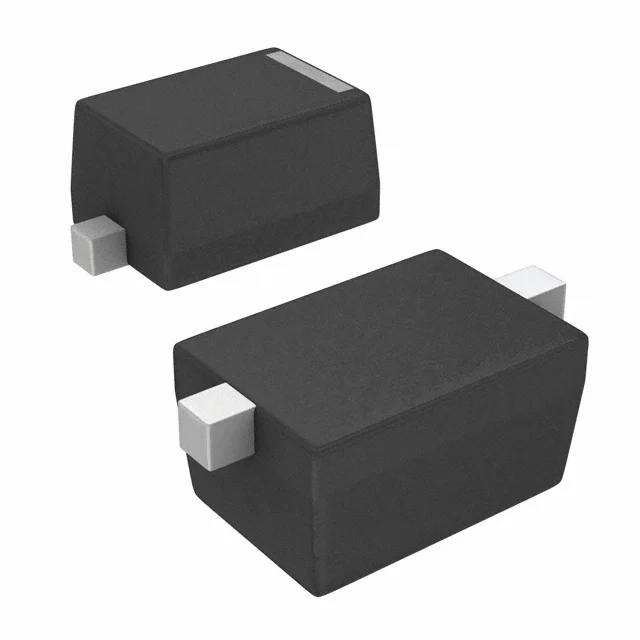
The TPS3839K33DBZR is the 3.3 V member of the nano power family in a 3 pin SOT-23, with a 2.93 V threshold, 150 nA of typical supply current and a fixed 200 millisecond reset delay. It is the same silicon as the 0.9 V and 1.1 V options on the rails below 2 V, and the only thing that changes is the internal divider that sets the trip point.
The output is push pull active low, so a processor reset pin can be driven without a pull up. There is no manual reset and no adjustable threshold, which is the reason the body has three pins and the reason the part sits on boards that have no space for a supervisor at all.
Key parameters taken from the TPS383x document
| Threshold | 2.93 V nominal, printed as 2.857 V minimum and 2.974 V maximum at 25 degrees |
| Rail it suits | A 3.3 V rail at minus 5 per cent is 3.135 V, and at minus 10 per cent is 2.97 V, so the threshold sits below the tolerance band and above a collapsed rail |
| Hysteresis | 29 mV on this option, between the 11 mV of the 1.1 V option and the 54 mV of the 0.9 V option |
| Supply range | 0.9 V to 6.5 V operating, with a defined output down to a 0.6 V supply |
| Supply current | 150 nA typical, and the family is specified for a correct output state rather than only for operation at that current |
| Reset delay | 200 milliseconds typical after the rail rises above the threshold plus the hysteresis |
| Output | Push pull active low, sinking 120 microamp at 0.9 to 1.2 V and 2 mA at 2.8 to 6.5 V |
| Fast transients | Made to ignore fast transients on the supply pin, which is what keeps a switching rail from resetting the board |
| Manual reset | Not fitted on this member, and the sibling with the input is the TPS3831 in a 4 pin body |
| Body | 3 pin SOT-23 DBZ |
| Reel and marking | 3000 pieces on a large reel, body marking PYYI, moisture level 1 at 260 degrees with unlimited floor life |
| Temperature | Minus 40 to plus 85 degrees C |
The threshold window is the row to read first. A 3.3 V rail that is allowed to run at minus 10 per cent sits at 2.97 V, which is inside the 2.857 V to 2.974 V window printed for this option, so a rail at that level can assert the reset. That is deliberate for a product that treats minus 10 per cent as a failure, and it is wrong for a product that treats minus 10 per cent as normal operation, where a different member of the family with a lower threshold would be correct.
Where the numbers matter in a real build
Most boards that use this option have a 3.3 V rail produced by a switching regulator and a processor that draws current in bursts. The 150 nA of supply current means the supervisor can hang directly on the rail with no series switch and no enable pin, and the push pull output means the reset net needs no other part. What the part does not do is filter. The vendor states that the device ignores fast transients, and the glitch immunity is fixed rather than adjustable, so a rail with a slow sag that lasts several milliseconds will assert the reset where a rail with a microsecond spike will not.
The 200 millisecond delay is the number that shapes the start up behaviour. A 3.3 V regulator that settles in 3 milliseconds still leaves the processor in reset for 200 milliseconds, which is a visible delay on a product that is switched on by a user and invisible on one that is always powered. Where the delay has to be shorter, the answer is a different family with a CT pin rather than an external part on this one, because the delay is set in silicon and cannot be trimmed.
The 2 mA of sink current at a 2.8 V rail and above is the drive that matters, because it is enough for a processor reset pin and a second device and not enough for a long net with several loads. On a board where the reset line runs across a backplane, the open drain member with a single pull up is the better arrangement, and the push pull output here is intended for a short local net.
What to check before a purchase order is released
- The threshold option, because the family prints nine thresholds in one 3 pin body and 2.93 V is only one of them.
- The hysteresis against the rail, since 29 mV is tight enough to follow the ripple of a burst mode converter.
- The sink current at the actual rail voltage rather than at the top of the range.
- The absence of a manual reset, because a board with a reset button needs the TPS3831 member in the 4 pin body.
- The delay, which is fixed and cannot be shortened on the board.
Which projects this part fits
3.3 V processor boards, industrial controllers, metering and portable instruments are the applications the vendor lists, and the common thread is a supervisor that must not be the largest standing load on a rail that stays alive in standby. Boards that already use the 1.1 V or 0.9 V member of the family are the other case, because the three parts share a body, a pinout and the same 150 nA.
Questions that come up before a purchase order is released
Does the part need an external capacitor?
No. There is no delay pin and no threshold pin, so the only external part is the decoupling capacitor the vendor asks for near the supply pin.
What happens below a 0.9 V supply?
The output stays defined down to 0.6 V, and below that the state is not guaranteed, which matters on a rail that collapses slowly and leaves a processor in an undefined state.
Can two of these watch the same rail?
Yes, but they will assert at the same point and the second one adds nothing except a second 150 nA, which is why a two rail board normally uses two different threshold options.
How SUPERB handles this line
Small supervisors in the 3 pin body are a routine reel item for us on both prototype and production quantities. Our one stop BOM sourcing covers a board where this part sits beside passives, connectors and a processor, and the kitting service is what most prototypes use when the supervisor is the only long lead line. Where the original part cannot be found at a workable lead time, the lead time note sets out what we can and cannot shorten.