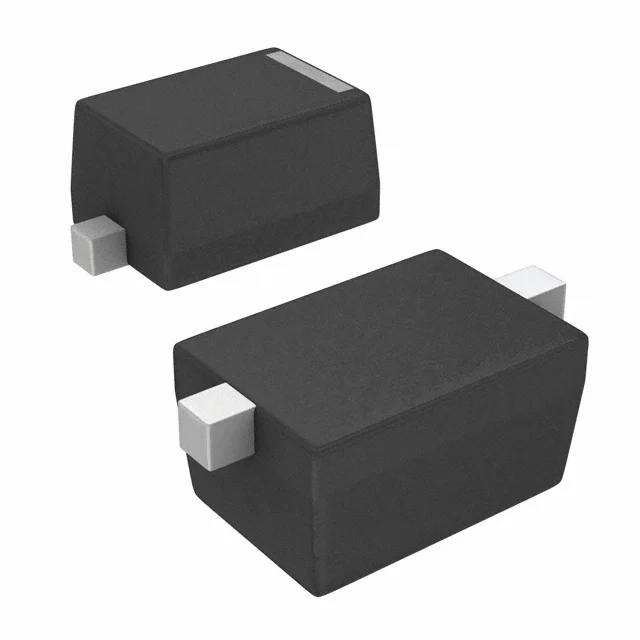

TMP117MAIDRVR
Brand: Texas Instruments
Texas Instruments TMP117MAIDRVR is a power management component designed for AI Servers & Low-Altitude Economy (Drone and UAV) and related applications. In stock at Superb Automation — request a quote for competitive pricing and fast delivery.
Product Specifications
TMP117MAIDRVR
Texas Instruments — Power Management & Signal Chain
Product Overview
The TMP117MAIDRVR from Texas Instruments is a power management / signal chain IC delivering high efficiency, precision regulation, and robust protection. Texas Instruments (TI) is a global leader in analog ICs, power management solutions, and embedded processors.
Superb Automation partners with leading brands including Qorvo, TI, ADI, XILINX, NVIDIA, Intel, ST, MACOM, Renesas, and Coilcraft to provide complete BOM and supply-chain solutions.
Key Features
- High-efficiency power conversion with low quiescent current
- Wide input voltage range with precision output regulation
- Integrated over-current, over-temperature, and short-circuit protection
- Small footprint packaging for space-constrained designs
- AEC-Q100 qualified options available for automotive applications
- Flexible sequencing and soft-start control
Key Specifications
| Input Voltage | V |
| Output Voltage | V |
| Output Current | A |
| Switching Frequency | kHz |
| Efficiency | % |
| Quiescent Current | µA |
| Topology | — |
| Package | — |
| Operating Temp | °C |
| Protection | — |
Applications
Industrial Automation
Automotive Electronics
Telecom Infrastructure
Server & Data Center Power
Medical Devices
Consumer Electronics
Request Quote — In Stock, 100% New & Original, Full Warranty
TMP117MAIDRVR: Digital temperature sensor, plus or minus 0.1 C, 16-bit, I2C and SMBus
TMP117MAIDRVR is a precision digital temperature sensor that replaces a Class AA platinum element without calibration in a WSON (DRV) body of 6 pins. It reports temperature over I2C at 0.0078 C resolution with an accuracy of plus or minus 0.1 C between -20 C and 50 C, draws 3.5 microamp in a one per second conversion cycle, and is specified to meet the standards for electronic patient thermometers.
Order code and package
| Ordering string | TMP117MAIDRVR, DRV package, 6-pin WSON, tape and reel |
| Package | 6-pin WSON, 2 mm by 2 mm, and a wafer level chip scale option |
| Accuracy bands | 0.1 C from -20 C to 50 C, 0.15 C from -40 C to 70 C, 0.2 C from -40 C to 100 C, 0.25 C to 125 C, 0.3 C to 150 C |
| Standards | ASTM E1112 and ISO 80601-2-56 for electronic patient thermometers |
| Interface | I2C and SMBus compatible, 16-bit result |
| Extra memory | 48 bits of general purpose EEPROM for a serial number or a calibration constant |
Electrical parameters that decide the application
| Supply range | 1.7 V to 5.5 V up to 70 C, 1.8 V to 5.5 V up to 150 C |
| Temperature range | -55 C to 150 C operating |
| Resolution | 0.0078 C per least significant bit |
| Conversion current | 3.5 microamp at one conversion per second |
| Shutdown current | 150 nanoamp |
| Averaging | Selectable, which trades conversion time for noise |
| Alert | Programmable high and low limits with a dedicated alert pin |
| Offset | Digital offset register for system level correction |
Points to check before this part goes on a BOM
The accuracy bands are nested, not separate parts. A device specified at plus or minus 0.1 C from -20 C to 50 C is also the device that is specified at 0.3 C over the full -55 C to 150 C range, and a quotation that quotes the 0.1 C figure for a freezer application is quoting the wrong band. The band that matters is the one that contains the product's operating range, and for a medical thermometer that is the 0.1 C band.
The 0.0078 C resolution is finer than the accuracy by more than a factor of ten, and that is deliberate. Averaging several conversions reduces the noise, so a stable reading below the accuracy limit is possible, and the resolution is what allows a trend to be seen before the absolute value is trustworthy. In a calorimeter or a drift measurement that ratio is the useful part of the specification.
Replacing a Class AA platinum element is the application this part was built for. A PT100 Class AA is plus or minus 0.1 C at 0 C and worse as the range extends, needs a precision current source and a conversion chain, and costs more in board area than the sensor. The digital part gives the same accuracy with two wires and no analogue chain, at the price of a conversion time and a bus transaction.
The 48 bits of EEPROM are what make a calibrated assembly possible without a second device. A probe can store its own serial number and a one point offset at final test, and the host can read both over the same bus. The digital offset register then applies a correction without changing the factory calibration, so a re calibration is a register write rather than a new part.
Self heating is the error that a datasheet cannot remove. At 3.5 microamp and 3.3 V the electrical power is about 12 microwatt, which in still air inside a plastic probe is a few millikelvin, and in a fast response probe with a thin wall is negligible. A board that polls the device continuously at the highest conversion rate raises that figure, which is a reason to use the one per second cycle unless the measurement needs otherwise.
The alert limits are the reason this part can run a thermostat without the host polling. Both limits are programmable with hysteresis, and the alert pin is open drain, so a comparator input or an interrupt pin can act on the event while the host sleeps. The accuracy of the alert is the accuracy of the sensor, which means a 0.1 C thermostat is possible without a separate comparator chain.
The thermal path is part of the accuracy. The sensor die sits on the package pad, so the temperature it reports is the temperature of the copper under it, not of the air. In a probe the pad should be coupled to the tip through a narrow neck and isolated from the rest of the board, or the board will act as a heat sink and the reading will follow the electronics rather than the medium. In a thermostat the opposite is wanted, and the pad should be tied to a large copper area so the sensor follows the enclosure.
Where this order code fits
It is used in electronic thermometers, thermostats, cold chain loggers, gas and heat meters, wearable fitness monitors, wireless environmental sensors and any product that has to replace a platinum element with a digital reading. Teams comparing it with a neighbouring part start from our Medical Device Components page, and teams replacing a part that has gone end of life start from the Power Management Cross Reference page.
Questions buyers ask
Does it need calibration? No. The accuracy is specified without calibration, and the offset register exists for a system level correction rather than for the sensor itself.
Can it be used in a medical thermometer? Yes. The part is specified to meet ASTM E1112 and ISO 80601-2-56, which are the standards for electronic patient thermometers, and the accuracy band that matters is 0.1 C from -20 C to 50 C.
What is the supply current in standby? 150 nanoamp in shutdown, which is why the device can be left powered on a coin cell between measurements.
SUPERB holds and sources this line for production and repair demand, quoted against the exact ordering string with date codes, packing and country of origin stated on the offer. When a part is moving, the One Stop BOM Sourcing page sets out the checks that keep a substitute from failing on the bench.