


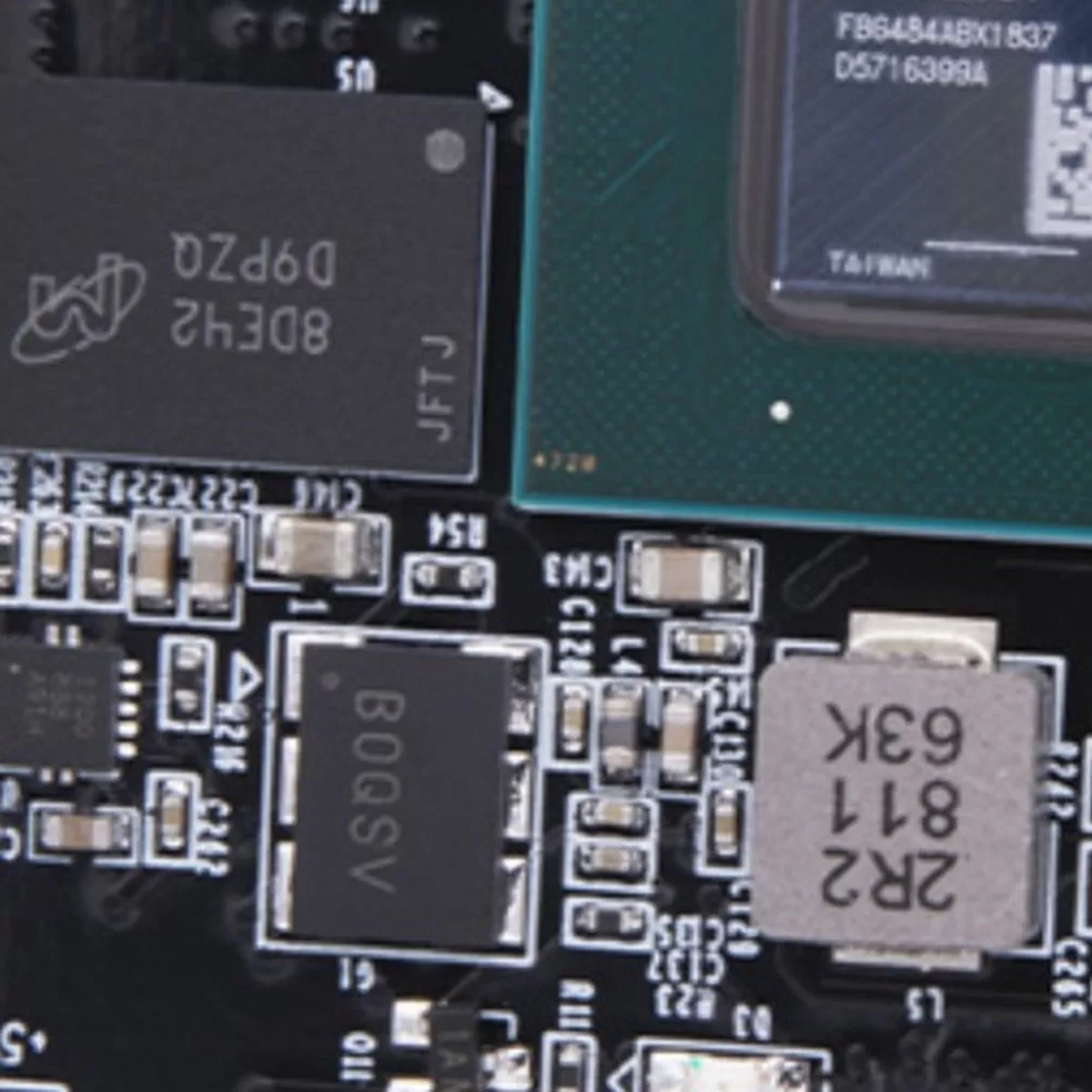

LSF0204PWR
Brand: Texas Instruments
Texas Instruments LSF0204PWR is a power management component designed for Industrial Automation and related applications. In stock at Superb Automation — request a quote for competitive pricing and fast delivery.
Product Specifications
LSF0204PWR
Texas Instruments — Power Management & Signal Chain
Product Overview
The LSF0204PWR from Texas Instruments is a power management / signal chain IC delivering high efficiency, precision regulation, and robust protection. Texas Instruments (TI) is a global leader in analog ICs, power management solutions, and embedded processors.
Superb Automation partners with leading brands including Qorvo, TI, ADI, XILINX, NVIDIA, Intel, ST, MACOM, Renesas, and Coilcraft to provide complete BOM and supply-chain solutions.
Key Features
- High-efficiency power conversion with low quiescent current
- Wide input voltage range with precision output regulation
- Integrated over-current, over-temperature, and short-circuit protection
- Small footprint packaging for space-constrained designs
- AEC-Q100 qualified options available for automotive applications
- Flexible sequencing and soft-start control
Key Specifications
| Input Voltage | V |
| Output Voltage | V |
| Output Current | A |
| Switching Frequency | kHz |
| Efficiency | % |
| Quiescent Current | µA |
| Topology | — |
| Package | — |
| Operating Temp | °C |
| Protection | — |
Applications
Industrial Automation
Automotive Electronics
Telecom Infrastructure
Server & Data Center Power
Medical Devices
Consumer Electronics
Request Quote — In Stock, 100% New & Original, Full Warranty
LSF0204PWR: 4 channel bidirectional level translator with partial power-down support in a 14-pin TSSOP
LSF0204PWR is a four channel bidirectional translator with a 0.8 V low side floor and an Ioff partial power-down function in a TSSOP body of 14 pins. The LSF0204 carries four channels in a 14-pin body and adds a function the eight channel part does not advertise in its feature list: Ioff partial power-down support, which keeps the high side pins from loading the bus while the low side supply is off. The low side reference covers 0.8 V to 4.5 V, the high side 1.8 V to 5.5 V, and the enable pin is active high on this order code whereas the LSF0204D variant inverts it.
Order code and package
| Order code | LSF0204PWR |
| Function | 4 channel bidirectional voltage level translator |
| Package | TSSOP, 14 pins, body code PW |
| Low side reference | 0.8 V to 4.5 V on Vref_A |
| High side reference | 1.8 V to 5.5 V on Vref_B |
| Channels | four, passive switches with no direction terminal |
| Enable polarity | active high on the LSF0204, active low on the LSF0204D variant |
| Partial power-down | Ioff supported, so the high side does not load the bus with the low side off |
| Throughput | 100 MHz upward at 30 pF, 40 MHz up or down at 50 pF |
| I/O tolerance | 5 V tolerant ports |
| Datasheet | SCES873, LSF family |
Electrical parameters that decide the application
| On resistance at Vref_A 3.3 V, 64 mA | 3 ohm typical |
| On resistance at Vref_A 1.8 V | about 4 ohm typical from the family table |
| On resistance at Vref_A 1.0 V, 32 mA | 9 ohm typical |
| Reference voltage range | 0 V to 5.5 V absolute on the reference and enable pins |
| Input current on the high side | 5 microamps maximum with the low side enable low |
| Supply current | 3.5 microamps maximum quiescent between the two rails |
| Channel capacitance | 6 pF on state |
| Pinout | Vref_A and Vref_B at opposite ends, channels between them |
| Enable threshold | 13 pF input capacitance on the enable pin |
| Package options | 14-pin TSSOP here, and a 14-pin body for the D variant |
Points to check before this part goes on a BOM
Ioff is the reason to pick this code over a plain four channel translator. With the low side supply removed, the high side pins present 5 microamps at most, which is what allows a card to be powered down while the backplane bus is still running. Without that behaviour the disabled card becomes a load on every line it is wired to.
The enable polarity differs between the two order codes in the same family. LSF0204 is active high and LSF0204D is active low, so a part substitution across those two codes inverts the bus state, and a board that holds enable high to keep the translator on will hold the D variant off.
On resistance falls with the low side reference in the same way as the eight channel part: 9 ohm at 1.0 V and 32 mA against 3 ohm at 3.3 V and 64 mA. A 1.0 V side therefore carries half the current with three times the resistance, and the logic low level on that side is the number that has to be checked against the receiver.
The part has no driver and no fixed thresholds, so the logic levels on each side are set by the reference and the pull-up on that side. A channel with a 10 kilohm pull-up into 50 pF of bus capacitance needs 500 ns to reach 63 percent of the rail, which is far below the 100 MHz switch figure and is the real limit on a low power bus.
Three of the four channels are often enough for SPI plus a chip select, and the fourth is kept for an interrupt line that runs in the opposite direction. Because every channel is bidirectional by construction, that mixed direction arrangement needs no extra pins and no rework when the interrupt moves.
Where this order code fits
Cards that plug into a live backplane use this part, because a board whose low side rail is switched off must not drag down a bus that other cards are still driving. It also appears on four wire SPI and JTAG ports where the eight channel body is larger than the interface needs. Boards comparing it with a neighbouring part start from our Pin to Pin Cross Reference page, and boards replacing a part that has gone end of life start from the Component Lead Time Solutions page.
Questions buyers ask
What does the Ioff function actually protect? It stops the high side pins from drawing current when the low side supply is off, so a powered down card does not load a bus that other cards are still driving. The specification is 5 microamps maximum.
Is LSF0204PWR a drop-in for LSF0204DPWR? No. The two share a footprint and a channel count but the enable polarity is inverted, so the board has to match the code or the translator stays in the wrong state.
Does it work as a 1.2 V to 3.3 V translator? Yes, with 1.2 V on the low side reference and 3.3 V on the high side. The low side floor for the family is 0.8 V, so 1.2 V has margin and the channel resistance sits between the 1.0 V and 1.8 V figures.
SUPERB holds and sources this Texas Instruments line for production and repair demand, quoted against the exact ordering string with date codes, packing and country of origin stated on the offer. When a line is moving, the One Stop BOM Sourcing page sets out the checks that keep a substitute from failing on the bench.