


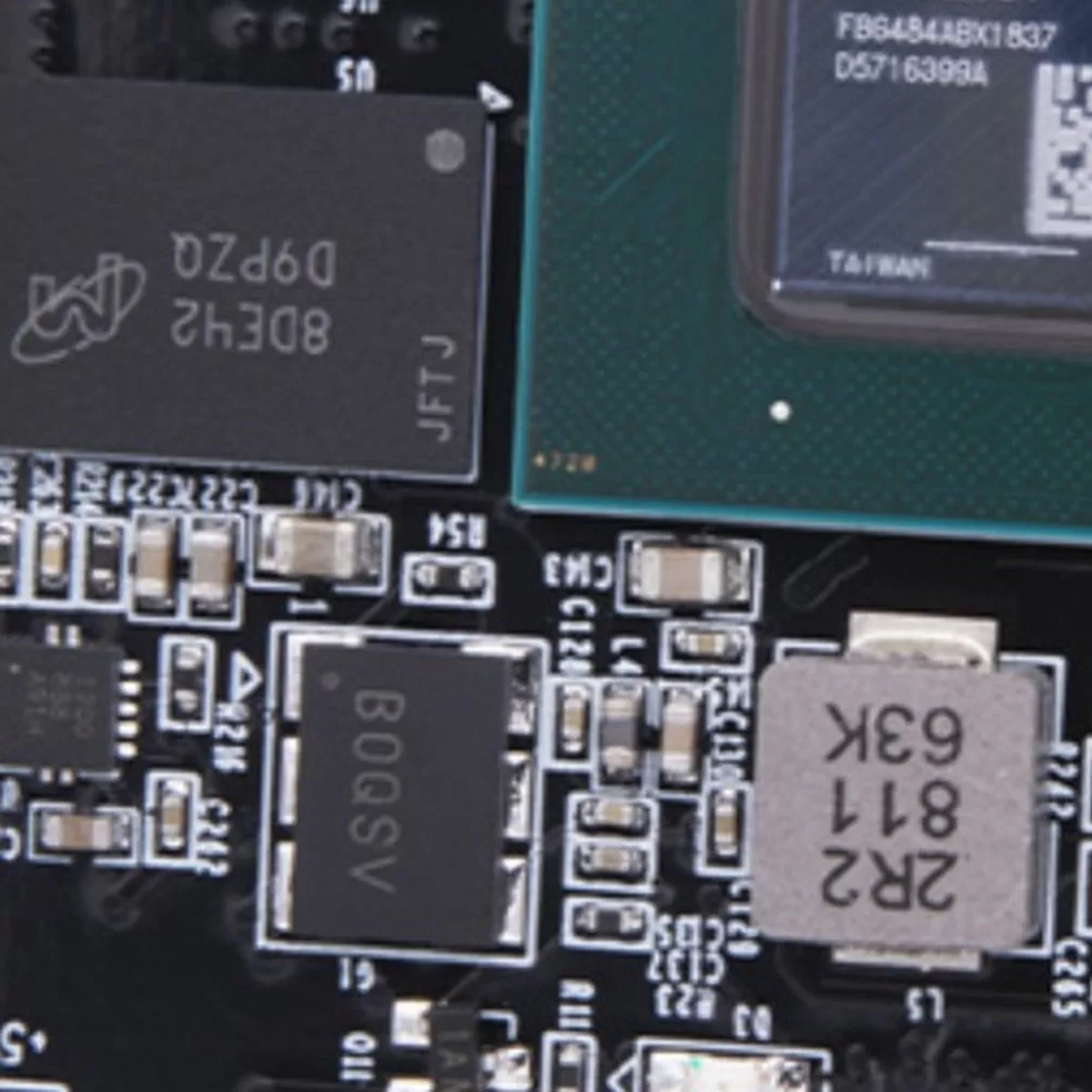

LM239PWR
Brand: Texas Instruments
Texas Instruments LM239PWR is a power management component designed for Industrial Automation and related applications. In stock at Superb Automation — request a quote for competitive pricing and fast delivery.
Product Specifications
LM239PWR
Texas Instruments — Power Management & Signal Chain
Product Overview
The LM239PWR from Texas Instruments is a power management / signal chain IC delivering high efficiency, precision regulation, and robust protection. Texas Instruments (TI) is a global leader in analog ICs, power management solutions, and embedded processors.
Superb Automation partners with leading brands including Qorvo, TI, ADI, XILINX, NVIDIA, Intel, ST, MACOM, Renesas, and Coilcraft to provide complete BOM and supply-chain solutions.
Key Features
- High-efficiency power conversion with low quiescent current
- Wide input voltage range with precision output regulation
- Integrated over-current, over-temperature, and short-circuit protection
- Small footprint packaging for space-constrained designs
- AEC-Q100 qualified options available for automotive applications
- Flexible sequencing and soft-start control
Key Specifications
| Input Voltage | V |
| Output Voltage | V |
| Output Current | A |
| Switching Frequency | kHz |
| Efficiency | % |
| Quiescent Current | µA |
| Topology | — |
| Package | — |
| Operating Temp | °C |
| Protection | — |
Applications
Industrial Automation
Automotive Electronics
Telecom Infrastructure
Server & Data Center Power
Medical Devices
Consumer Electronics
Request Quote — In Stock, 100% New & Original, Full Warranty
LM239PWR: the TSSOP quad in the narrow body
LM239PWR is the same four comparator die in the 14 pin TSSOP body on tape and reel. The TSSOP is 5.00 by 4.40 millimetres, roughly half the footprint of the SOIC and a third of the height, and it is the body a board with a height limit uses: a module that slides into a card cage, a sensor with a low profile lid, a board stacked 8 millimetres above another.
Nothing in the electrical table changes with the package. The offset, the bias current, the input range, the output sink and the response time are the same rows. What changes is thermal resistance, handling, and the number of pieces on the reel.
That is the trade a packaging engineer makes: a smaller body has less copper area to spread heat, and the same dissipation produces a larger junction rise. On a comparator that dissipates about 15 milliwatts the rise is a few degrees either way, so the trade is easy. On a part that dissipates a watt it would not be.
What the TSSOP body changes
The pin pitch is 0.65 millimetres, the body height is 1.2 millimetres maximum, and the lead span is 6.4 millimetres including the leads. The land pattern needs a stencil aperture that suits a 0.65 millimetre pitch, which is standard work for any assembly house and a source of bridging on a poorly printed board.
The reel carries 2000 pieces on a 330 millimetre reel with a 12.4 millimetre tape, which is one of the standard TSSOP-14 carriers. The moisture level on the body is level 1 at 260 degrees, so no bake is needed before reflow.
| Orderable code | LM239PWR |
| Comparators per body | 4 |
| Body | TSSOP, 14 pins, 5.00 by 4.40 millimetres |
| Pin pitch | 0.65 millimetres |
| Carrier | tape and reel, 2000 pieces, 330 millimetre reel |
| Moisture level | level 1 at 260 degrees |
| Offset at 25 degrees | 2 millivolts typical, 5 maximum |
| Supply current | 0.8 milliamps typical at 5 volts |
| Response time | 1.3 microseconds typical |
| Temperature window | minus 25 to plus 85 degrees |
The thermal number to check before choosing the small body
The junction to ambient resistance of the TSSOP body is higher than the SOIC body, because there is less lead frame and less plastic to spread the heat. On this part the dissipated power is the supply current times the supply voltage, about 4 milliwatts at 5 volts and 16 milliwatts at 30 volts, so the rise is under a degree in still air.
The number only becomes interesting when the output sinks current continuously. Four outputs at 8 milliamps into a 0.4 volt saturation is 12.8 milliwatts of additional dissipation, which doubles the total and still leaves a rise of about two degrees. A comparator bank is not a thermal problem in either body; the choice between them is about height, not heat.
Where the small body does hurt is probing. A 0.65 millimetre pitch is at the limit of a hand probe, and a board that expects field service to measure the comparator inputs should bring the nodes out to test points rather than to the pins.
Four thresholds in 22 square millimetres
The footprint is the reason to use this string. Four comparators, a reference divider, a pull-up and four decoupling capacitors fit in the area a single SOIC-14 occupies. On a 30 by 40 millimetre sensor board that is the difference between fitting and not fitting.
The sharing rules are the same as in the larger body. One decoupling capacitor within a few millimetres of the supply pin, one pull-up for a wired OR node, and a ground plane under the body if the board has one. The smaller the body, the more the board has to do the work the package no longer does.
The input range still includes ground, which is the family's main advantage, and the upper limit is 1.5 volts below the rail at 25 degrees. A 3.3 volt rail leaves 1.8 volts of usable input, and a 5 volt rail leaves 3.5, which is why the part is often used on the 5 volt rail of a mixed supply board.
Response time and the loads it can drive
At 1.3 microseconds typical the part is slow by modern standards and fast enough for any mechanical or human scale event. A relay, a fan, a solenoid, a power supply sequencer and a battery gauge all sit comfortably inside that budget.
What it cannot do is follow a switching edge or resolve a pulse shorter than a microsecond. A board that uses it as a zero crossing detector on a 50 kilohertz signal is asking for trouble; the same part on a 50 hertz line is comfortable.
The output rise time is set by the pull-up and the node capacitance, not by the comparator, so a fast edge is a pull-up problem. A 1 kilo ohm pull-up into 10 picofarads gives 10 microseconds, which is slower than the comparator itself and is often the real limit of the circuit.
Stencil, reflow and the 0.65 millimetre pitch
The 0.65 millimetre pitch is the part of the TSSOP body that decides whether a build goes smoothly. A stencil of 0.12 millimetres with apertures reduced to about 80 percent of the pad area gives a paste deposit that does not bridge, and a stencil of 0.15 millimetres with full apertures bridges on the first board.
Reflow follows the paste rather than the part. The body is rated to 260 degrees and needs no bake, so the profile is set by the largest component on the board. A small body in the shadow of a connector heats more slowly, and the soak zone is what equalises it.
Inspection is where the small body costs money. An automated optical inspection machine sees the joints, a hand inspection with a loupe does not, and an X-ray is only needed where there is a thermal pad. On a comparator with no thermal pad the joints are visible from the side and the risk is bridging between adjacent pins.
Where the narrow body earns its place
It earns its place on boards with a height limit, on boards that are already dense, and on products where the comparator bank is an afterthought squeezed into the remaining area. Sensor modules, DIN rail interfaces, small power supplies and handheld instruments all fit.
Height is the number to measure before choosing the body. The TSSOP stands 1.2 millimetres off the board once soldered, and the SOIC stands about 2 millimetres. On a stack with 1.5 millimetres of clearance only one of them fits, and the difference in thermal behaviour is not worth the argument.
It is the wrong choice on a board that will be hand assembled, reworked or probed in the field. The SOIC body costs a few square millimetres and saves a lot of grief.
Our pin to pin cross reference page covers the body and pinout differences between the SOIC and TSSOP versions, and the medical device components page covers the traceability that a small body part needs when it goes into a validated instrument.
Buying questions that come with this code
Is the TSSOP pinout the same as the SOIC pinout? Yes, 14 pins in the same order, with a different body and pitch.
Does the reel fit a standard feeder? Yes, 12.4 millimetre tape on a 330 millimetre reel.
Is the part available in a tube? Yes, under the string without the R. The tube is the right carrier for prototypes.
The reel size also decides the line time. At 2000 pieces on a 330 millimetre reel the carrier runs for about 40 minutes on a machine placing 50 parts a minute, which is long enough to cover a shift change without a reload. A 2500 piece reel of the larger body runs proportionally longer and takes more shelf space.
Does the smaller body run hotter? Slightly, for the same dissipation, because there is less lead frame to spread the heat. On this part the difference is under a degree and not worth measuring.