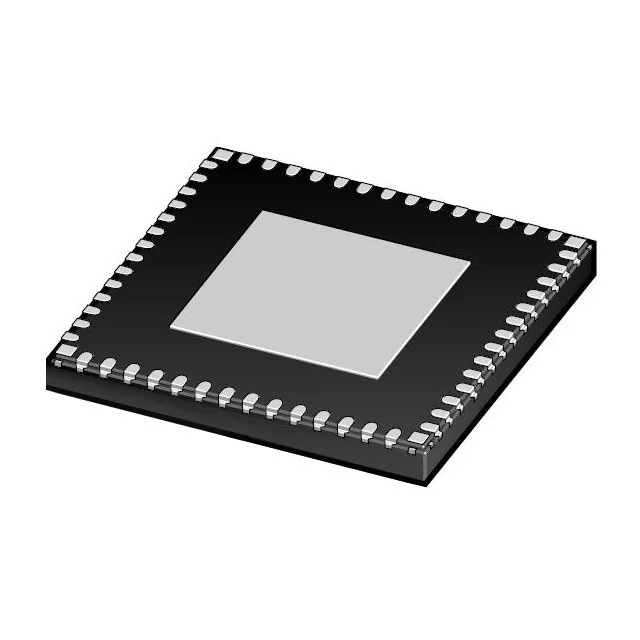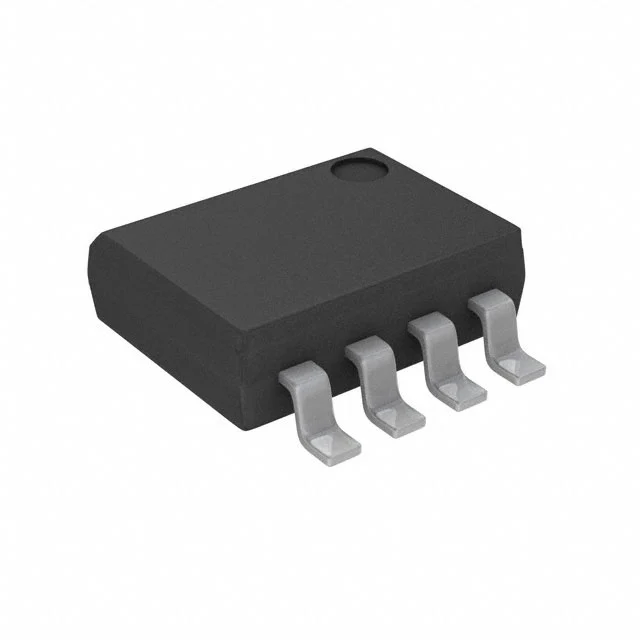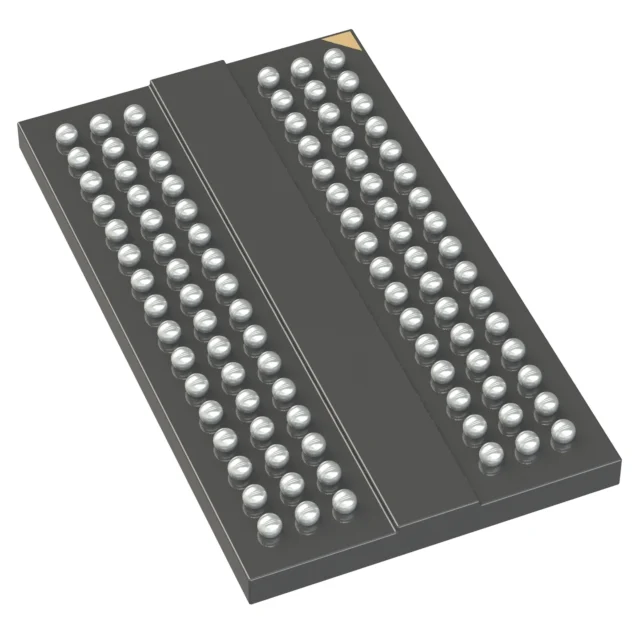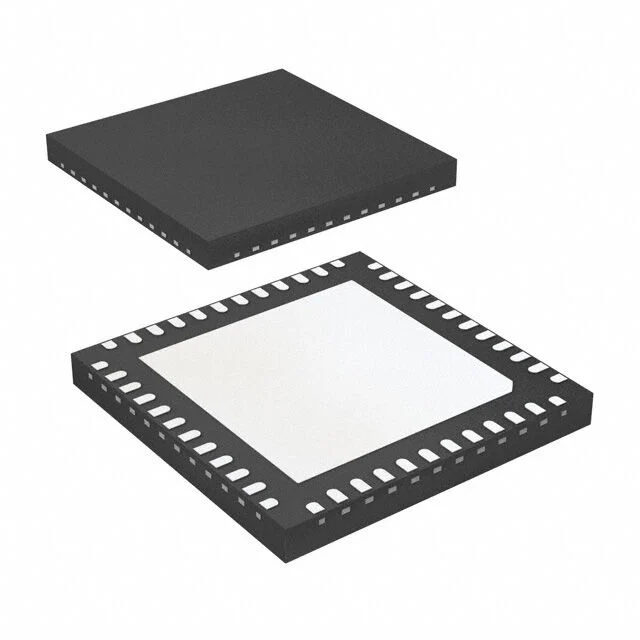

ISOW1432BDFMR
Brand: Texas Instruments
Texas Instruments ISOW1432BDFMR is a power management component designed for AI Servers & Low-Altitude Economy (Drone and UAV) and related applications. In stock at Superb Automation — request a quote for competitive pricing and fast delivery.
Product Specifications
ISOW1432BDFMR
Texas Instruments — Power Management & Signal Chain
Product Overview
The ISOW1432BDFMR from Texas Instruments is a power management / signal chain IC delivering high efficiency, precision regulation, and robust protection. Texas Instruments (TI) is a global leader in analog ICs, power management solutions, and embedded processors.
Superb Automation partners with leading brands including Qorvo, TI, ADI, XILINX, NVIDIA, Intel, ST, MACOM, Renesas, and Coilcraft to provide complete BOM and supply-chain solutions.
Key Features
- High-efficiency power conversion with low quiescent current
- Wide input voltage range with precision output regulation
- Integrated over-current, over-temperature, and short-circuit protection
- Small footprint packaging for space-constrained designs
- AEC-Q100 qualified options available for automotive applications
- Flexible sequencing and soft-start control
Key Specifications
| Input Voltage | V |
| Output Voltage | V |
| Output Current | A |
| Switching Frequency | kHz |
| Efficiency | % |
| Quiescent Current | µA |
| Topology | — |
| Package | — |
| Operating Temp | °C |
| Protection | — |
Applications
Industrial Automation
Automotive Electronics
Telecom Infrastructure
Server & Data Center Power
Medical Devices
Consumer Electronics
Request Quote — In Stock, 100% New & Original, Full Warranty
ISOW1432BDFMR: an isolated RS-485 transceiver with the supply built in
The ISOW1432BDFMR is a galvanically isolated RS-485 and RS-422 transceiver with an integrated DC-DC converter in a 20 pin wide body. It is the part that removes the separate isolated supply from an interface card: the converter, the isolation barrier and the transceiver sit in one package, and the board needs only decoupling on each side. Data rate is 12 Mbps on this member, against 500 kbps on the sibling part in the same body.
The converter is built for low emissions and low noise. The vendor states compliance with CISPR 32 class B and EN 55032 class B, which matters because an isolated RS-485 port is often the cable that leaves the cabinet and radiates. A discrete flyback built for the same job usually needs a snubber and a shielded transformer to reach the same result, and even then the board routing decides whether it passes.
There is also a second channel. An additional 2 Mbps general purpose channel crosses the same barrier, so a direction control line or a fault line does not need a separate digital isolator. The transceiver meets or exceeds the TIA/EIA-485A requirements, and the isolated side is rated to 5000 VRMS for one minute under UL 1577, which is the number a port specification usually quotes.
Key data for the ISOW1432BDFMR
| Function | Isolated RS-485 and RS-422 transceiver with an integrated DC-DC converter |
| Data rate | 12 Mbps on this member, 500 kbps on the sibling part in the same body |
| Extra channel | One additional 2 Mbps general purpose channel across the same barrier |
| Isolation | 5000 VRMS for 60 s per UL 1577 on both the signal and the power path |
| Emissions | Stated to meet CISPR 32 class B and EN 55032 class B |
| Standard | Meets or exceeds TIA/EIA-485A requirements |
| External parts | No external components beyond decoupling, with ferrite bead provisions for tighter emission limits |
Body, packing and marking data
| Body | SOIC DFM, 20 pins, the wide isolated body that carries the converter |
| Packing | 850 pieces on a large reel, a reel size driven by the body width |
| Finish | NIPDAU, moisture level 3 with a 168 hour floor life, 260 C peak |
| Marking | ISOW1432 printed on the body, without the reel or the revision letter |
| Temperature | Minus 40 C to plus 125 C |
The integrated converter changes the fault model
A discrete isolated RS-485 port has two failure points: the converter and the isolator. This part has one. That reduces the bill of materials and removes the most common field failure in an isolated port, which is a converter that runs hot because its snubber was tuned for a different transformer batch.
It also removes a degree of freedom. The isolated supply voltage and its current limit are fixed by the part, so a board that needed a higher isolated current for a long line bias has to look at the vendor limits rather than at a bigger transformer. The output current budget has to cover the transceiver, the termination resistors and any sensor on the isolated side, and it has to be checked against the worst case temperature rather than the typical one, with the converter losses included.
Where an isolated RS-485 port with its own supply is used
Solar inverters, protection relays, motor drives, building automation controllers and industrial transport all carry an RS-485 port that has to survive a ground potential difference across a long cable. The integrated converter is what allows the port to be built without a second isolation barrier for the supply, and the 2 Mbps extra channel carries the direction control without a third part.
Our CAN bus transceiver selection page compares the isolated bus options side by side, and the component lead time solutions page covers how we schedule a part that ships 850 pieces per reel rather than a round 1000 or 2500.
Questions we get on this code
Buyers ask why the reel holds 850 pieces. The body is 20 pins wide, the carrier is wider, and the reel holds fewer parts per layer than the 16 pin families. That is a packing fact rather than a supply signal, but it changes the reel count on a production order, so a quantity quoted in reels has to be converted to pieces before the schedule is agreed.
The second question is whether this part can replace a discrete isolated port without a board change. It cannot, because the pin count, the body width and the isolated supply arrangement all differ. What it can do is replace the whole block on the next revision, and the saving is measured in components, board area and test time rather than in unit price alone, which is why the comparison has to be made on the whole port rather than on one line of the bill of materials.