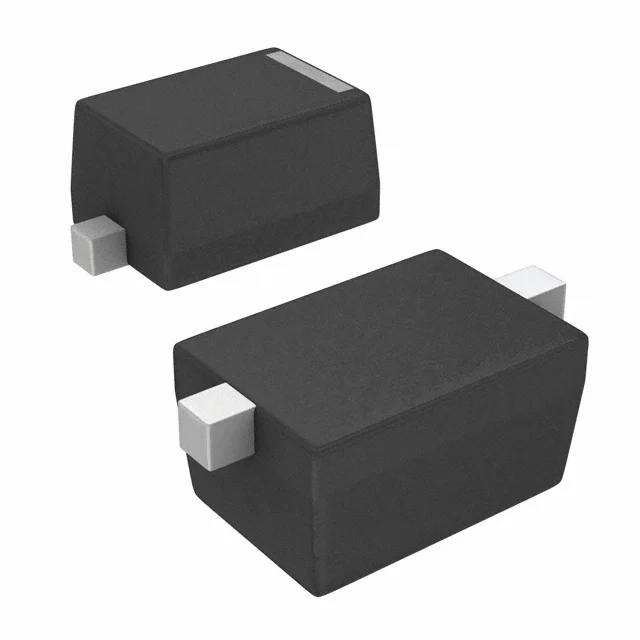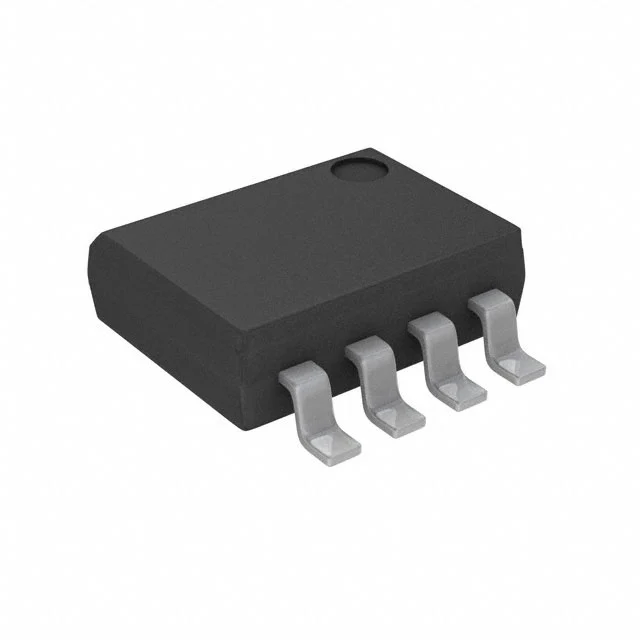

INA2180A4QDGKRQ1
Brand: Texas Instruments
Texas Instruments INA2180A4QDGKRQ1 is a power management component designed for AI Servers & Low-Altitude Economy (Drone and UAV) and related applications. In stock at Superb Automation — request a quote for competitive pricing and fast delivery.
Product Specifications
INA2180A4QDGKRQ1
Texas Instruments — Power Management & Signal Chain
Product Overview
The INA2180A4QDGKRQ1 from Texas Instruments is a power management / signal chain IC delivering high efficiency, precision regulation, and robust protection. Texas Instruments (TI) is a global leader in analog ICs, power management solutions, and embedded processors.
Superb Automation partners with leading brands including Qorvo, TI, ADI, XILINX, NVIDIA, Intel, ST, MACOM, Renesas, and Coilcraft to provide complete BOM and supply-chain solutions.
Key Features
- High-efficiency power conversion with low quiescent current
- Wide input voltage range with precision output regulation
- Integrated over-current, over-temperature, and short-circuit protection
- Small footprint packaging for space-constrained designs
- AEC-Q100 qualified options available for automotive applications
- Flexible sequencing and soft-start control
Key Specifications
| Input Voltage | V |
| Output Voltage | V |
| Output Current | A |
| Switching Frequency | kHz |
| Efficiency | % |
| Quiescent Current | µA |
| Topology | — |
| Package | — |
| Operating Temp | °C |
| Protection | — |
Applications
Industrial Automation
Automotive Electronics
Telecom Infrastructure
Server & Data Center Power
Medical Devices
Consumer Electronics
Request Quote — In Stock, 100% New & Original, Full Warranty
INA2180A4QDGKRQ1: dual 200 V/V automotive monitor in a VSSOP-8
The INA2180A4QDGKRQ1 is the automotive dual of the INA180 family at 200 V/V, in an 8 pin VSSOP body. It is AEC-Q100 grade 1 qualified for minus 40 C to plus 125 C ambient, HBM ESD class 2 and CDM class C6, with functional safety documentation available. Each channel reads a shunt from 0.2 V below ground to 26 V above it on a 2.7 V to 5.5 V supply, with 150 uV of offset at 0 V common mode, 500 uV at 12 V, 1 uV per degree of drift, 1 percent gain error and 105 kHz of bandwidth at gain 200. Both channels together draw 500 uA maximum.
The automotive dual exists because a vehicle module that monitors two loads usually has to do it on one board area behind one connector. Two channels in one package share the bypass capacitor and the qualification file, which is worth more to a programme than the few cents of silicon. The published packing is 2500 pieces on a large reel with SN plating and moisture level 1, so there is no floor life clock.
Key data for the INA2180A4QDGKRQ1
| Gain | 200 V/V per channel, with 20, 50 and 100 in the same Q1 family |
| Input | Common mode minus 0.2 V to plus 26 V per channel, independent of the 2.7 V to 5.5 V supply |
| Accuracy | Offset 150 uV maximum at 0 V and 500 uV at 12 V, 1 uV per degree drift, 1 percent gain error |
| Bandwidth | 105 kHz at gain 200 with a 10 pF load, which suits monitoring rather than fast protection |
| Supply | 2.7 V to 5.5 V, 500 uA maximum for both channels, AEC-Q100 grade 1 qualification |
| ESD | HBM class 2 and CDM class C6, both stated on the qualification line of the data sheet |
Body, marking and reel data
| Body | DGK, VSSOP 8 pin, the only dual body printed for the Q1 family |
| Reel | 2500 pieces on a large reel, with 2000 pieces printed on the carrier table row of the same string |
| Finish | SN plating, moisture level 1 at 260 C, unlimited floor life |
| Marking | The addendum prints 4180A1Q against the A4 row, a marking field that names the A1 gain |
| Grade | AEC-Q100 grade 1, minus 40 C to 125 C ambient, functional safety documentation available |
Two loads, one package, and the marking trap
The marking line is worth a paragraph of its own. The addendum prints 4180A1Q against the A4 row, which is the marking convention for the A1 gain in the same family. A receiving inspection that decodes the marking instead of reading the reel label will conclude that an A4 shipment is an A1 shipment and reject a good lot, or accept a wrong one. That is exactly the kind of thing a supplier is expected to catch before the carton reaches the line, and it is why our incoming check reads the label first and the marking second.
The electrical consequence is real too. A1 is 20 V/V and A4 is 200 V/V, a factor of ten in output scale, so a mixed carton produces readings that are wrong by an order of magnitude and perfectly stable, which is the hardest kind of fault to notice. Where a programme runs more than one gain, our incoming inspection plan sets out the label, marking and reel checks, and the amplifier cross reference lists the gains by part number so a substitution is visible on paper.
Buyer questions on the INA2180A4QDGKRQ1
Why does the marking not match the gain? The marking field in the automotive addendum prints the A1 convention on the A4 row. The reel label carries the orderable string, so it is the authoritative identifier and the marking is not.
Is the packing 2000 or 2500 pieces? The orderable table prints 2500 and the carrier table prints 2000 on the same string. We confirm the reel count on receipt rather than quoting a number the documents disagree about.
Can this part replace two single automotive monitors? Electrically yes, if both channels share a supply and a ground return. Mechanically no, the VSSOP 8 land is different from the SC70 6 land of the single part.
Availability and ordering notes
The Q1 dual is active at 2500 pieces on a large reel with SN plating and moisture level 1, and the reel label is the only reliable gain identifier because of the marking convention. The automotive document SLYS017 is separate from the industrial INA180 sheet, so an automotive string is verified against its own addendum. We record the label, the marking and the packing on receipt, and the result goes on the sourcing audit trail. The packing disagreement between the orderable table and the carrier table only matters when a line schedules a run against a reel count, and it is settled at intake rather than after the kit is short.