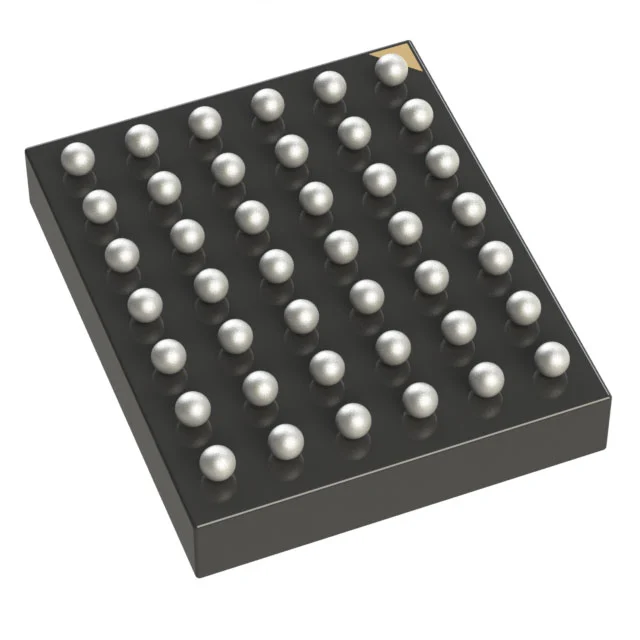

DRV2624YFFR
Brand: Texas Instruments
Texas Instruments DRV2624YFFR is a power management component designed for AI Servers & Low-Altitude Economy (Drone and UAV) and related applications. In stock at Superb Automation — request a quote for competitive pricing and fast delivery.
Product Specifications
DRV2624YFFR
Texas Instruments — Power Management & Signal Chain
Product Overview
The DRV2624YFFR from Texas Instruments is a power management / signal chain IC delivering high efficiency, precision regulation, and robust protection. Texas Instruments (TI) is a global leader in analog ICs, power management solutions, and embedded processors.
Superb Automation partners with leading brands including Qorvo, TI, ADI, XILINX, NVIDIA, Intel, ST, MACOM, Renesas, and Coilcraft to provide complete BOM and supply-chain solutions.
Key Features
- High-efficiency power conversion with low quiescent current
- Wide input voltage range with precision output regulation
- Integrated over-current, over-temperature, and short-circuit protection
- Small footprint packaging for space-constrained designs
- AEC-Q100 qualified options available for automotive applications
- Flexible sequencing and soft-start control
Key Specifications
| Input Voltage | V |
| Output Voltage | V |
| Output Current | A |
| Switching Frequency | kHz |
| Efficiency | % |
| Quiescent Current | µA |
| Topology | — |
| Package | — |
| Operating Temp | °C |
| Protection | — |
Applications
Industrial Automation
Automotive Electronics
Telecom Infrastructure
Server & Data Center Power
Medical Devices
Consumer Electronics
Request Quote — In Stock, 100% New & Original, Full Warranty
DRV2624YFFR: a closed loop haptic driver with 1 kB of internal memory
The DRV2624YFFR drives a linear resonant actuator or an eccentric rotating mass motor from a 2.7 V to 5.5 V rail, using a closed loop architecture that measures the back EMF of the actuator and adjusts the drive to keep the effect the same as the battery discharges. The loop is the point of the part. An open loop driver produces a strong click on a full battery and a weak one at 3.4 V, and the difference is what users describe as a mushy button.
Inside the package there is a 1 kB RAM block and a waveform sequencer, so a short pattern can be stored on the device and played from a trigger pin without waking the host processor. Real time playback mode takes a stream from the host when the effect is not known in advance, and the internal memory takes over when it is. Automatic resonance tracking, automatic overdrive and automatic braking cover the three moments that decide whether a haptic pulse feels sharp.
The power figures are the reason the part turns up in wearables. Shutdown current is 105 nA typical and 180 nA maximum with the reset pin held low, standby current is 1.55 uA typical and 2 uA maximum, and idle quiescent current is 2.5 mA. Output stage resistance is 0.75 ohm across both switches, so a 200 mA drive loses about 30 mW in the driver itself rather than in the actuator.
Key data for the DRV2624YFFR
| Function | Closed loop haptic driver for linear resonant actuators and eccentric rotating mass motors |
| Supply | 2.7 V to 5.5 V, with an on chip 1.8 V regulator brought out for the digital side |
| Actuator range | Linear resonant actuator frequency from 45 Hz to 300 Hz, load capacitance up to 100 pF |
| Memory | 1 kB RAM with a loopable waveform sequencer and hardware or software trigger |
| Interface | I2C, 1.8 V compatible and tolerant of the supply rail, with an optional interrupt pin |
| Current | 105 nA typical shutdown, 1.55 uA typical standby, 2.5 mA idle quiescent |
| Output stage | 0.75 ohm on resistance across the low side and high side switches, 15 kOhm output impedance when shut down |
| Diagnostics | Resistance based actuator detection, over current and thermal protection |
Body, packing and marking data
| Body | DSBGA YFF, 9 balls, 1.498 mm by 1.361 mm, a 0.4 mm pitch array |
| Packing | 3000 pieces on a large reel as DRV2624YFFR, 250 pieces on a small reel as DRV2624YFFT |
| Finish | SNAGCU ball material, moisture level 1, 260 C peak, unlimited floor life |
| Temperature | Minus 40 C to plus 85 C ambient, junction rated to 150 C, 107 C per W junction to ambient in still air |
Order code note before you place the string on a purchase order
The R at the end is the reel, and the T at the end of the sibling string is the small reel. Both rows are printed as active production with SNAGCU balls at moisture level 1, and the part marking is 2624 on both. A prototype line that orders the T string and then moves to the R string is buying the same device on a different carrier, not a different device.
The pin to watch at assembly is the reset pin, which has no internal pull up or pull down. Left floating, the part sits in an undefined state and draws more than the 105 nA shutdown figure, which is the kind of leak that shows up as a battery drain in a wearable and never appears on the bench. Tie it to the supply when the pin is not used, and tie the trigger pin to ground when that one is not used.
Where a closed loop haptic driver earns its place
A phone, a watch band, a mouse, a touch panel and a game controller all need a short mechanical pulse that feels the same on the tenth press as on the first. The closed loop keeps the amplitude constant as the battery falls, and the internal memory keeps the host out of the loop, which is worth more than the part cost on a device that runs from a coin cell.
On a production line the driver is only half the problem, because the actuator itself has a spread of resonant frequencies. Our OEM procurement page covers buying driver and actuator as one kit, and the incoming inspection plan page is where the actuator resonance check belongs if the incoming parts are not pre sorted.
Questions we get on this code
The first question is whether the part can drive an eccentric rotating mass motor. It can, and the closed loop switches to a different tracking mode for it, but the diagnostics behave differently because a rotating mass has no single resonance to track. The vendor draws the distinction in the functional description rather than in the feature list, and it is worth reading before the first prototype.
The second question is about the one wire trigger. The scheme sends a pattern index over the trigger pin as a pulse count, so the host does not need I2C for a simple click. The catch is that the pattern has to be stored in the 1 kB RAM first, and a device that boots with an empty RAM produces nothing until the host writes one.