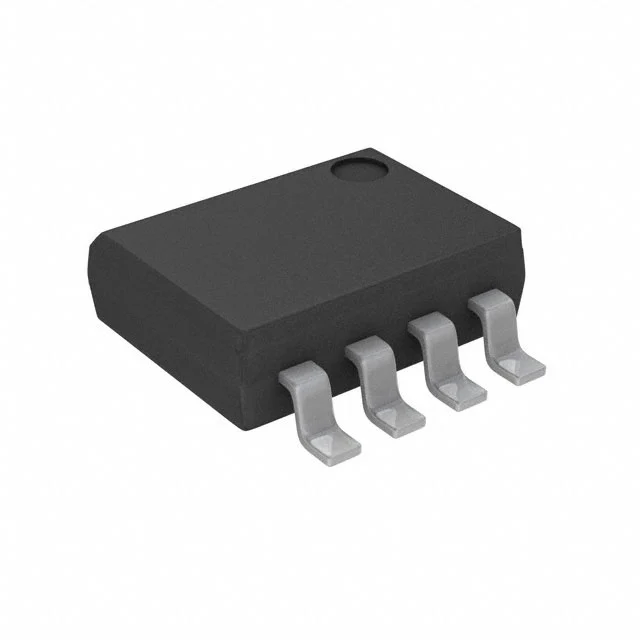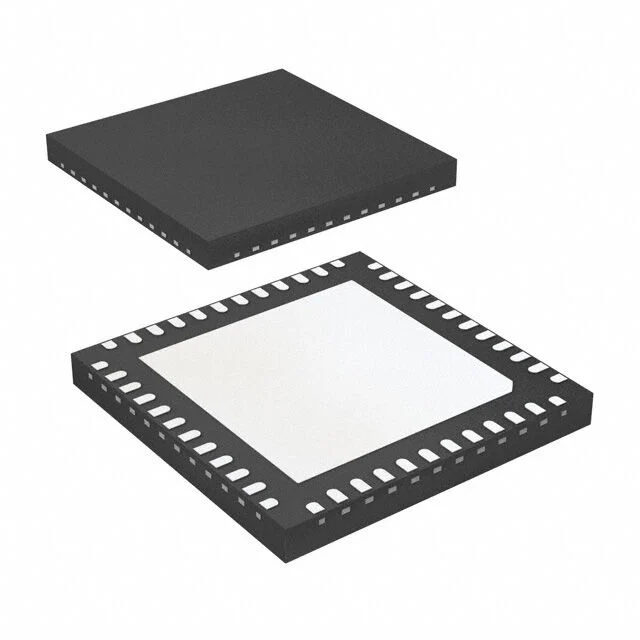

BQ75614PAPRQ1
Brand: Texas Instruments
Texas Instruments BQ75614PAPRQ1 is a power management component designed for AI Servers & Low-Altitude Economy (Drone and UAV) and related applications. In stock at Superb Automation — request a quote for competitive pricing and fast delivery.
Product Specifications
BQ75614PAPRQ1
Texas Instruments — Power Management & Signal Chain
Product Overview
The BQ75614PAPRQ1 from Texas Instruments is a power management / signal chain IC delivering high efficiency, precision regulation, and robust protection. Texas Instruments (TI) is a global leader in analog ICs, power management solutions, and embedded processors.
Superb Automation partners with leading brands including Qorvo, TI, ADI, XILINX, NVIDIA, Intel, ST, MACOM, Renesas, and Coilcraft to provide complete BOM and supply-chain solutions.
Key Features
- High-efficiency power conversion with low quiescent current
- Wide input voltage range with precision output regulation
- Integrated over-current, over-temperature, and short-circuit protection
- Small footprint packaging for space-constrained designs
- AEC-Q100 qualified options available for automotive applications
- Flexible sequencing and soft-start control
Key Specifications
| Input Voltage | V |
| Output Voltage | V |
| Output Current | A |
| Switching Frequency | kHz |
| Efficiency | % |
| Quiescent Current | µA |
| Topology | — |
| Package | — |
| Operating Temp | °C |
| Protection | — |
Applications
Industrial Automation
Automotive Electronics
Telecom Infrastructure
Server & Data Center Power
Medical Devices
Consumer Electronics
Request Quote — In Stock, 100% New & Original, Full Warranty
BQ75614PAPRQ1: a 14S or 16S automotive monitor with current sense inside
The BQ75614PAPRQ1 is a battery monitor for automotive 48 V systems. It reads up to 16 series cells, balances them, and measures pack current through a shunt, all from one 64 pin package. A module built around it does not need a separate current sense amplifier or a separate balancing controller, which on a 48 V pack is most of the analogue front end in one part.
The conversion path is the reason it exists. The part measures a full stack in under 200 microseconds, and the post converter filters turn those samples into steady readings without the host having to average them. Both matter on a pack that is being loaded by a motor drive: a stack read cell by cell over several milliseconds sees cells at different points in the current waveform, and the sum of those readings is not the pack voltage at any single instant.
The device is qualified to AEC-Q100 Grade 1 for minus 40 to 125 C ambient, and it is developed for functional safety applications with both systematic and hardware capability stated up to ASIL D. The accuracy headline is plus or minus 1.5 mV on the cell channels.
Key data for the BQ75614PAPRQ1
| Function | Automotive battery monitor, balancer and current sense front end |
| Cell count | Up to 14 or 16 series cells in one module |
| Conversion time | Full stack measured in under 200 microseconds |
| Accuracy | Plus or minus 1.5 mV on the cell channels |
| Current sense | Shunt resistor measurement, can be synchronised with the cell readings |
| Filtering | Input filters on the cell pins plus post converter low pass filtering |
| Balancing | Autonomous internal balancing, paused and resumed on temperature |
| Qualification | AEC-Q100 Grade 1, minus 40 to 125 C, HBM level 2, CDM level C4B |
| Functional safety | Developed for ISO 26262 applications, systematic and hardware capability up to ASIL D |
| Package | HTQFP, 64 pins, 10.00 mm by 10.00 mm |
| Compatibility | Pin, package and software compatible with the stacked monitor family, 16S, 14S and 12S members |
| Ordering | BQ75614PAPRQ1, 1000 pieces on a large tape and reel, moisture level 3 at 260 C with a 168 hour floor life |
Why a 48 V module needs a standalone monitor
A high voltage pack stacks monitors in a daisy chain because the pack voltage is far above what one device can stand off. A 48 V module is different: the whole stack sits inside the working range of one part, so there is no chain to build and no isolation barrier to cross. That removes the communication latency between devices and the cost of the isolation components, and it makes the module simpler to certify because there are fewer places for a single fault to hide.
The standalone arrangement also changes the failure analysis. On a stacked system a lost link takes out the whole pack reading, and the system has to decide whether to limp or to open the contactors. On a single device the reading is either there or the device has failed, and a second reference channel plus the internal diagnostics is enough to tell the difference.
The cell count choice is 14S or 16S from the same body. A 48 V pack built from 14 cells and one built from 16 cells both land in the part, and the spare channels on the 14S build are simply not connected. Same reel, same test program, two pack variants.
The current channel and the synchronisation it offers
State of charge on a pack that is being pulsed depends on pairing each voltage reading with the current that was flowing at that instant. The part can synchronise its shunt measurement with the cell conversion, so the host receives a voltage set and a current that belong together. Without that pairing, the internal resistance calculated from the pair carries the error of the timing offset, and the error grows with the rate of change of the load.
The shunt itself is external, and its tolerance lands on every current number. A 0.1 per cent part with a low temperature coefficient is the normal choice on a 48 V module; a cheaper part will pass a bench test and fail a cold start, because the coefficient shows up as a current error that changes with the season.
The measurement range is set by the shunt and the amplifier gain, and the gain is a configuration item. A module that is re rated for a higher current needs a new shunt and a new gain, and both have to be re verified against the pack current at the top of the range rather than at the middle where the bench test usually runs.
Where it fits in a build
Automotive 48 V lithium packs, e-bike and e-scooter batteries, and any 48 V module that has to carry an automotive qualification. A 12 V or 24 V pack built to an industrial standard is better served by the industrial monitor family, which carries the same measurement approach without the automotive documentation.
On an automotive programme the part number on the purchase order and the documentation pack that travels with it are both part of the release. For a build that has to keep that evidence together, the sourcing audit trail page sets out what we keep and how it is handed over.
The sourcing side of this part is covered on the supplier scorecard. For a part that carries an automotive qualification, that page covers how a supplier is scored over a programme.
Questions we get on this code
Can it monitor a pack with fewer than 14 cells? Yes, unused channels are left unconnected and the configuration is set to the cell count in use. The accuracy of the connected channels does not change.
Does the balancing run without the host? Yes, the part balances autonomously and pauses when the temperature rises. The host can still take control when a specific balancing policy is needed.
What does the functional safety capability mean in practice? It means the device was developed with the documentation and the diagnostic coverage that an ISO 26262 system needs to claim a given level. The claim belongs to the system, and the device evidence is one input to it.
Why is the conversion this fast? Because a stack read slowly cannot be compared with a single current sample, and because a pack controller needs a fresh reading inside the control loop rather than outside it.