


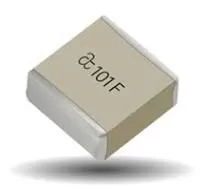

SPB52410S3
Brand: Superb Automation
Superb Automation SPB52410S3 is a amplifiers & comparators component designed for Signal Conditioning & Filtering and related applications. In stock at Superb Automation — request a quote for competitive pricing and fast delivery.
Product Specifications
SPB52410S3
Superb Automation — Amplifiers & Comparators
Product Overview
The SPB52410S3 from Superb Automation is a precision amplifier / comparator delivering high gain, wide bandwidth, and low distortion for signal conditioning. Superb Automation supplies this part with incoming inspection, test records and lot traceability.
Superb Automation partners with leading brands including Qorvo, TI, ADI, XILINX, NVIDIA, Intel, ST, MACOM, Renesas, and Coilcraft to provide complete BOM and supply-chain solutions.
Key Features
- High gain-bandwidth product for wideband signal amplification
- Low input offset voltage and drift for precision DC applications
- EMI-hardened design for robust operation in noisy environments
- Rail-to-rail input/output for maximum dynamic range
- Low quiescent current for power-sensitive designs
- Unity-gain stable with capacitive load drive capability
Key Specifications
| Channels | — |
| GBWP | MHz |
| Slew Rate | V/µs |
| Vos | µV |
| Iq per Channel | µA |
| Input Type | — |
| Supply Voltage | V |
| Operating Temp | °C |
| Package | — |
Applications
Signal Conditioning & Filtering
Current Sensing & Monitoring
Data Acquisition Systems
Audio & Video Processing
Sensor Interface Amplifiers
Industrial Control Loops
SPB52410S3: the 2.2 dB noise figure that decides the head of the chain
The SPB52410S3 is a DC to 3 GHz gain block in a SOT89, 20 dB of small signal gain, 14 dBm at the 1 dB compression point and 35 mA from a 5 V rail. Six other parts in the same family cover similar bands with similar output power. The number that separates this one is the noise figure: 2.2 dB here against 2.9 to 4.0 dB for every sibling.
What the vendor publishes
| Parameter | Value |
|---|---|
| Frequency range | DC to 3 GHz |
| Gain | 20 dB |
| Output P-1dB | 14 dBm at 1 GHz |
| Output Psat | 15 dBm |
| Noise figure | 2.2 dB |
| Input return loss | 17 dB, 1.33:1 |
| Output return loss | 21 dB, 1.20:1 |
| Output IP3 | 26 dBm at 1 GHz |
| Supply | +5 V, 35 mA |
| Package | SOT89 |
191 kelvin at the input
2.2 dB of noise figure is 191 K of equivalent input noise temperature. Put this part first and a second stage with 6 dB of noise figure and 20 dB of gain behind it, and the pair measures 2.28 dB. Put a 3.5 dB part first with the same second stage and the pair measures 3.54 dB. The difference is not in the second stage at all: it comes entirely from which device sees the source impedance first. At the front of a receiver that 1.26 dB is usually worth more than any gain specification on the page.
A small signal block, not a driver
With 20 dB of gain and 14 dBm at compression, the input at compression is -6 dBm. That is a low ceiling. Any signal path that can deliver more than -6 dBm into this part will clip it before the following stage is stressed. The saturation power of 15 dBm sits only 1 dB above the compression point, so the knee is abrupt rather than soft, and there is no graceful overload region to lean on. At compression the part draws 0.175 W of DC and delivers 0.025 W of RF, 14.4 percent conversion, which leaves 0.15 W to get out of a SOT89. That is a comfortable load for the package.
Matching that does not need a pad
Input return loss of 17 dB is 1.33:1 with 0.09 dB of mismatch loss; the output at 21 dB is 1.20:1 with 0.03 dB. Boards that would otherwise place a 3 dB attenuator between the amplifier and a filter can leave the pad out here, and the noise figure survives, which is the whole point of buying a 2.2 dB part. One caution follows from the band: DC to 3 GHz means the input is DC coupled inside the part. A source with a DC offset, a single supply operational amplifier or a DAC output for example, needs a blocking capacitor or it will shift the bias of the first transistor.
Two questions buyers ask
Can it run from 3.3 V? The vendor table gives one supply, +5 V at 35 mA, and one set of RF figures measured on it. Nothing published covers 3.3 V operation, and the compression point would fall if it worked at all. Treat a 3.3 V request as a question for the vendor rather than an assumption.
How much gain variation should I expect over temperature and band? The gain block table does not publish flatness or a temperature coefficient, unlike the driver amplifier table in the same series. If your budget has less than 2 dB of margin, ask for a swept measurement over the band you will use before you fix the margin.
SUPERB supplies the SPB52410S3 with the vendor table confirmed against the lot, and we can quote it together with the SOT89 siblings in the same family. If you are replacing an existing front end stage, the amplifier cross reference hub lists the parameters that have to agree before a swap is safe. For allocation or lead time on the surrounding parts, see BOM shortage recovery. Stock and price breaks for the SPB52410S3 are quoted from the amplifiers and comparators index.
Request Quote — In Stock, 100% New & Original, Full Warranty