


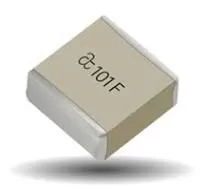

SPB52390D2
Brand: Superb Automation
Superb Automation SPB52390D2 is a amplifiers & comparators component designed for Signal Conditioning & Filtering and related applications. In stock at Superb Automation — request a quote for competitive pricing and fast delivery.
Product Specifications
SPB52390D2
Superb Automation — Amplifiers & Comparators
Product Overview
The SPB52390D2 from Superb Automation is a precision amplifier / comparator delivering high gain, wide bandwidth, and low distortion for signal conditioning. Superb Automation supplies this part with incoming inspection, test records and lot traceability.
Superb Automation partners with leading brands including Qorvo, TI, ADI, XILINX, NVIDIA, Intel, ST, MACOM, Renesas, and Coilcraft to provide complete BOM and supply-chain solutions.
Key Features
- High gain-bandwidth product for wideband signal amplification
- Low input offset voltage and drift for precision DC applications
- EMI-hardened design for robust operation in noisy environments
- Rail-to-rail input/output for maximum dynamic range
- Low quiescent current for power-sensitive designs
- Unity-gain stable with capacitive load drive capability
Key Specifications
| Channels | — |
| GBWP | MHz |
| Slew Rate | V/µs |
| Vos | µV |
| Iq per Channel | µA |
| Input Type | — |
| Supply Voltage | V |
| Operating Temp | °C |
| Package | — |
Applications
Signal Conditioning & Filtering
Current Sensing & Monitoring
Data Acquisition Systems
Audio & Video Processing
Sensor Interface Amplifiers
Industrial Control Loops
SPB52390D2: the widest gap between intercept and compression in the family
The SPB52390D2 covers DC to 8 GHz with 12 dB of gain and 12.5 dBm at compression, drawing 40 mA from 5 V in a 2 x 2 mm DFN. Its output intercept is 28 dBm, the same figure as the 17 dB part on the DC to 6 GHz band, but its compression point is 1.5 dB lower. That 15.5 dB spacing between intercept and compression is the widest in the series, and it defines the job this part is good at.
What the vendor publishes
| Parameter | Value |
|---|---|
| Frequency range | DC to 8 GHz |
| Gain | 12 dB |
| Output P-1dB | 12.5 dBm at 1 GHz |
| Output Psat | 13.5 dBm |
| Noise figure | 4 dB |
| Input return loss | 16 dB, 1.38:1 |
| Output return loss | 17 dB, 1.33:1 |
| Output IP3 | 28 dBm at 1 GHz |
| Supply | +5 V, 40 mA |
| Package | 2 x 2 mm DFN-6L |
Why the spacing matters more than the compression point
An output intercept of 28 dBm with a 12.5 dBm compression point means the part stays linear well below its own ceiling. With two tones at 2.5 dBm each at the output, third order products land about 51 dBc down; at 6 dBm per tone they are 38 dBc down. A part with the same intercept but a higher compression point would be working closer to its knee at the same output level, and the products would stop improving at the rate the intercept predicts. For a multicarrier signal or a high order quadrature amplitude modulation, this is the member of the family to start from.
Twelve dB is a stage, not a chain
With 12 dB of gain and 12.5 dBm at compression, the input at compression is 0.5 dBm. The part expects to be driven by something that already has level: a first gain stage, a filter output with gain ahead of it, or a mixer that delivers around 0 dBm. Used directly after an antenna it will contribute its 4 dB noise figure to a chain that has no gain in front, and the 438 K of noise temperature will dominate the receive floor.
The band edge and the DC bill
Extending to 8 GHz is what separates this part from the two DC to 6 GHz members of the family. At 5 V and 40 mA the DC input is 0.20 W, and at compression the output is 0.018 W, 8.9 percent conversion, the lowest in the family because the compression point is 1.5 dB below the 14 dBm siblings while the current is the same. The 0.18 W of heat in a 2 x 2 DFN needs a paddle with vias, as with every part in this package.
Two questions buyers ask
Can it drive a mixer LO port? 12.5 dBm at compression with 13.5 dBm of saturation can supply about +10 dBm to a level 7 mixer with a small backoff, but the margin is thin. The 18 dBm part on the DC to 10 GHz band is the safer choice for an LO driver.
Does the gain fall off towards 8 GHz? The table does not publish flatness. Since the part is specified to 8 GHz and this is the band edge that distinguishes it, ask for a sweep at the top of the band before you rely on 12 dB there.
SUPERB supplies the SPB52390D2 with the vendor table confirmed per lot. If you are qualifying it in place of a part you already use, the amplifier cross reference hub lists the parameters to match. When the surrounding circuitry is on allocation, see BOM shortage recovery. Availability and price breaks for the SPB52390D2 are quoted from the amplifiers and comparators index.
Request Quote — In Stock, 100% New & Original, Full Warranty