
UAV Power, Motor & Navigation System PCB
The Propulsion and Guidance Core: BMS, ESC Drives, GNSS/INS, and Collision Avoidance
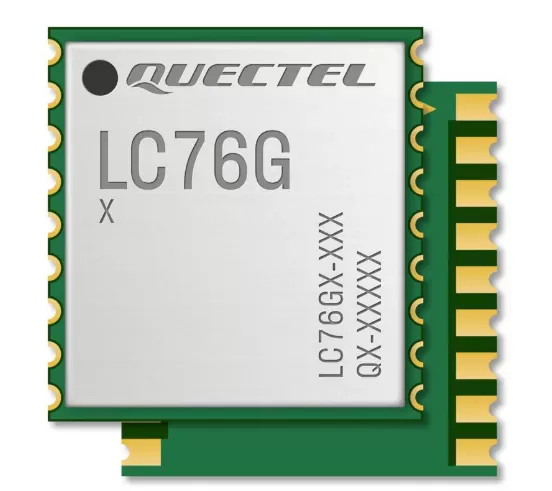
Every UAV ultimately depends on three foundational subsystems: power (to stay aloft), propulsion (to move and maneuver), and navigation (to know where it is and where it's going). A failure in any of these means the mission ends — often abruptly. The PCBs that implement battery management, motor drives, navigation sensors, and collision avoidance must combine high power handling with reliability that borders on the absolute. This article covers the complete power, propulsion, and navigation PCB ecosystem for UAVs: battery management systems (BMS), electronic speed controllers (ESCs), GNSS/INS navigation, collision avoidance sensors, and payload power distribution. UAVs are overwhelmingly battery-powered — lithium-polymer (LiPo) or lithium-ion (Li-Ion) packs with configurations from 3S (11.1 V) for micro-drones to 12S (50.4 V) for heavy-lift industrial UAVs, with capacities from 500 mAh to 50,000 mAh. The BMS PCB ensures safe operation by monitoring cell voltages, balancing cells, controlling charge/discharge, and protecting against over-voltage, under-voltage, over-current, and over-temperature. A 12S LiPo battery (12 cells in series) requires individual monitoring of each cell's voltage (3.0–4.2 V per cell) with accuracy of ±5 mV to prevent over-discharge (which permanently damages the cell) and over-charge (which can cause thermal runaway and fire). The BMS PCB uses a dedicated battery monitor IC (e.g., Texas Instruments BQ76952, supporting 3–16 cells) that measures each cell voltage through a resistive divider network. The voltage sense traces from the battery's balance connector to the monitor IC must be protected against: reverse polarity (a series 100 Ω–1 kΩ resistor and a Schottky diode clamp on each input), ESD (TVS diodes at the connector), and cell connection sequence (the battery monitor IC must survive any order of cell connection without latch-up — the IC's datasheet-specified connection sequence must be followed in the PCB layout). The cell balancing function — passive balancing using internal MOSFETs shunting current around fully charged cells — dissipates heat in the IC, requiring thermal vias and a copper pour for heat spreading. For large batteries (>10 Ah), active balancing (using inductive or capacitive charge transfer between cells) is more efficient but adds complexity to the BMS PCB. Accurate State-of-Charge (SoC) estimation — the battery's "fuel gauge" — is critical for UAV range prediction and return-to-home triggering. The BMS uses coulomb counting (integrating charge/discharge current over time) with a precision current-sense resistor (typically 0.1–1 mΩ, 1% tolerance, <50 ppm/°C TCR) and a 16–24 bit ADC. The current-sense resistor's Kelvin connections — separate sense traces that measure the voltage directly at the resistor's terminals, bypassing the high-current path — must be routed as a differential pair directly from the resistor pads to the ADC input, with the traces kept <10 mm long to minimize stray inductance. The SoC algorithm combines the coulomb counter with voltage-based correction (using the battery's known open-circuit voltage vs. SoC curve, applied during periods of low current when the voltage is not distorted by internal resistance) to maintain <1% SoC accuracy over the battery's lifetime. Superb Tech's BMS PCBs achieve <0.5% SoC accuracy through precision low-ohmic resistor placement and shielded Kelvin sensing. The ESC converts the flight controller's throttle command into the 3-phase AC power that drives the brushless DC motors. For a heavy-lift UAV with 8 motors each drawing 50 A at 50 V, the total power handled by the ESCs is 20 kW — comparable to an electric vehicle's motor drive. The ESC PCB must manage: high currents (20–100 A continuous per motor), high voltages (up to 60 V for 14S LiPo), fast switching (24–96 kHz PWM with <100 ns rise/fall times), and minimal weight (a 100 A ESC typically weighs <50 g). The ESC's power stage consists of 6 MOSFETs arranged in 3 half-bridges (one for each motor phase). For a 50 V, 80 A ESC, each MOSFET (typically an N-channel trench or super-junction device in a DFN5×6 or TOLL package) has an RDS(on) of 2–5 mΩ and a gate charge of 20–50 nC. The PCB layout of the power stage is dominated by the need to minimize parasitic inductance in the switching loop — the path from the input capacitor, through the high-side MOSFET, through the motor phase output, through the low-side MOSFET, and back to the input capacitor's ground. Every nanohenry of loop inductance generates voltage overshoot (V = L × dI/dt) during switching; at 80 A with a 50 ns switching time, dI/dt = 1.6 A/ns, so 1 nH of inductance produces a 1.6 V overshoot — significant when the MOSFET's voltage rating margin may be only 20–30%. The switching loop area is minimized by: placing the input decoupling capacitors (typically 4–10 ceramic MLCCs of 10–22 µF each, plus a bulk electrolytic of 470–1,000 µF) directly adjacent to each half-bridge, using a multi-layer PCB with the power ground plane directly under the MOSFETs (layer 2, providing the shortest possible return path), and connecting the capacitors to the MOSFET drain/source tabs with wide copper pours rather than narrow traces. Superb Tech's heavy-copper (4–6 oz) and insulated metal substrate (IMS) PCB technologies achieve <1 nH switching loop inductance for high-performance UAV ESCs. The MOSFET gate driver IC must deliver 2–5 A peak current to charge and discharge the gate within 20–50 ns, minimizing switching losses. The gate driver should be placed within 5–10 mm of the MOSFET gate pin, and the gate trace should be wide (1–2 mm) to minimize inductance and resistance. A gate resistor (typically 2.2–10 Ω) between the driver output and the gate controls the switching speed to manage EMI; the resistor should be placed as close to the gate as possible. For current sensing, shunt resistors (0.2–1 mΩ) are placed in the low-side MOSFET source path (low-side sensing) or in each phase (3-shunt sensing for Field-Oriented Control — FOC). FOC provides smoother, more efficient motor control than trapezoidal commutation and requires phase current measurement with <1% accuracy. The current-sense amplifier (typically with 50–100 V/V gain and 100–200 kHz bandwidth) must use differential Kelvin connections to the shunt resistor, with the sense traces routed as a tightly coupled differential pair on an inner layer, away from the high-current switching nodes. Superb Tech's ESC PCBs support FOC with phase current sensing accuracy of <0.5%, enabling the smooth, efficient motor control required for precision hovering and cinematography. The GNSS/INS (Global Navigation Satellite System / Inertial Navigation System) is the UAV's primary source of position, velocity, and attitude. It combines a multi-constellation GNSS receiver (GPS L1/L2, GLONASS, Galileo, BeiDou) with an IMU in a tightly-coupled or deeply-coupled Kalman filter that provides continuous navigation even through brief GNSS outages. Survey-grade and defense UAVs increasingly use multi-frequency (L1/L2 or L1/L5) GNSS receivers for centimeter-level accuracy through RTK (Real-Time Kinematic) or PPP (Precision Point Positioning). A dual-frequency GNSS receiver PCB must: receive two frequency bands simultaneously (typically L1 at 1575.42 MHz and L2 at 1227.60 MHz) with a dual-band patch antenna or two separate antennas, provide >30 dB of L1/L2 isolation (to prevent the L1 signal from saturating the L2 front-end), and maintain a low phase-center variation (<1 mm) for the antenna to achieve millimeter-level carrier-phase accuracy. The antenna PCB includes: the dual-band patch element (typically a stacked patch with the L1 element on top and the L2 element below, separated by a low-loss dielectric), a dual-band LNA (noise figure <1.5 dB, gain 25–35 dB), and a dual-band bandpass filter (rejecting out-of-band signals, particularly the strong 1.2–1.3 GHz amateur and radar bands near L2, and 1.7–1.8 GHz cellular near L1). Superb Tech's GNSS antenna PCBs achieve <1 dB noise figure and >35 dB out-of-band rejection, enabling reliable RTK positioning in challenging RF environments. In a tightly-coupled GNSS/INS architecture, the GNSS receiver provides raw pseudorange and carrier-phase measurements (not a position fix) to the INS Kalman filter, which integrates them with the IMU's acceleration and angular rate measurements. This architecture maintains navigation through partial GNSS outages (when fewer than 4 satellites are tracked) and provides faster reacquisition after complete outages. The GNSS/INS PCB integrates the GNSS receiver, the IMU (typically a tactical-grade MEMS IMU such as the ADIS16495 with <1°/hr gyro bias stability), and the navigation processor (an ARM Cortex-M7 or -A series running the Kalman filter at 100–400 Hz). The IMU and GNSS receiver must be physically co-located on the same PCB (<50 mm separation) to minimize the lever-arm correction (the translation of IMU measurements to the GNSS antenna phase center, which introduces errors if not perfectly known). The navigation processor must have a deterministic real-time operating system (RTOS) or bare-metal execution (no Linux, which introduces non-deterministic latency), with the Kalman filter running in a high-priority interrupt at a fixed rate synchronized to the IMU's data-ready signal. Superb Tech's GNSS/INS PCBs achieve <0.5 m position accuracy and <0.1° heading accuracy after GNSS outages of up to 30 seconds. For BVLOS operation and urban air mobility, UAVs must detect and avoid obstacles — other aircraft, buildings, terrain, and birds. Collision avoidance sensors include: forward-looking cameras with computer vision, ultrasonic sensors (short-range, <10 m), mmWave radar (medium-range, 10–200 m), and ADS-B In receivers (cooperative, receiving transponder signals from manned aircraft). Automotive-grade 77 GHz radar sensors (e.g., TI AWR1843, NXP TEF82xx) are increasingly adapted for UAV collision avoidance, offering all-weather detection at ranges of 100–200 m with ±1° angular resolution (using MIMO techniques with 3 transmitters and 4 receivers). The radar PCB consists of: a patch antenna array (typically 3 TX and 4 RX elements in a linear array with λ/2 spacing, occupying approximately 30 mm × 30 mm), the radar MMIC (integrating the 77 GHz transceiver, ramp generator, and ADC), and a processing MCU or DSP (running the FFT-based range-Doppler processing and CFAR detection). The antenna array's PCB must use a very low-loss, low-Dk laminate (Rogers RO3003, Dk = 3.0, tan δ = 0.001 at 77 GHz) with 0.127 mm substrate thickness to minimize surface-wave losses. The antenna elements' dimensions (approximately 1.0 mm × 1.5 mm for a 77 GHz patch) must be fabricated with <15 µm tolerance to maintain the designed radiation pattern. Superb Tech's 77 GHz radar PCBs achieve <2° angular accuracy and >100 m detection range on automotive-sized targets. ADS-B (Automatic Dependent Surveillance-Broadcast) In receivers detect the 1090 MHz transponder signals from manned aircraft, providing cooperative collision avoidance with up to 300 km range. The ADS-B In PCB consists of: a 1090 MHz bandpass filter (typically a SAW filter with <3 dB insertion loss and >40 dB out-of-band rejection at 1030 MHz, the adjacent TCAS frequency), an LNA (NF < 2 dB, gain 15–20 dB), an RF detector or down-converter, and an FPGA or MCU implementing the 1090ES (Extended Squitter) protocol decoder. The PCB's critical element is the 1090 MHz antenna: typically a quarter-wave monopole (68 mm long) or a PCB meandered antenna for compact installations. The antenna must have >25 dB of front-to-back ratio (to reject signals from below the aircraft, which are likely multipath reflections rather than direct line-of-sight signals from other aircraft). This is achieved through a ground plane that extends at least λ/4 (68 mm) in all directions beneath the antenna — a significant PCB area that must be accommodated in the UAV's layout. Superb Tech's ADS-B In PCBs achieve -93 dBm sensitivity (the minimum trigger level for ADS-B reception per DO-260B), enabling reliable detection of cooperative traffic at tactical ranges. UAV payloads — cameras, sensors, communications equipment, and mission-specific electronics — require clean, regulated, and protected power. The payload power distribution PCB takes the UAV's battery voltage (typically 12–50 V) and converts it to the multiple voltage rails required by the payload (typically 3.3 V, 5 V, 12 V, and sometimes 24 V or 48 V), with the total payload power budget ranging from 10 W for a simple camera to 500 W+ for a SAR radar or jammer. The payload power PCB uses a combination of: a high-efficiency buck converter (typically 90–95% efficient, using a synchronous rectifier topology with MOSFETs having <5 mΩ RDS(on)) to generate the main intermediate bus voltage (typically 12 V or 5 V), followed by point-of-load (POL) regulators for each payload rail. The buck converter's inductor selection is critical for UAV applications: the inductor must be shielded (to minimize radiated EMI that could couple into the magnetometer or GNSS receiver) and should have low DCR (<10 mΩ) to minimize I²R losses. The inductor's saturation current rating must be at least 1.5× the maximum load current to prevent saturation during load transients (e.g., a gimbal motor starting). Superb Tech's payload power PCBs achieve >90% end-to-end efficiency with <50 mVpp output ripple, powering sensitive payloads without degradation. Each payload power output must be individually protected: over-current protection (electronic fuse or "eFuse" with programmable current limit and fast <1 µs trip time), over-voltage protection (crowbar circuit that shorts the output if the voltage exceeds a threshold, blowing an upstream fuse), and reverse-current protection (ideal diode controller preventing current from flowing back into the battery if the payload's voltage exceeds the battery voltage, as can happen with regenerative loads). A failure in one payload must not affect others — the power distribution PCB uses independent protection on each output channel, and the main battery input is protected by a fuse or circuit breaker rated for the total payload budget plus 20% margin. Superb Tech manufactures payload power distribution PCBs with full protection and isolation, meeting the reliability requirements of BVLOS and over-people operations.1. Battery Management System (BMS) PCB
1.1 Multi-Cell Voltage Monitoring and Balancing
1.2 Coulomb Counting and State-of-Charge Estimation
2. Electronic Speed Controller (ESC) PCB
2.1 3-Phase Inverter Power Stage PCB
2.2 Gate Drive and Current Sensing
3. GNSS/INS Navigation System PCB
3.1 Multi-Frequency GNSS Receiver PCB
3.2 Tightly-Coupled GNSS/INS Integration
4. Collision Avoidance and Detect-and-Avoid (DAA) PCB
4.1 mmWave Radar Collision Avoidance Sensor PCB
4.2 ADS-B In Receiver PCB
5. Payload Power Distribution and Protection
5.1 Multi-Output DC-DC Converter PCB
5.2 Protection and Fault Isolation
Subsystem Power/Current Voltage Key Specification PCB Technology BMS (12S LiPo) 5–50 Ah 50.4 V nominal ±5 mV cell accuracy, <1% SoC FR-4, 4-layer ESC (100 A, 14S) 100 A continuous 60 V max <1 nH switching loop, FOC Heavy Cu (4 oz) / IMS, 6-layer GNSS/INS navigation <1 W 3.3 V / 5 V <0.5 m, <0.1° heading FR-4, 6-layer 77 GHz collision radar 2–5 W 5 V / 3.3 V >100 m range, ±2° angle RO3003, 4-layer Payload power distribution 10–500 W total 12–50 V input >90% efficiency, isolated faults FR-4, 4–6 layer