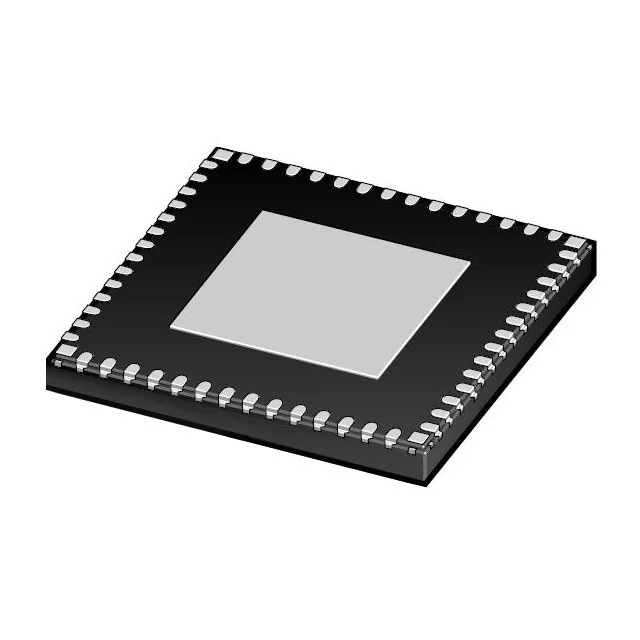
The build survives if somebody turns the notice into a last time buy quantity before the window shuts. If nobody does, the part does not disappear: it moves to the open market, where the price is set by scarcity and the only thing you really know about the reel in front of you is the date code printed on it. The difference between those two outcomes is administrative, not technical, and it is decided in the week the notice arrives.
An end of life notice is a date, not an event. The part keeps shipping until the date, and then it stops. A product change notification that precedes it is the earlier warning: JESD46 asks for 90 days notice before a change, and the end of life announcement that follows typically opens a window of six to twelve months, sometimes with a minimum buy attached. Miss the window and the part still exists on paper, in broker lists, in someone's excess inventory. It stops existing in a franchised channel, and with it goes the traceability that a medical or defense customer needs at the next audit.
The quantity is a calculation, not a guess
Most last time buy errors are not price errors, they are quantity errors, and they come from copying the previous order. A build that uses 8,000 pieces a year with three years of product life left needs 24,000 pieces, not 8,000. Add placement losses and scrap at 2 percent, add a buffer for the service spares that always appear after the last shipment, and the number is around 26,000. Order 8,000 and the line stops in fourteen months, in the middle of the last production run, with no second chance.
The opposite error costs cash. At 3.20 USD, 26,000 pieces is 83,000 USD of inventory that sits in a warehouse for three years. Carrying cost at 25 percent a year on a stock that declines from full to zero averages 41,500 USD of tied stock, so about 10,400 USD a year, roughly 31,000 USD over the three years. Above three years of coverage, the arithmetic usually argues for a board revision rather than a buy.
Storage has its own clock. Solderability degrades in storage: an OSP finish is measured in months, ENIG in a year or more, and a three year old reel of fine pitch parts needs a bake to J-STD-033 and a fresh solderability check before it goes on the line. Moisture sensitive parts need dry pack and a floor life record, and any part that has been out of its bag for years should be treated as suspect until it passes.
Three things that go wrong
Accepting a drop-in replacement on pinout alone. A pin compatible part can differ in input offset, quiescent current, ESR, switching frequency, thermal pad size, moisture sensitivity level and temperature grade. One of those will bite: the classic case is a regulator with the same pinout and a lower dropout that oscillates with the existing output capacitor, and the second classic is a capacitor with the same case size and a different dielectric that loses half its capacitance at the operating voltage.
Buying the residual on the open market without verification. After the window closes the part is available, and the price premium is the least of the problems. Verify before assembly: X-ray for die presence and bond wires, decap for die marking, curve trace against a known good part, XRF for the finish, and a date code checked against the lot history. A reel that passes all five is usable. One that passes four is a risk you are choosing to take, and that choice belongs to the customer, in writing, not to the purchasing desk.
Forgetting that the second source is a project. Qualifying a replacement is not a purchase order. It is a sample lot, a functional test against the original specification, a temperature grade check, an EMC check on switching parts, and in medical or defense work a change control record that a notified body or a customer will read. Starting that twelve weeks before the window closes is a plan. Starting it after is a fire.
Where the notice usually arrives too late
Two places account for most of the damage. The first is the bill of materials itself: a part three levels down inside a sub-assembly does not appear in the purchasing review, so the first signal is a shortage rather than a notice. The second is the service commitment, which is often written for ten years while the component plan covers three, so the last time buy gets sized for production and not for repair.
What SUPERB does with an EOL notice
The first step is a search across franchised distribution and the regional agents behind it before the part is declared gone, because a part that is end of life at one maker is frequently still in stock at three others, and an allocation elsewhere in the same family often covers it. When the part really is finished, we support a last time buy with the quantity calculated from your forecast and your remaining product life, storage in dry pack with a date code register, and release against your schedule.
Where a substitute is proposed, it is offered with the differences written down, not as a drop-in. Pin to pin substitution runs only with written customer approval, and the approval record stays with the build. Incoming material is checked at goods in with X-ray reel counting and decap on the lots that carry risk, and components are covered by a 730 day warranty from the date of our shipment. Traceability per lot is on component sourcing, the assembly side including goods in inspection and X-ray is on turnkey PCBA assembly, and the wider lead time picture is in planning around a 26 week quote.
What to send with the question
The end of life notice or the part number, annual usage, the remaining production life of the product and any service commitment after it, the current stock position, the approved vendor list if there is one, and the change control route a substitute has to pass. With those five items the build can be covered with a number instead of a hope, and the decision about how many years of parts to hold becomes a calculation everybody can see.