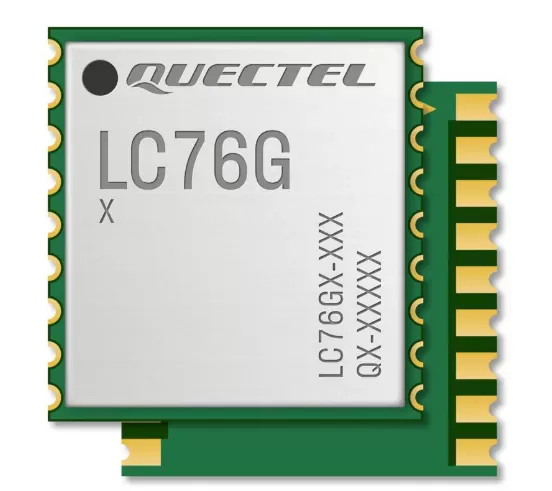

One line on the BOM comes back with a quote of 22, 26 or 34 weeks. The board is ready, the production slot is booked, and one part decides whether the build happens on time. In those weeks, lead time planning matters more than price negotiation.
This guide covers how to read a long lead time quote, how to tier a BOM by supply risk, and which levers genuinely pull a delivery date forward. It is written for buyers and engineers working on RF, medical, industrial and telecom boards.
What a 26-week quote actually tells you
A lead time is not one number. It is the sum of stages that move independently: order confirmation, the allocation window at the brand, wafer or substrate start, assembly and test, then freight, customs and incoming inspection at your end. A quote of 26 weeks is usually the brand's standard production schedule. It rarely means the part does not exist today.
Before you plan anything, separate three cases:
- Stock-backed quote. The part is on a shelf and the date is a shipping date. Days to two weeks, not months.
- Schedule-backed quote. Nothing in stock. The date is a production slot, and it can move again if supply tightens.
- Allocation. The part is in production but quantity is assigned, so only the released quantity is confirmed.
Ask which of the three you are being quoted. The same 26-week number means a different plan in each case. On imported goods, plan three to six extra weeks for freight, customs and incoming inspection before parts reach the line.
Tier the BOM before you negotiate
Not every line deserves the same attention. Sorting the BOM into supply tiers takes an afternoon and prevents most emergency purchases later. The bands below are a practical starting point for RF, medical, telecom and industrial boards.
| Band | Typical lead time | Examples | Default posture |
|---|---|---|---|
| Short | Under 4 weeks | Common passives, standard logic | Reorder on cadence, minimal buffer |
| Medium | 4 to 12 weeks | Mainstream MCUs, general-purpose analog and power | Safety stock sized to demand variance |
| Long | 12 to 30 weeks | Precision analog, RF front-end parts, some FPGAs | Safety stock plus allocation monitoring |
| Extended | Over 30 weeks, or allocated | Mature-node parts, single-source RF devices | Forward-buy decision, not a stock decision |
Two questions decide where a line lands: how many qualified sources exist, and what happens to the build if the part arrives late. A part is effectively single-source when the only alternative needs a new board revision, even if three catalogues list it.
Four levers that pull a date forward
1. Buy ahead of the purchase order
The most effective way to avoid a 26-week wait is to start the clock earlier. Place long-lead items at design freeze, not at build release. A conditional order on the two or three longest lines buys months of schedule for a fraction of the cost of a line stoppage.
2. Size the buffer with data, not instinct
Buffer stock is a calculation. The common form is safety stock equal to the service factor, multiplied by the standard deviation of demand, multiplied by the square root of the lead time in weeks. A 95 percent service target uses a factor near 1.65, and a further 10 to 15 percent belongs on lines where the lead time itself varies. Holding that buffer is the cost of a 26-week supply line, so buffer the three critical lines properly and keep the rest lean.
3. Qualify a second source before you need it
Second sourcing is a qualification project, not a purchase. The work belongs in normal supply, when there is time to compare datasheets, package and pinout, temperature grade and tolerances. Done early, a qualified alternative is a schedule lever. Done during a shortage, it is a risk taken under pressure.
4. Recover stock before you redesign
When a line is allocated, the fastest route is usually inventory rather than engineering. Brand-direct and regional stock, excess inventory held by other users of the same part, and screened open-market stock can close a gap in days. Screening is what makes it safe: date-code and packaging checks at magnification, X-ray for internal die and lead-frame consistency, decapsulation where the risk justifies it, and electrical test against datasheet limits.
Only after stock recovery and second sourcing have both failed does a swap or a board revision become the right answer.
How SUPERB PCBA supports long-lead programmes
Superb Automation has supplied components and PCB assembly since 2000, and long-lead work sits at the centre of it. When a BOM arrives, the long-lead lines are flagged at the quote stage rather than discovered at build release, with the options laid out side by side: stock-backed supply where it exists, a buffer recommendation where it does not, and qualified alternatives where the original part cannot be held on schedule.
Incoming material is inspected before it reaches the line, with X-ray and decapsulation used where the risk profile of the part justifies it, alongside date-code, packaging and documentation checks. Parts are kitted and built as one flow rather than handed between vendors, so a schedule slip on a single line stays visible instead of surfacing as a missed build date.
- Component sourcing and supply: BOM review, availability checks and options at quote stage.
- Hard-to-find and obsolete parts: stock recovery, last-time-buy support and successor selection.
- RF and microwave devices: the category where long lead times hurt most, including amplifiers, switches and front-end parts.
- BOM cost optimisation: where buffer cost and unit price have to be balanced.
The same team covers SUPERB PCB support, SUPERB Assembly and box build, so an availability decision can be checked against the board and the build plan before it is made.
Frequently asked questions
Does a 26-week quote mean I have to wait 26 weeks?
Not always. If the part exists in stock, the wait is shipping and inspection time. If the date is schedule-backed, it holds unless allocation changes. Always ask which it is, and whether the order is cancellable.
How much buffer stock is reasonable?
Enough to cover demand variance across the full lead time, plus a margin for lead-time variance. For a 26-week part that is often several months of consumption on the critical lines only.
Should I use the open market for a critical part?
As a bridge, not as a standard channel. Open-market stock can close a gap in days, but it has to be verified before use: traceability documents, date codes, packaging at magnification, and X-ray or electrical test where the risk justifies it.
Can I qualify an alternative without redesigning the board?
Often yes. Parts in the same family and package frequently share a pinout, so the change stays inside the assembly and test flow. It still needs a documented qualification and a functional check on the assembled board.
Next step
Send the BOM with target quantities and build dates. Long-lead lines are flagged with their current availability, the buffer needed to protect the date, and any qualified alternative that keeps the build on schedule. For boards already in production, include the current part numbers and required delivery date so the options can be compared line by line.