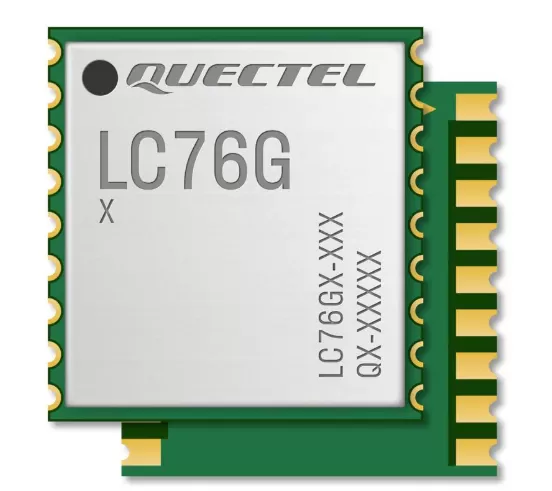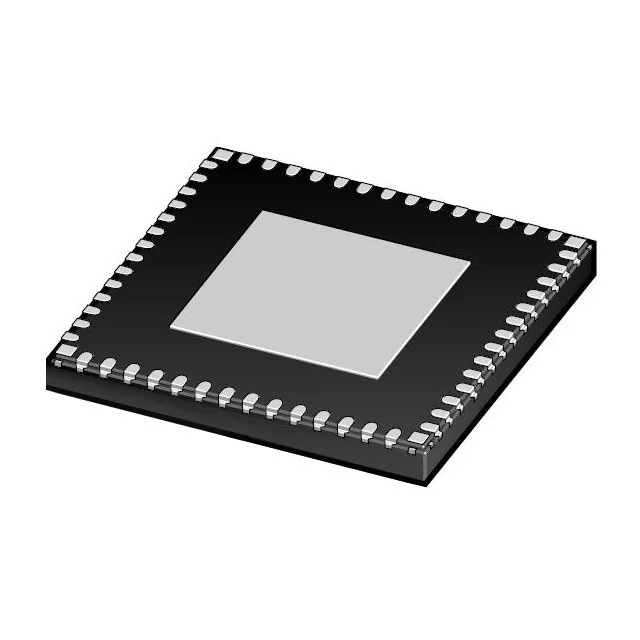
RF procurement looks like a buying task until one line comes back wrong. An RF BOM is small in value and heavy in consequence: a transistor, a filter or a synthesizer that ships late stops a build that the rest of the BOM was already waiting for, and a part that arrives on time with a different lot can flatten the gain across the band.
Buying RF parts is a different job from buying passives. Quantities are low, makers are few, alternatives are rarely interchangeable, and the person asking for the price is usually not the person who knows which lines can move. A procurement model that ignores that difference produces kits that look complete and boards that fail first article.
Where RF procurement goes wrong
The first problem is the single maker. Most of an RF front end is built around one qualified source: the driver, the low noise amplifier, the filter, the clock. An equivalent part exists on paper and differs in gain, noise figure, output intercept, thermal path or matching network. A second source rule written for passives does not transfer to those lines.
The second is that the part is bought as a component and judged on the board. A capacitor with the same value and a different dielectric changes the match at the top of the band. A connector with the same footprint and a different launch changes the return loss. Procurement cannot see that; the build finds it at test.
The third is a lead date quoted for the order instead of the line. A kit of forty lines with one line at week twenty six is not a kit at week twenty six. The plan needs a date against each line, and the lines that moved since the last confirmation named.
The fourth is obsolescence. RF and microwave parts go end of life quietly, the last time buy window is measured in weeks, and the notice often reaches the buyer after the window closes. The link between the buyer and whoever watches part status is the part of the process that usually fails.
The fifth is provenance. RF parts are expensive per unit and easy to relabel. An offer that undercuts the maker by a wide margin is a question about history, not a bargain. Reels have to be counted, markings and date codes compared with maker data, and the parts that carry the risk opened and checked.
What decides an RF procurement model
| Decision | What it controls | What a weak model looks like |
|---|---|---|
| Risk class per line | Which lines can move and which cannot | Every line treated the same |
| Approved alternative per critical line | The speed of a substitution | Alternative searched during the shortage |
| Lead date per line | Whether the kit date means anything | One date quoted for the order |
| Part status watch | Whether a status notice arrives in time | Notice read after the last time buy closes |
| Provenance check | Whether the lot can be trusted | Price used as the only filter |
| Quantity basis | How much stock ages on the shelf | Reel quantity bought for a pilot |
| Substitution authority | Who approves a change, and in writing | Swaps made to keep the date |
| Board coupling | Whether the part still works at frequency | Value and footprint matched only |
| Kit completeness | Whether the build can start | Lines short on arrival |
| Record per lot | Whether a field return can be traced | Test data kept per order only |
How SUPERB PCBA supports RF procurement
Send the RF BOM with pilot and annual quantity, the lines that have already caused a stop, and anything the circuit will not tolerate. The reply maps each line to a risk class, quotes a date per line, and names the alternative with the difference stated in electrical terms. The sourcing side of that work is described on the RF component sourcing page, and the end of life route is covered in obsolete RF part replacement.
The build side of the same answer matters because the part is only half the outcome. RF boards run from 500 MHz to 77 GHz on Rogers RO4003C, RO4350B and RO4835, Taconic RF-35, TLY-5 and CER-10, and PTFE with plasma treatment before plating, plus RF and FR-4 hybrid stacks. Impedance is held to plus or minus 5 percent, and to plus or minus 2 percent where the circuit needs it, with a TDR coupon on each panel. Backdrill stub is kept at or below 0.25 mm, registration within 0.025 to 0.06 mm, and boards run to 68 layers. The process detail sits on the RF and microwave PCB page.
Assembly runs on seven SMT lines with placement down to 01005, 3D SPI, 3D AOI, X-ray in 2D and CT with voiding below 5 percent, ICT and functional test, under IPC-A-610 Class 2 and Class 3, ISO 9001 and, for medical programs, ISO 13485. Every RF lot is tested against the same lot number that the components carry, so the record joins the part to the board it went into. When a date moves, the options are set out in component lead time solutions rather than by taking what is available.
The record an RF line has to carry
An RF build needs a record that survives the program: purchase order, lot number of every critical part, certificate of conformance, incoming inspection result, and the test data of the boards the part went into. Parts are counted by X-ray on receipt, markings and date codes compared with maker data, and aged stock checked for solderability.
Verified lots carry a 730 day warranty, and a pin to pin substitution is made only with written approval, never on our own judgement. SUPERB Tech keeps the mapping so a field return traces to a part and a lot.
RF procurement questions
How do I second source an RF part without a board respin?
Rarely by part number. The workable route is to qualify the alternative against the same test limits, state the difference in gain, noise and match, and keep the original as the primary until the alternative passes. Where the difference is small and the circuit has margin, the change is made at the next build, not mid kit.
Who should own the part status watch?
Whoever sees the BOM every time it is quoted. A status review that runs on a calendar rather than on a quote misses exactly the programs that stopped quoting, which are the ones about to lose their window.
Is a broker part ever acceptable?
With provenance, yes. Counted reels, markings and date codes checked against maker data, and decapsulation where the risk justifies it. Without that record the saving is a bet on someone else's history.
What quantity should a pilot buy?
The pilot quantity plus attrition and test boards, not the reel. Where a reel is the only pack, the excess is planned stock and should be dated in the plan rather than discovered at the next count.
Next step
Send the RF BOM with quantities, the lines that have stopped a build, and the constraints the circuit carries. You get a map with a date per line, an approved alternative where one exists, and a kit complete before the build starts.