A memory device is the easiest part of a bill of materials to compare on paper and one of the hardest to replace in a product that is already running. Density, voltage and package are in every summary table, while organisation, timing and controller compatibility decide whether the board still works. A memory cross reference request usually arrives when a flash or DRAM line is discontinued and the next build is already scheduled.
The trap is that memory parts are sold by density. Two devices with the same density and the same package can differ in bank organisation, page size, command set and the number of clocks they need before the first valid read.
Where memory cross references fail
Organisation comes first. A device arranged as two banks of eight bits behaves differently from one arranged as a single bank of sixteen, and code that assumes a page boundary at a fixed address will read the wrong row after a substitution.
Timing comes second. Speed grade is quoted, but the numbers behind it are the ones that matter: access time for asynchronous parts, clock to valid output for synchronous ones, and the write recovery and refresh intervals for DRAM. A replacement that is faster on the headline number can still violate the setup the controller expects at the slow corner.
Voltage comes third. A 3.3 V and a 1.8 V part are not interchangeable even when the interface looks similar, and a mixed supply board often carries both, which makes the mistake easy on a line item.
Endurance and retention come fourth, and they are the numbers that decide field returns rather than first article yield. An industrial eMMC and a consumer part can share a footprint while differing by an order of magnitude in program and erase cycles and in retention at temperature.
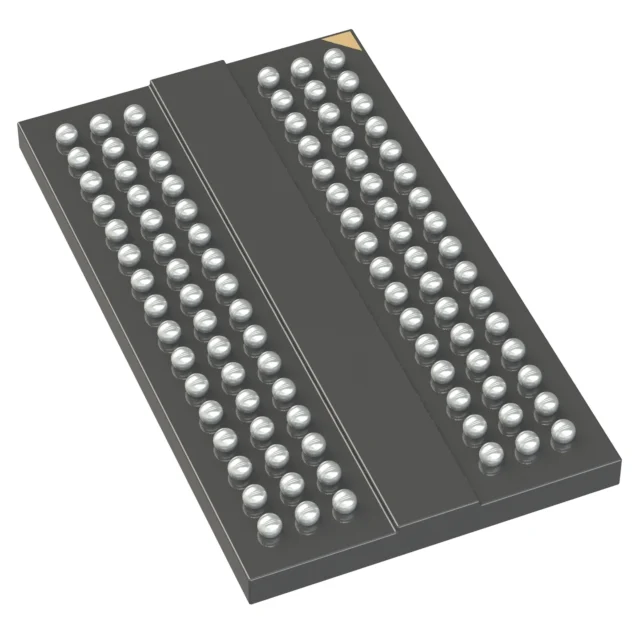
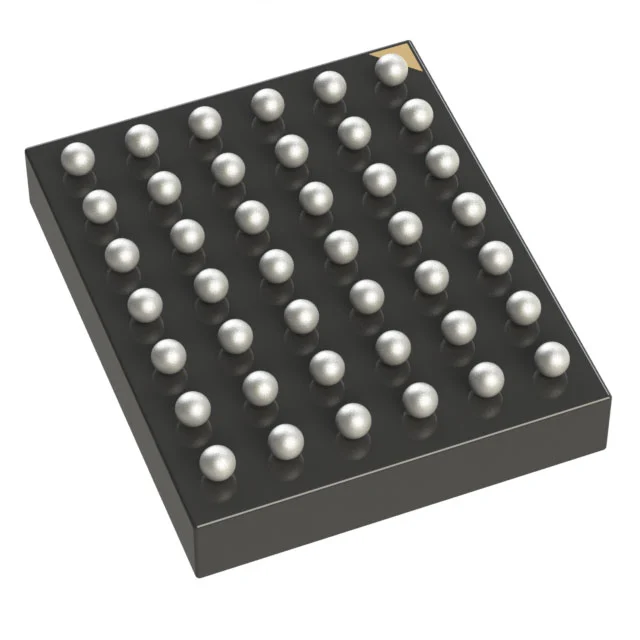
Then the package. BGA ball maps are not standard between families, and a part with the same ball count can still move the power and ground balls, which changes the decoupling on the board.
The parameters that decide a memory cross reference
| Parameter | Why it decides the outcome | What a weak comparison looks like |
|---|---|---|
| Density and organisation | Banks, word width and page size decide how the existing code addresses the part | Density matched, organisation and page size not compared |
| Interface and command set | Parallel asynchronous, SPI, eMMC and DDR are different worlds | Same family name, command set and initialisation sequence different |
| Speed grade and timing | Access time, clock to output and refresh intervals decide the slow corner | Headline speed matched, setup and hold at temperature not checked |
| Supply voltage | 3.3 V, 1.8 V and dual rail parts are not interchangeable | Nominal voltage matched, IO rail on the board different |
| Endurance and retention | Program and erase cycles and retention at temperature decide field life | Consumer grade offered for a continuously logging product |
| Package and ball map | Ball count, ball map and power and ground placement decide reuse | Same ball count, power balls moved, decoupling no longer correct |
| Temperature grade | Industrial and automotive ranges decide operation outside the cabinet | Commercial grade quoted for an outdoor or engine bay unit |
| Controller compatibility | Address mapping, training and configuration tables decide whether it boots | Part replaced, controller settings left as they were |
| Status and longevity | How long the brand keeps the part, and what replaces it next | Part available today, no route for the next two years |
How SUPERB PCBA handles a memory change
Send the original part number, the board it sits on and the annual quantity, plus the way the device is used: firmware image, data logging, cache or working memory. The reply is a line by line comparison against the table above, with the organisation, timing, voltage and package marked as compatible, needs a check, or needs a board change, and with any point the datasheet leaves open returned as a question plus the condition that closes it.
Where the original is already end of life, the routes are collected in the obsolete part cross reference hub. Memory families are listed under multi function ICs, with separate entries for SPI NOR flash for firmware storage, DDR3L and DDR4 SDRAM and eMMC and NAND storage for industrial controllers. Where a candidate is pin compatible on paper, the procedure in pin to pin cross reference confirms the ball map before anything is ordered.
Provenance comes before the sample. Reels are counted by X-ray, markings and date codes are inspected, and decapsulation is used where the risk justifies it, because re marked memory is one of the oldest problems in the open market. Verified lots carry a 730 day warranty, and a substitution only enters the BOM after written approval from your side.
SUPERB Assembly then proves the change on hardware: first article inspection against released data, 3D SPI before reflow, 3D AOI after it, X-ray in 2D and CT mode with voiding below 5 percent on the ball array, in circuit and functional test on fixtures approved by your team, and a write and read pattern across the whole array at the temperature corners the product sees. The work runs under IPC-A-610 Class 2 and Class 3, IPC-7095 for area array work, ISO 9001, and ISO 13485 for medical programmes, with placement down to 01005 and boards in the same build supported from 500 MHz to 77 GHz, lines down to 0.05/0.05 mm, impedance held to plus or minus 5 percent and to plus or minus 2 percent where the circuit needs it, up to 68 layers.
The difference between a sample and a qualified part
A memory sample can pass a bench read and still fail in the product, because the failure modes depend on the pattern and on temperature. The qualification that matters writes and reads the full array with a pattern that catches adjacent cell coupling, repeats it at the hot and cold corners, and then holds the board powered for the retention interval the product has to survive. That is the test that decides whether the change stays in the build.
Memory cross reference questions
Can a higher density part always replace a lower density one?
No. Address mapping, page size and the controller configuration all change, and an unused part of the array does not make the interface compatible.
Is an industrial grade part always the right choice?
It is the right choice where the board sees temperature outside a cabinet. Where the product runs cool, the endurance and retention figures still decide, not only the grade label.
How is a memory substitution proved?
With a full array pattern at the temperature corners, a retention check, and functional test on the assembled board. A boot test alone proves very little.
What if the ball map has moved?
Then it is a board change. The power and ground balls and the decoupling are checked together, and the change is quoted with the test plan before the order.
Next step
Send the original memory part number, the board reference, the annual quantity and how the device is used. You get the comparison with each difference marked, the candidate list with availability and date codes, and the test plan needed to release the change.