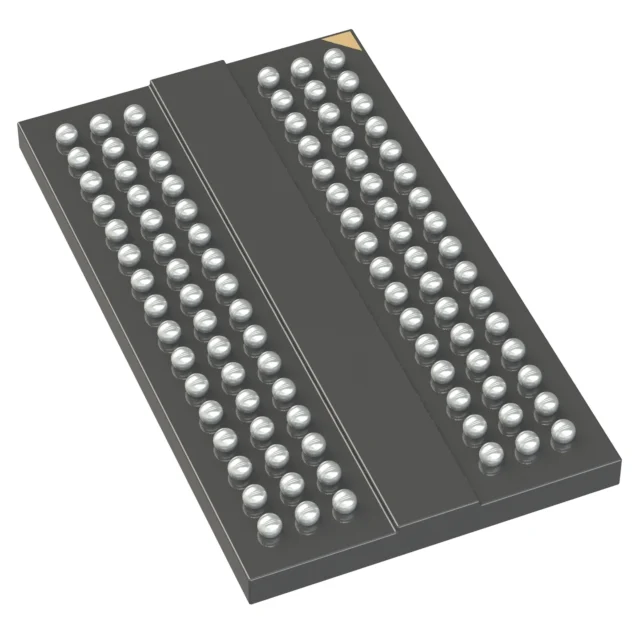
A BGA that fails after reflow turns a populated board into a decision. The part is under the package where no iron can reach it, the board around it may carry twenty other devices, and the cost of scrap is the whole assembly rather than the package. Rework is the answer in some cases and the wrong answer in others, and telling them apart is the first job.
The reason to be careful is that a rework is a second thermal cycle on a board and a package that have already been through one. Every removal adds heat to the laminate under the site, and a site that is worked twice is weaker than a site that was worked once. A rework that is done well holds for the life of the product. A rework that is done to save a board with a lifted pad costs more than the board was worth.
When a BGA is worth reworking
| Defect found | Decision | Reason |
|---|---|---|
| Head in pillow or a single open ball on a board that is otherwise good | Rework | The package and the site are intact, one joint is the problem |
| Bridge between two balls after reflow | Rework | Paste volume or placement, and the site survives one removal |
| Warpage open at the corner of a large package | Rework only with a carrier and a reviewed profile | The cause is thermal, so the same profile will fail again |
| Pad crater or a lifted land under the package | Scrap | The connection to the inner layer is damaged, and a repaired land is not a Class 3 joint |
| Delamination in the laminate under the site | Scrap | Moisture in the board, and the second cycle makes it worse |
| Several defects across one package | Scrap unless the customer asks otherwise | Two removals on one site is outside what the standard covers |
The steps that decide whether the rework holds
| Step | What has to be controlled | What goes wrong when it is not |
|---|---|---|
| Bake before work | Moisture level of the board and of the replacement package | Popcorn voids in the laminate, or a package that cracks on the second cycle |
| Removal profile | Ramp rate, soak and the temperature at the package edge, measured with a thermocouple on a scrap board | Overheat of the neighbours, or a pad that lifts with the package |
| Site dressing | Removal of residual solder to a flat land, without thinning the pad | Uneven standoff and a ball that never contacts the pad |
| Deposition | Paste volume per pad, or flux only when the package is pre balled | Bridging on a fine pitch array, or voids under the ball |
| Placement | Alignment within the pad, and the force the head applies | Package shift during reflow, and a short to the neighbour |
| Reflow and cool | The same profile family as the original build, with a controlled cooling rate | Warpage open at the corner, or a joint that cracks in the cool down |
| Inspection | X-ray before and after, read to the void limit on the drawing | A void that passes a visual check and opens in thermal cycling |
Reballing: what it changes
Reballing is the component side of the same job. The package is cleaned of its old balls, a stencil is aligned to the array, balls are placed and the package is reflowed on its own before it goes back on a board. It applies when a package is being reused, when the ball alloy has to change, or when the original balls were damaged during removal.
Three things decide the result: the ball size and alloy called for by the package data sheet, the stencil that matches the array pitch, and the standoff that the finished joint will have. A reballed package with the wrong ball size will sit at the wrong height, and a joint that looks sound on X-ray can still fail a drop or a thermal cycle test. The reference for the work is IPC-7711 and IPC-7721, which set what is a rework and what is outside the standard, and the site rules behind it are summarised under IPC-7711 and IPC-7721.
How SUPERB PCBA handles a rework lot
Every lot starts with a bake and a documented removal profile, thermocouple checked on a board of the same build before a customer board is touched. Removal and reflow run on a rework station with a localised heater and a controlled cooling stage. Inspection is X-ray on the site before and after, read to IPC-7095 with voiding held under five percent, on the X-ray system described under X-ray inspection.
The rest of the flow is the same flow the board was built on: seventeen steps with ten quality stations, IPC-A-610 Class 2 and Class 3, under ISO 9001 and ISO 13485 for medical work, on seven SMT lines with 01005 placement through to odd form parts. A reworked unit is marked as reworked in its history, and the record carries the profile, the operator, the X-ray images and the disposition. What that record has to contain, and who signs it, is set out under PCBA rework and repair authorization.
One limit is worth stating plainly. A rework is not a repair of the laminate. If the site is damaged, the board is scrapped and the reason is written down, because a board that leaves with a repaired land will fail at the customer's test and take the lot's credibility with it.
BGA rework questions
Can you rework a BGA on a board that is already coated?
Yes, with a local strip of the film around the site and a re coat after the joint is verified. The coating has to come off before heat is applied, because a film that is baked during removal leaves a residue that no wash will take out of the site. The re coat is recorded like any other rework.
How many times can the same site be reworked?
Once, as a rule, and twice only with the customer's written agreement and an X-ray of the site after the first pass. The laminate under a BGA site is already at its limit after two thermal cycles, and a third pass is where pad lift and delamination appear.
Do you reball the package or replace it?
Both routes are available, and the choice is economic. A reball keeps a package that is otherwise good and is usually the cheaper route on a short lot. A new package removes the risk that the old one absorbed moisture or was damaged during removal, and on a high value assembly that is often the better call.
Next step
Send the board with the failed site, the X-ray image if you have one, the package data sheet and the void limit the lot is judged to, or send the build package and the quantity you expect to rework. The reply returns the rework or scrap call per defect, the profile and bake items, the acceptance record and a price per unit with the tooling listed separately.