
Not all PCBA manufacturers understand RF. Not all RF shops understand automotive reliability. And almost none understand both — plus the ultra-low-power demands of IoT. If you're building a Starlink tracker, an eCAN module, an eEye ADAS camera, or a TagLINK sensor tag, this guide helps you evaluate PCBA partners against the specific demands of your device.
1. Can They Handle RF and Digital on the Same Board?
Your GPS tracker has a GNSS section (1575.42 MHz L1, maybe 1227.60 MHz L2), a cellular section (700 MHz–2.6 GHz LTE, or 2.4 GHz Wi-Fi), and a digital section (MCU, PMIC, memory). All on one 4–8 layer board. The PCBA manufacturer needs to understand:
Impedance control: 50Ω single-ended for GNSS and cellular traces, 100Ω differential for MIPI CSI camera lanes and USB. ±10% tolerance is standard; ±5% is better for GNSS front-end matching.
RF material selection: Rogers RO4003C or RO4350B for the RF layer, high-Tg FR4 for digital layers. The shop needs experience bonding dissimilar materials — delamination at the Rogers-FR4 interface is a common failure mode.
Via fencing and ground stitching: GNSS LNA stages need ground vias every λ/20 along the RF trace. A consumer electronics PCBA shop will skip this — an RF-aware shop won't.
Desense testing: After assembly, does the cellular transmitter degrade GNSS sensitivity? A proper PCBA partner runs conducted desense tests before shipping.
Long-tail queries this answers: RF PCB assembly for GPS tracker, Rogers PCB manufacturer for GNSS devices, 50 ohm impedance control PCB, 4 layer GPS tracker PCB stackup, 6 layer telematics PCB fabrication
2. Do They Source the Right Components?
Telematics and IoT devices depend on a specific set of components. A generic PCBA shop will quote based on open-market sourcing — which means counterfeit GNSS modules, date-code mismatches, and endless requalification. Your PCBA partner should have established channels for:
| Component Type | Typical Parts | Sourcing Risk |
| GNSS Modules | u-blox NEO-M9N, ZED-F9P, MAX-M10S | Counterfeit u-blox modules are common — verify lot codes and RF performance on arrival |
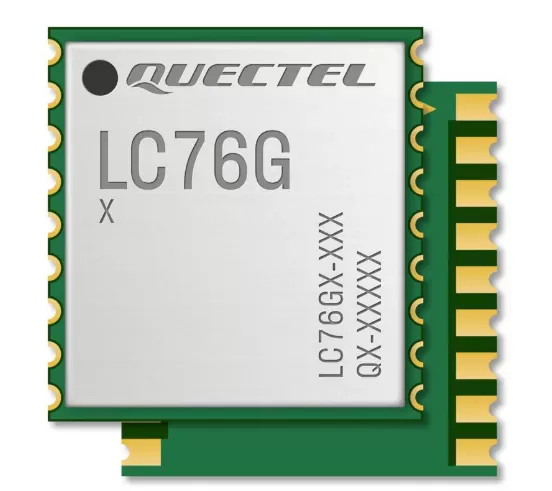
| Cellular Modules | Quectel EC25/EG25, Telit ME310, SIMCom SIM7600 | Carrier certification depends on firmware version — wrong firmware = no AT&T/Verizon approval |
| MCUs | STM32F4, STM32L4, nRF52840, ESP32 | Date-code freshness matters for LDO/PMIC companion ICs — old stock may have degraded specs |
| CAN Transceivers | TJA1042, MCP2562, SN65HVD230 | ESD rating varies by manufacturer — substitute parts may fail vehicle-level ESD testing |
| MEMS Sensors | LSM6DSO, ICM-20948, BMI270, BME280 | Moisture sensitivity level (MSL) — LGA packages absorb humidity, need proper dry-pack storage |
Long-tail queries: u-blox NEO-M9N PCB assembly, Quectel EC25 module sourcing, STM32 telematics PCBA supplier, CAN transceiver board contract manufacturing, MEMS sensor SMT assembly service
3. What Is Their Conformal Coating Capability?
A Starlink tracker lives under a dashboard or behind a bumper. A TagLINK sensor sits in a refrigerated container or on an oil pipeline. Both need environmental protection. The PCBA manufacturer should offer:
Acrylic coating (AR): Good humidity resistance, easy rework, standard for indoor IoT devices.
Silicone coating (SR): Wide temperature range (-55°C to +200°C), flexible, ideal for under-hood automotive electronics.
Urethane coating (UR): Excellent chemical resistance — the choice for industrial sensors exposed to solvents and fuels.
Parylene coating: Vapor-deposited, pinhole-free, sub-micron thickness. For IP67/IP68 outdoor trackers and marine IoT devices where weight and thickness matter.
Selective coating: Keeps connectors, SIM holders, programming pads, and test points uncoated. Requires precision robotics with needle dispenser or curtain-coat masking.
A red flag: a manufacturer that only offers acrylic dip coating. For vehicle trackers that see salt spray, condensation, and -30°C cold starts, you need at minimum silicone with selective masking.
Long-tail queries: conformal coating for vehicle tracker PCBA, IP67 GPS tracker PCB protection, silicone conformal coating automotive electronics, parylene coating IoT sensor manufacturing, selective conformal coating service China
4. Can They Do Functional Testing — Not Just ICT?
In-circuit testing (ICT) checks that resistors are the right value and no pins are shorted. That's table stakes. For a telematics device, you need:
GNSS functional test: Connect to a live GNSS antenna (rooftop or simulator), verify TTFF (time to first fix), check C/N0 (carrier-to-noise ratio) on at least 4 satellites. A cold-start TTFF over 60 seconds or C/N0 below 35 dB-Hz indicates an assembly problem — poor RF soldering, wrong component value in the matching network, or an oxidized antenna connector.
Cellular registration test: Insert a test SIM, verify network registration on the target bands (B2/B4/B5/B12 for North America, B1/B3/B7/B8/B20 for Europe). Measure TX power and RX sensitivity at the antenna port.
CAN bus message injection: For eCAN modules: inject a known CAN frame (e.g., engine RPM at 0x0C command), verify the module decodes it correctly. Test at 125 kbps, 500 kbps, and 1 Mbps.
Current consumption profiling: Measure sleep current, idle current, GNSS-tracking current, and cellular-TX current. A device drawing 50 mA in sleep instead of 50 µA has a soldering defect or a wrong pull-up resistor — not something ICT catches.
BLE/Wi-Fi RSSI test: For IoT sensors: measure RSSI at 1m and 10m with a calibrated reference. More than 3 dB variance from golden sample? Investigate antenna matching.
Long-tail queries: GPS tracker functional test service, GNSS signal simulation PCBA testing, CAN bus module functional test, IoT device current consumption test, BLE RSSI test PCBA manufacturer
5. What IPC Class Do They Work To?
| IPC Class | Acceptance Criteria | Suitable For |
| Class 1 | Functional — the device works | Consumer toys, disposable electronics. Not for anything that drives, tracks assets, or reports sensor data. |
| Class 2 | Dedicated service — extended life, uninterrupted operation desired but not critical | Indoor IoT sensors, commercial telematics, non-safety automotive accessories. Minimum for Starlink Asset and IoTLINK devices. |
| Class 3 | High performance/harsh environment — downtime cannot be tolerated, end-use environment may be uncommonly harsh | ADAS cameras, under-hood CAN modules, Starlink EV battery monitors, fleet safety devices. Required for any device where failure = vehicle downtime or safety risk. |
Ask your PCBA manufacturer: "What percentage of your boards ship to IPC Class 3?" If they hesitate or say "we can do Class 3 if you ask," their process isn't built around it. A shop that routinely ships Class 3 boards has X-ray inspection, AOI with AI-based defect classification, and solder joint cross-sectioning in their standard workflow — not as a special request.
Long-tail queries: IPC Class 2 vs Class 3 PCBA, automotive grade PCB assembly requirements, IPC-A-610 Class 3 contract manufacturer, high reliability PCBA for vehicle electronics
6. Prototype to Volume: Do They Scale?
You're building 50 Starlink EV trackers for a pilot with a logistics company. Six months later, they want 5,000 units per month. Can your PCBA partner handle that transition without requalifying everything?
Look for:
NPI (New Product Introduction) process: A structured DFM review, first-article build with detailed report (X-ray images, solder joint micrographs, test data), and a documented handoff from NPI to production engineering. If the same engineer handles both, the process isn't scalable.
Multiple SMT lines: A single line means your 5K/month order competes with every other customer's production. Two or more lines with dedicated changeover teams means your production slot is protected.
Component pipeline visibility: For volume production, the manufacturer should provide a material readiness report before builds: which BOM lines are in stock, which have lead time risk, and suggested alternates. Surprises during production are expensive.
Long-tail queries: prototype to volume PCBA transition, small batch GPS tracker assembly, contract manufacturing scale up China, NPI PCBA service telematics
7. PCB Complexity: How Many Layers Does Your Device Actually Need?
This is where many telematics startups over-spec or under-spec their boards:
| Device Type | Typical Layers | Why |
| Basic GPS Tracker (2G/4G Cat-1) | 4–6 layers | GNSS + cellular on top, digital on bottom. 4 layers minimum for controlled-impedance RF; 6 layers if adding Wi-Fi or BLE. |
| Advanced Fleet Tracker (4G Cat-4 + Wi-Fi + BLE + CAN) | 6–8 layers | Multiple RF domains need internal ground planes for isolation. Dedicated power plane for PA supply. |
| ADAS Camera Module | 8–12 layers | MIPI CSI differential pairs, image sensor BGA (0.4–0.5mm pitch), DDR memory routing. HDI with microvias often required. |
| BLE Sensor Tag / Asset Tracker | 2–4 layers | Single-chip BLE SoC with chip antenna. 4 layers if adding sensors or boost converter; 2 layers for ultra-low-cost coin-cell designs. |
| Multi-Radio IoT Gateway (LoRa + BLE + Wi-Fi + GNSS) | 8–12 layers | 4+ RF domains require careful isolation. Dedicated ground planes, RF shielding, and possibly cavity shielding. |
| CAN Bus Vehicle Interface Module | 4–6 layers | CAN transceiver isolation, wide-input power supply section, MCU + cellular backhaul. 6 layers if adding GNSS for location-stamped CAN data. |
Your PCBA manufacturer should be able to review your stackup and suggest optimizations — not just quote what you send them. A shop that says "we build whatever Gerber you provide" without DFM feedback is a fabrication house, not a manufacturing partner.
Long-tail queries: how many layers for GPS tracker PCB, 6 layer telematics PCB stackup, 8 layer ADAS camera PCB design, 4 layer IoT sensor PCB fabrication, HDI PCB for vehicle tracker
Checklist: 10 Questions to Ask a PCBA Manufacturer
Have you assembled GNSS receivers with active antenna bias? How do you test LNA gain post-assembly?
What Rogers/Taconic RF materials do you stock, and what's the typical lead time for RO4350B 0.020"?
Do you offer conformal coating, and which types? Can you mask connectors, SIM holders, and programming pads?
What functional test capabilities do you have for GNSS, cellular, CAN bus, and BLE devices?
What percentage of your boards are built to IPC Class 3? Can you provide microsection reports?
How do you source u-blox, Quectel, STM32, and TI components? What traceability do you provide?
What's your NPI-to-production handoff process? Is there a dedicated NPI engineer?
What's your minimum order quantity for prototypes? For volume production?
Where are your SMT lines located? What's the shipping time to our target market?
Can you provide references from other telematics or IoT customers?
For GPS tracker, telematics, CAN bus module, and IoT sensor PCBA, send your Gerber files and BOM to pcba@superb-tech.com. We respond with a manufacturing feasibility review, DFM feedback, and quotation within 1 business day.
Superb Automation Co., Limited · From Design to Delivery · www.superb-tech.com