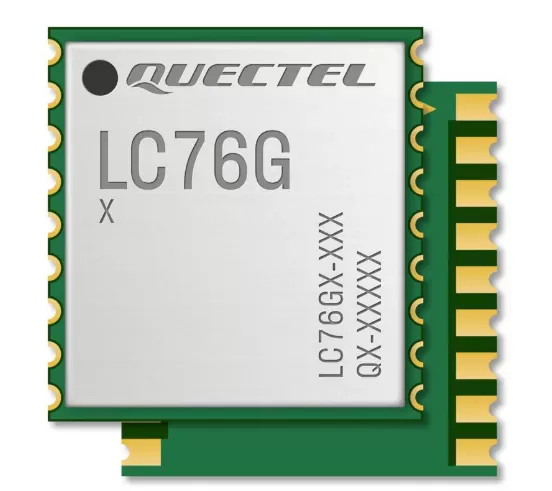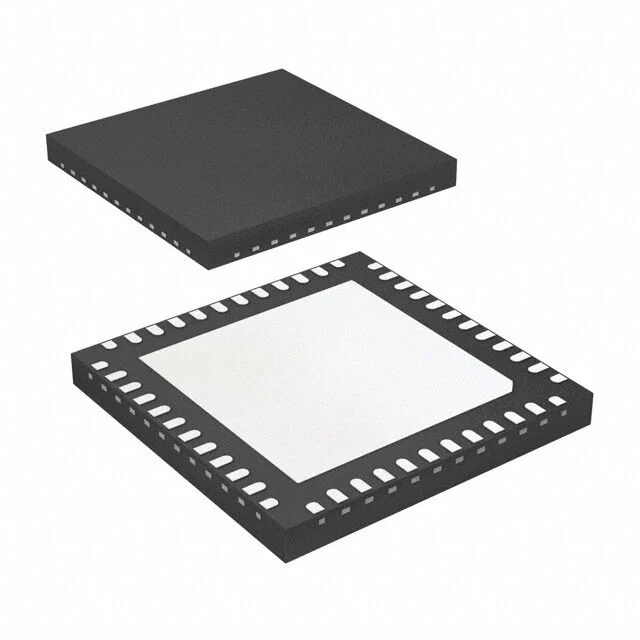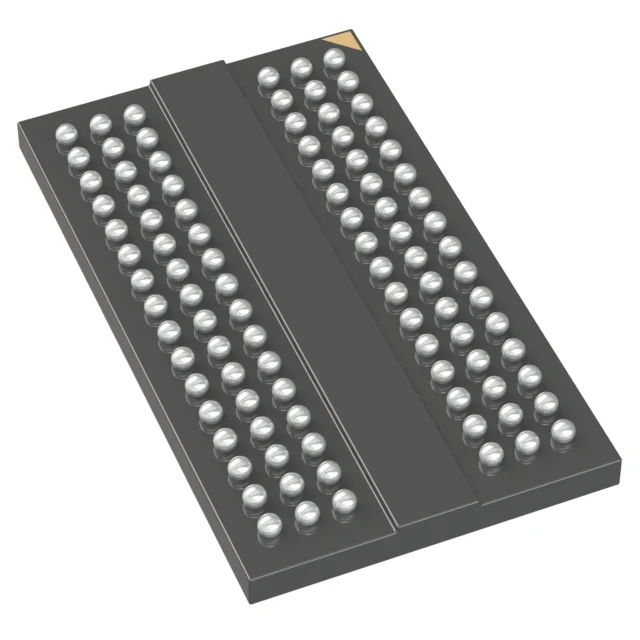

4 ADI ADC Pin-to-Pin Replacements: 125M–500MSPS LVDS ADCs for Medical Imaging, Industrial Inspection & Radar
GMS008 / GMS009 / GMS002 / GMS026 — drop-in replacements for AD9467, AD9656, AD9434, and AD9652. 12 to 16-bit resolution, LVDS interface, identical QFN packages. Domestic stock, 2–4 week lead time. Superb Automation provides validated PCB + PCBA + component sourcing for multi-channel data acquisition systems.
Superb Perspective: The 125M–500MSPS ADC Sweet Spot
Medical CT scanners, industrial AOI machines, phased-array antennas, and communication IF receivers all share one thing in common: they need ADCs in the 125 to 500 MSPS range with 12 to 16-bit resolution. The AD9467, AD9656, AD9434, and AD9652 have been the go-to parts for these applications — but procurement has become increasingly difficult. Lead times stretch beyond 20 weeks, and allocation is unreliable.
The four GMS-series replacements covered in this article are true pin-to-pin drop-ins. Same QFN packages, same LVDS digital outputs, identical SNR and SFDR performance. A medical CT manufacturer recently switched their detector data-acquisition boards from AD9467 to GMS008 — noise performance was identical, SFDR met all specifications, and their entire next-generation 128-slice CT scanner now runs on the domestic solution.
Send your BOM — we identify every ADI ADC that has a validated domestic pin-to-pin replacement
We procure evaluation samples from verified domestic channels with full lot traceability
Quick-turn PCBA build (5–10 boards) on our SMT lines for side-by-side testing
Validation report: SNR, SFDR, ENOB, channel-to-channel matching, power consumption
Validation passes → switch to volume production. Same PCB, same FPGA firmware, same test fixtures.
At-a-Glance: 4 ADCs, 4 Replacements
| Domestic | Replaces | Resolution | Sample Rate | Channels | Best Application |
|---|---|---|---|---|---|
| GMS008 | AD9467-250 | 16-bit | 250 MSPS | 1 | Medical CT/MRI, Industrial AOI, NDT |
| GMS009 | AD9656 | 16-bit | 4×125 MSPS | 4 | Phased-array, Multi-channel sonar, Ultrasound |
| GMS002 | AD9434EE-500 | 12-bit | 500 MSPS | 1 | Telecom IF sampling, Spectrum analysis, SDR |
| GMS026 | AD9652 | 16-bit | 2×310 MSPS | 2 | Radar IF, Base station, Test instrumentation |
1. GMS008 — 16-Bit 250 MSPS (Replaces AD9467-250)
The sweet-spot combination of high resolution and mid-range speed. Used extensively in medical CT detector arrays, industrial AOI systems, and non-destructive testing equipment where every decibel of dynamic range matters.
ADC Core Performance
| Parameter | GMS008 | AD9467-250 |
|---|---|---|
| SNR (typ) | 80.5 dBFS | 80.5 dBFS |
| SFDR @ 70 MHz | >95 dBc | >95 dBc |
| SFDR @ 200 MHz | >90 dBc | >90 dBc |
| THD (typ) | >-100 dBc | >-100 dBc |
| ENOB @ 250 MSPS | 12.8 bit | 12.8 bit |
Electrical
| Parameter | GMS008 | AD9467-250 |
|---|---|---|
| Supply Voltage | 1.8V / 3.3V | 1.8V / 3.3V |
| Power Consumption | ~1.05 W | ~1.05 W |
| Digital Interface | LVDS (IEEE 1596.3-1996) | LVDS (IEEE 1596.3-1996) |
| Input Bandwidth | >1.5 GHz | >1.5 GHz |
| Input Full-Scale | 2.0 Vpp (diff) | 2.0 Vpp (diff) |
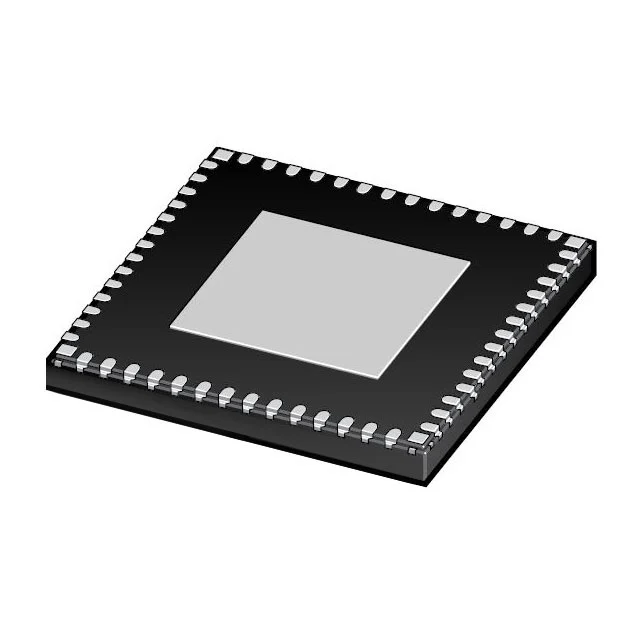
| Package | 64-Lead QFN | 64-Lead QFN |
| Operating Temperature | -40°C to +85°C | -40°C to +85°C |
Verdict: Indistinguishable from AD9467 across all parameters. Medical CT, industrial AOI, and NDT applications can switch with zero performance delta.
2. GMS009 — 16-Bit Quad 125 MSPS (Replaces AD9656)
Four 16-bit channels in a single 64-QFN package — one chip replaces four discrete ADCs, simplifying PCB layout, reducing BOM line items, and cutting board area. The go-to choice for phased-array receivers, multi-channel sonar, and medical ultrasound front-ends where channel density matters.
ADC Core Performance
| Parameter | GMS009 | AD9656 |
|---|---|---|
| SNR (typ) | 79 dBFS | 79 dBFS |
| SFDR @ 70 MHz | >90 dBc | >90 dBc |
| Channel Matching | ≤0.5° / ≤0.3 dB | ≤0.5° / ≤0.3 dB |
| ENOB @ 125 MSPS | 12.5 bit | 12.5 bit |
Electrical
| Parameter | GMS009 | AD9656 |
|---|---|---|
| Supply Voltage | 1.8V / 3.3V | 1.8V / 3.3V |
| Total Power (4 ch) | ~1.6 W | ~1.6 W |
| Digital Interface | LVDS | LVDS |
| Package | 64-Lead QFN | 64-Lead QFN |
Verdict: The best cost-per-channel option for multi-channel acquisition. Channel-to-channel matching (≤0.5° phase, ≤0.3 dB gain) is identical to AD9656 — critical for phased-array beamforming and ultrasound beam-steering.
3. GMS002 — 12-Bit 500 MSPS (Replaces AD9434EE-500)
The workhorse for communication IF sampling, spectrum analysis, and software-defined radio. 500 MSPS with 12-bit resolution gives you a 250 MHz Nyquist zone — enough to capture a full 100 MHz-wide 5G NR carrier with room for anti-alias filtering.
ADC Core Performance
| Parameter | GMS002 | AD9434EE-500 |
|---|---|---|
| SNR | 66.5 dBFS | 66.5 dBFS |
| SFDR @ 70 MHz | >80 dBc | >80 dBc |
| ENOB | 10.7 bit | 10.7 bit |
Electrical
| Parameter | GMS002 | AD9434EE-500 |
|---|---|---|
| Power | ~700 mW | ~700 mW |
| Digital Interface | LVDS | LVDS |
| Package | 48-Lead QFN | 48-Lead QFN |
Verdict: Identical SNR of 66.5 dBFS, identical SFDR of >80 dBc, same 700 mW power budget. Ideal for high-volume telecom IF sampling and spectrum monitoring where cost and availability matter.
4. GMS026 — 16-Bit Dual 310 MSPS (Replaces AD9652)
The highest-resolution dual-channel option in this family. At 16 bits and 310 MSPS per channel, it covers radar IF digitization, communication base station receivers, and precision test instrumentation. The dual-channel architecture with tight inter-channel matching (≤0.3° phase, ≤0.1 dB gain) makes it suitable for direct I/Q sampling without external quadrature demodulation.
ADC Core Performance
| Parameter | GMS026 | AD9652 |
|---|---|---|
| SNR | 78 dBFS | 78 dBFS |
| SFDR @ 70 MHz | >90 dBc | >90 dBc |
| Channel Matching | ≤0.3° / ≤0.1 dB | ≤0.3° / ≤0.1 dB |
Electrical
| Parameter | GMS026 | AD9652 |
|---|---|---|
| Total Power (2 ch) | ~1.2 W | ~1.2 W |
| Digital Interface | LVDS | LVDS |
| Package | 64-Lead QFN | 64-Lead QFN |
Verdict: Tightest inter-channel matching in this lineup (≤0.3° / ≤0.1 dB) — ideal for direct I/Q sampling without external quadrature demodulation. Radar IF and base station receivers can switch with zero FPGA firmware changes.
Full Specification Matrix
| Domestic Model | Spec | Replaces ADI | Interface | Package | Primary Application |
|---|---|---|---|---|---|
| GMS008 | 16-bit 250 MSPS | AD9467-250 | LVDS | 64-QFN | Medical CT, Industrial AOI, NDT |
| GMS009 | 16-bit 4-ch 125 MSPS | AD9656 | LVDS | 64-QFN | Phased-array, Multi-ch sonar, Ultrasound |
| GMS002 | 12-bit 500 MSPS | AD9434EE-500 | LVDS | 48-QFN | Telecom IF, Spectrum analysis, SDR |
| GMS026 | 16-bit 2-ch 310 MSPS | AD9652 | LVDS | 64-QFN | Radar IF, Base station, Test instrumentation |
Superb's PCB Expertise for Multi-Channel LVDS ADC Boards
Multi-channel LVDS ADCs demand rigorous PCB design: trace-length matching across all LVDS data pairs (typically <5 mil intra-pair, <50 mil inter-pair for the GMS009 quad-channel device), clean analog/digital ground partitioning to prevent digital switching noise from coupling into the ADC front-end, and low-noise power delivery with dedicated LDOs per supply rail. Superb fabricates these boards in-house: 16–60 layers, controlled impedance ±5%, ENIG finish, and full LVDS eye-diagram verification on every data lane before shipping. Whether it is a single GMS008 in a CT detector board or sixteen GMS009s on a phased-array backplane, we build the PCB, assemble the components, and validate the signal integrity.
Supply Chain & Lead Time
All four models in stock — 2 to 4 week lead time from verified domestic channels
Free evaluation samples — request samples with reference design files and layout guidance
No minimum order quantity — single-unit engineering samples through to volume production
Full traceability — every batch is lot-tracked with Certificate of Conformance documentation
FAQ
Q: Are these truly pin-to-pin — can I solder a GMS008 onto an existing AD9467 board?
Yes. All four GMS models use the identical QFN package and pinout as their ADI counterparts. GMS008 and GMS026 use 64-QFN; GMS002 uses 48-QFN; GMS009 uses 64-QFN. Supply rails, LVDS lane assignments, and clock inputs are all pin-compatible. No PCB layout changes are required.
Q: Do I need to change my FPGA firmware when switching LVDS ADCs?
No. The LVDS interface is identical — same data format, same lane mapping, same timing. The FPGA-side deserializer (e.g., Xilinx SelectIO or Intel LVDS SERDES) sees the same bitstream. No IP core changes, no pin-constraint updates.
Q: The GMS009 has four channels — does channel-to-channel matching hold up in production?
Measured inter-channel matching is ≤0.5° phase and ≤0.3 dB gain — identical to AD9656 specifications. This level of matching is sufficient for phased-array beamforming without per-channel calibration. For applications requiring tighter matching, Superb can perform per-board characterization and provide calibration coefficients.
Q: Can Superb handle the full migration — PCB, PCBA, and ADC sourcing?
Yes. Send your Gerber files and BOM. We source the GMS ADC from verified domestic channels, fabricate the PCB (impedance-controlled LVDS traces, ENIG finish), assemble the board on our SMT lines, and deliver a complete test report including SNR, SFDR, channel matching, and LVDS eye diagrams. One purchase order covers everything.
Q: What is the typical migration timeline?
For an existing validated ADI-based board design: 2–3 weeks from Gerber receipt to validated PCBA with full ADC characterization. This covers PCB fabrication, GMS ADC procurement, SMT assembly, and performance testing. Rush service (10 business days) is available for time-critical programs.
Send your BOM and Gerber files to pcba@superb-tech.com. Reference "GMS ADC Migration" for prioritized evaluation — we return a migration plan, sample availability, and quotation within 24 hours.
Superb Automation Co., Limited — From Design to Delivery. High-performance PCB fabrication, precision PCBA assembly, and trusted component sourcing for medical imaging, industrial inspection, radar, and telecommunications.
Performance data sourced from independent third-party characterization. Superb Automation is not an authorized distributor of Analog Devices or GMS-series ADCs. We operate as a trusted supplier, sourcing from verified channels with full lot traceability and 100% genuine guarantee.