
Published June 21, 2026 • 7 min read • Telecom Insights
The IEEE 1588 Precision Time Protocol (PTP) Grandmaster is the primary time source in a PTP network — distributing absolute time-of-day and frequency with sub-microsecond accuracy over packet networks. For 5G NR TDD networks, PTP Grandmasters provide the ±1.5 µs phase alignment required between neighbouring base stations to prevent inter-cell interference. This represents a fundamental shift from 4G LTE, which typically required only frequency synchronisation (50 ppb) — easily achieved with SyncE or GPS receivers at each site.
Key Takeaway: PTP achieves sub-microsecond accuracy by compensating for network asymmetry — the fundamental challenge that propagation delay is seldom equal in both directions. The Grandmaster and Boundary Clocks use hardware timestamping at the Ethernet PHY level to achieve ±50 ns per-hop accuracy.
PTP Protocol Operation
PTP uses a two-step message exchange between master and slave. The master sends a Sync message (timestamped at egress, t1), optionally followed by a Follow_Up message carrying t1 in two-step mode. The slave timestamps Sync arrival (t2). The slave sends a Delay_Req (t3), and the master responds with Delay_Resp carrying the arrival timestamp (t4). The slave computes: offset = (t2 − t1) − (t4 − t3) / 2, and mean path delay = ((t2 − t1) + (t4 − t3)) / 2. The fundamental assumption is path symmetry — if delay asymmetry exists (e.g., different fibre lengths in each direction), it translates directly to time error.
PTP Profiles: 8275.1, 8275.2, and Default
Different applications require different PTP profiles. ITU-T G.8275.1 (Telecom Profile for phase/time with full timing support) requires every network node (switches, routers) to be a Boundary Clock or Transparent Clock, providing hop-by-hop timing correction — achieving ±200 ns end-to-end accuracy. G.8275.2 (Partial timing support) allows ordinary switches between the GM and slave, with PTP messages bypassing non-PTP-aware nodes, achieving ±1.5 µs for 5G. The Default Profile (IEEE 1588 Annex J) is used in enterprise, industrial automation, and financial networks. 802.1AS (gPTP) is the TSN variant for deterministic Ethernet.
Grandmaster Architecture
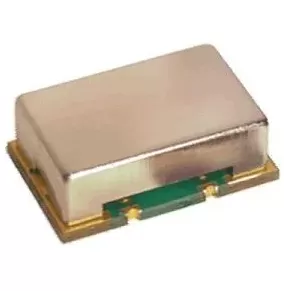
A telecom-grade PTP Grandmaster integrates: a GNSS receiver (multi-constellation: GPS, GLONASS, Galileo, BeiDou) providing UTC-traceable time (±30 ns to UTC), a holdover oscillator (OCXO or rubidium atomic clock) maintaining accuracy during GNSS outages (1.5 µs over 24 hours for OCXO, over 72 hours for rubidium), PTP engine (hardware timestamping on 1GE/10GE/25GE ports), and outputs (1PPS + ToD, 10 MHz, BITS, E1/T1). Redundant GM pairs with Automatic GM Failover using BMCA (Best Master Clock Algorithm) provide carrier-grade availability.
Boundary Clocks and Transparent Clocks
Boundary Clocks (BCs) terminate PTP on one port (slave to upstream GM) and originate PTP on other ports (master to downstream slaves), running the PTP stack locally and correcting for residence time. Each BC hop adds 50–100 ns of time error. Transparent Clocks (TCs) do not terminate PTP — they measure the residence time of each PTP event message and insert it into the correction field of the Follow_Up or Pdelay_Resp message. End-to-End TCs cumulatively correct for total residence time; Peer-to-Peer TCs additionally correct for link delay. BCs scale better for large networks; TCs scale better for dynamic topologies.
PTP in 5G and Financial Networks
For 5G NR TDD, the O-RAN S-plane requires ±1.5 µs phase alignment at the RU antenna port — breaking down to ±1.1 µs for the network (G.8271.1 Class 4) and ±400 ns for the RU itself. For financial trading (MiFID II compliance), PTP provides 1 µs timestamping accuracy for trade order sequencing, with the GM disciplined to national UTC labs via GNSS. Datacentre PTP (with hardware timestamping in NICs and switches) achieves ±100 ns synchronisation for distributed database consistency.
PTP technology continues to evolve with the new IEEE 1588-2019 standard adding high-accuracy default profile, security enhancements (integrated authentication), and better support for partial-timing networks — critical as 5G deploys beyond urban areas with limited GNSS visibility.