
5G / mmWave / WiFi Communication Module PCB Solutions
Advanced PCB Technologies for Next-Generation Wireless Communication Modules
The wireless communication landscape is undergoing its most dramatic transformation since the introduction of digital cellular. 5G New Radio (NR), with its dual frequency ranges — sub-6 GHz FR1 and millimeter-wave FR2 — combined with WiFi 7's tri-band operation, demands a fundamental rethinking of printed circuit board design. Communication module PCBs must now simultaneously support channel bandwidths up to 400 MHz in 5G and 320 MHz in WiFi 7, handle modulation schemes as complex as 1024-QAM and 4096-QAM, and manage antenna arrays with 64 to 256 elements for massive MIMO beamforming. This article presents a comprehensive analysis of PCB solutions for 5G, millimeter-wave, and WiFi communication modules.
1. The 5G NR Communication Module Landscape
5G NR introduces two distinct frequency regimes that impose fundamentally different PCB design requirements. FR1 (410 MHz to 7.125 GHz) builds upon existing 4G LTE infrastructure and PCB design practices, while FR2 (24.25 GHz to 52.6 GHz) opens an entirely new design space where traditional microwave techniques give way to quasi-optical and antenna-integrated approaches.
1.1 FR1 Module PCBs: Evolution Not Revolution
FR1 communication modules benefit from mature PCB technologies developed over two decades of cellular evolution. The primary challenge at sub-7 GHz frequencies is managing the dramatic increase in channel bandwidth — from 20 MHz in LTE to 100 MHz in 5G NR, with carrier aggregation pushing aggregate bandwidths to 200–400 MHz. This requires RF front-end PCBs with flat gain and group delay characteristics across the entire band, achieved through wideband impedance matching networks using multi-section quarter-wave transformers and tapered line structures.
FR1 modules increasingly adopt multi-layer HDI (High-Density Interconnect) constructions with 8–12 layers. The layer stackup typically places RF signals on the top layer with a continuous ground plane on layer 2, followed by power distribution, digital control, and additional ground layers. This arrangement provides the shortest possible return path for RF currents and minimizes parasitic inductance in the ground reference.
1.2 FR2 mmWave Module PCBs: A New Paradigm
At FR2 frequencies, the wavelength shrinks to millimeters (10.7 mm at 28 GHz in free space, approximately 5–6 mm in typical PCB substrates). This dimensional shift fundamentally changes the approach to communication module design. The antenna, which at sub-6 GHz might be a separate component connected via a U.FL connector or spring contact, must now be integrated directly onto or into the PCB substrate — giving rise to the Antenna-in-Package (AiP) and Antenna-on-PCB (AoP) architectures.
AiP modules encapsulate the RFIC (Radio Frequency Integrated Circuit) and antenna array within a single package, often using flip-chip assembly onto a low-loss organic or ceramic substrate. The antenna elements — typically patch antennas in a 2×2, 4×4, or larger array — are fabricated directly in the package substrate metallization. This co-integration eliminates the losses associated with connectors and cables at mmWave frequencies, where a single U.FL-to-board transition can incur 1–2 dB of insertion loss.
2. Beamforming and Phased Array PCB Design
Perhaps the most significant technical challenge in 5G FR2 communication modules is beamforming. Unlike omnidirectional or fixed-pattern antennas used in earlier cellular generations, 5G mmWave relies on electronically steerable phased arrays that can form and direct narrow beams toward specific users.
2.1 Phase-Matched Routing
A phased array's beam pattern depends critically on precise phase relationships between antenna elements. For a 16-element array (4×4), the PCB must route RF signals from the beamformer IC to each element with phase matching typically within ±5 degrees at 28 GHz. This translates to an electrical length matching of approximately ±0.15 mm in Rogers 3003 substrate — a tolerance that demands extraordinary precision in PCB fabrication.
Designers achieve phase matching through serpentine delay lines and meandered traces, where additional path length is added to shorter routes to equalize the total electrical length. However, every bend and meander introduces impedance discontinuities and radiation loss. Modern phased array PCBs increasingly adopt a symmetric, radial routing topology centered on the beamformer IC, where all antenna paths have inherently equal lengths by design rather than by compensation.
2.2 Coupling Mitigation
Mutual coupling between antenna elements in a dense array can degrade beamforming performance by distorting each element's radiation pattern and introducing correlation in the received signals. On the PCB, coupling occurs through two primary mechanisms: direct space-wave coupling between adjacent patch elements, and surface-wave coupling through the dielectric substrate. Surface-wave suppression techniques include the use of electromagnetic bandgap (EBG) structures — periodic patterns of metallic patches and vias that create a high-impedance surface preventing surface-wave propagation — and substrate-integrated cavities that confine each antenna element's fields.
| Parameter | 4G LTE Module | 5G FR1 Module | 5G FR2 AiP Module |
|---|---|---|---|
| Frequency Range | 0.6–2.7 GHz | 0.6–7.1 GHz | 24–40 GHz |
| Max Channel BW | 20 MHz | 100 MHz | 400 MHz |
| Antenna Configuration | 2×2 MIMO discrete | 4×4 MIMO discrete | 4×4 to 16×16 phased array |
| Typical Layer Count | 4–6 | 8–12 | 8–16 |
| Substrate Material | FR-4 / Mid-loss | Rogers 4350B hybrid | Megtron 7 / Astra MT77 / LTCC |
| Key Challenge | Cost optimization | Bandwidth & CA | Phase matching & thermal |
3. WiFi Module PCB Evolution: WiFi 6E and WiFi 7
WiFi technology has evolved rapidly, with each generation introducing wider channels, higher-order modulation, and additional frequency bands. WiFi 6E (802.11ax) added the 6 GHz band, while WiFi 7 (802.11be) introduces 320 MHz channels, 4096-QAM modulation, and Multi-Link Operation (MLO) across all three bands simultaneously.
3.1 Tri-Band Front-End Design
A tri-band WiFi 7 module must simultaneously support 2.4 GHz (2.400–2.4835 GHz), 5 GHz (5.150–5.835 GHz), and 6 GHz (5.925–7.125 GHz) operation. The front-end PCB requires three separate transmit/receive paths, each with its own PA, LNA, and bandpass filter. The challenge lies in antenna sharing — using a single antenna for all three bands requires a triplexer with less than 1 dB insertion loss per path and better than 20 dB inter-band isolation.
PCB-embedded triplexers using coupled-line and interdigital filter topologies can achieve these specifications with careful simulation in 3D electromagnetic solvers. The filter sections must be physically separated and shielded from each other, often using grounded via fences that create isolation walls between filter stages. At Superb Tech, our controlled-impedance PCB fabrication ensures that the narrow, closely spaced traces of interdigital filters maintain their designed coupling coefficients with better than 2% tolerance.
3.2 4096-QAM and EVM Requirements
WiFi 7's 4096-QAM (12 bits per symbol) modulation places extreme demands on signal integrity. The Error Vector Magnitude (EVM) must be better than -38 dB for 4096-QAM to be usable. This means that every source of signal distortion — impedance mismatch, trace roughness, connector reflections, and even solder joint impedance — must be minimized. The PCB's contribution to EVM degradation includes trace insertion loss variation with frequency, group delay ripple in filters, and common-mode-to-differential-mode conversion at unbalanced-to-balanced transitions. Careful selection of ultra-low-profile copper foils and smooth dielectric surfaces becomes essential for commercial WiFi 7 modules targeting the highest data rates.
4. Multi-Mode Communication Modules: 5G + WiFi + BT Convergence
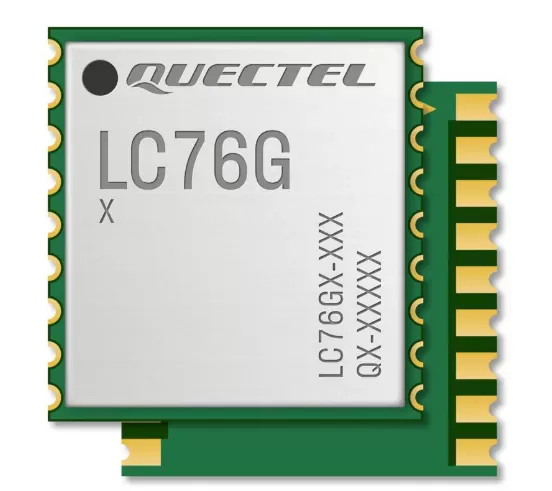
The trend toward converged communication modules that integrate cellular (5G/4G), WiFi, Bluetooth, and GNSS functionality onto a single PCB presents both opportunity and challenge. The opportunity lies in shared resources — a common antenna aperture, shared power management, and unified digital baseband processing. The challenge lies in coexistence: a 5G FR1 transmitter delivering +23 dBm at 2.5 GHz can desensitize a WiFi 7 receiver operating at 2.4 GHz unless isolation exceeds 60 dB.
Coexistence PCB design employs several strategies: physical separation of antennas (typically 30–50 mm for 20–30 dB of free-space isolation), frequency-selective surfaces and defected ground structures that suppress specific interference paths, and coordinated time-domain scheduling that prevents simultaneous transmission on adjacent frequencies. The PCB acts as the platform that enables these strategies, providing the physical layout, grounding, and shielding infrastructure that makes coexistence practical.
5. Manufacturing Excellence for Communication Module PCBs
Manufacturing communication module PCBs at scale requires capabilities that go well beyond standard PCB fabrication. For FR2 mmWave modules, the key manufacturing specifications include:
Line width/spacing: 75/75 µm typical, 50/50 µm advanced, with tolerances of ±10 µm on critical RF layers
Copper thickness: 18–35 µm on RF layers to minimize skin-effect losses at mmWave frequencies
Via technology: Laser-drilled microvias (75–100 µm diameter) with via-in-pad for compact AiP layouts
Surface finish: ENEPIG (Electroless Nickel Electroless Palladium Immersion Gold) for wire-bondable and solderable surfaces with minimal RF loss
Impedance control: 50 Ω ±5% for single-ended, 100 Ω ±8% for differential, verified by TDR coupon testing on every panel
Registration: Layer-to-layer registration better than ±50 µm for reliable via landing on fine-pitch BGA pads
Superb Tech's communication module PCB manufacturing line is equipped with direct imaging (DI) exposure systems, laser drilling, plasma desmear, and automated optical inspection (AOI) optimized for the fine features and tight tolerances demanded by 5G and WiFi 7 modules. Our RF testing capabilities include VNA measurements to 67 GHz and active phased array testing using over-the-air (OTA) near-field scanning.