
Intelligent Driving and Sensor PCBs: ADAS Domain Controllers to LiDAR
Table of Contents
1. The Sensing Stack for Autonomous Driving
Autonomous and highly automated driving (SAE Levels 2+ through 5) depend on a diverse sensor suite: cameras, radar, lidar, and ultrasonic sensors, all feeding data into a central or zonal domain controller that fuses the inputs and makes driving decisions in real time. Each sensor type has distinct PCB requirements, and the domain controller that combines them faces perhaps the most demanding PCB design challenge in the automotive industry: integrating multiple high-performance SoCs, high-bandwidth sensor interfaces, and fail-operational safety mechanisms on a single board.
This article examines the PCB types at every level of the ADAS sensing stack: the domain controller main board, individual sensor PCBs for lidar, radar, and cameras, and the high-speed serial links (GMSL, FPD-Link) that connect them. Each presents unique challenges in high-speed signal integrity, thermal management, and automotive-grade reliability.
2. ADAS Domain Controller PCB
2.1 Central Compute Architecture
The ADAS domain controller is the most complex PCB in the vehicle. Modern designs (e.g., NVIDIA DRIVE Orin/Thor, Mobileye EyeQ6, Qualcomm Snapdragon Ride Flex) integrate:
2-4 high-performance SoCs: Each dissipating 45-75W with compute from 64 TOPS (Mobileye EyeQ5H) to 250+ TOPS (NVIDIA Orin) to 2000 TOPS (NVIDIA Thor)
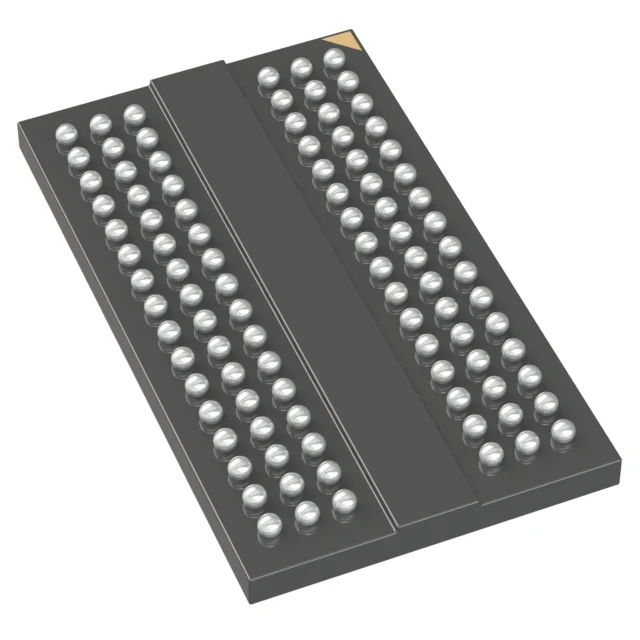
LPDDR5/LPDDR5x memory: 16-64GB per SoC, often PoP (package-on-package) or discrete LPDDR on the PCB
Sensor deserializers: 12-16 GMSL2/GMSL3 deserializer ICs that convert the serialized camera data back to MIPI CSI-2 streams
Automotive Ethernet switch: For internal data distribution between SoCs and to the vehicle gateway, with 1Gbps to 10Gbps per port
Safety MCU: ASIL-D MCU monitoring SoC health and managing failover
2.2 PCB Requirements
An ADAS domain controller PCB is typically 16-24 layers using high-performance materials:
| Parameter | Requirement | Notes |
|---|---|---|
| Layer count | 16-24 | Driven by multiple large BGA SoCs and dense routing |
| Material | Megtron 6/7 class, or low-loss automotive-qualified | Must support PCIe Gen4/5 and 12Gbps+ SerDes |
| HDI build-up | 2-3-2 or 3-4-3 | For SoC BGA breakout at 0.65-0.8mm pitch |
| Copper thickness (power layers) | 2-3 oz | For the multi-100W power distribution |
| Tg | >175°C | Withstands under-hood temperatures plus self-heating |
| Automotive qualification | AEC-Q200 Component, IPC-6012DA Class 3 |
2.3 Multi-SoC Floorplanning
The most critical PCB layout decision is SoC placement. For a dual-Orin design:
SoCs must be placed to minimize LPDDR5 trace lengths (<40mm from SoC edge to first DRAM)
Sufficient spacing between SoCs for heatsink coverage and thermal expansion
High-speed inter-SoC links (PCIe Gen4 x8/x16 or proprietary) routed with minimal length and tight skew control
Power delivery: VRM phases distributed around the SoC perimeter to share thermal load
3. LiDAR Sensor PCB Architecture
3.1 LiDAR System Overview
Automotive lidar sensors come in several architectures—mechanical scanning, MEMS mirror, optical phased array, and flash—but all share common PCB requirements for the transmitter, receiver, and signal processing sections. A modern 905nm or 1550nm lidar integrates:
Laser driver PCB: High-current pulsed laser diode driver (10-50A peak, 1-10ns pulse width) with careful loop inductance minimization
APD/SPAD receiver PCB: Avalanche photodiode or single-photon avalanche diode array with transimpedance amplifier (TIA) front-end
TDC/ADC PCB: Time-to-digital converter or high-speed ADC for time-of-flight measurement with picosecond resolution
Processing PCB: FPGA or SoC for point cloud processing, object detection, and data formatting
3.2 Transmitter PCB Design
The laser driver PCB is the most demanding section. To achieve the fast rise times needed for accurate ranging (100ps rise time ≈ 1.5cm range resolution):
Gate driver loop: The MOSFET gate driver → MOSFET → laser diode → current sense loop must have total inductance below 1-2nH
GaN FETs: Many designs use GaN HEMTs for their ultra-fast switching (sub-nanosecond) and low gate charge
PCB layout: The power loop is routed as a transmission line with controlled impedance; components are placed with zero-spacing to minimize loop area
4-6 layer PCB: Inner layers dedicated to solid ground planes for the return current path directly under the switching loop
3.3 Receiver PCB Design
The APD receiver PCB requires extreme sensitivity (detecting single photons) while rejecting the massive electrical noise from the transmitter. Key practices:
Physical separation: Transmitter and receiver on separate PCB sections or separate boards with shielding
Guard rings: Guard traces around the TIA input node, driven by a buffer to eliminate leakage currents
APD bias supply: High-voltage DC-DC converter (100-400V for APD) with ultra-low noise (<1mV ripple), located as far from the TIA as practical
4. Automotive Radar Sensor PCBs
4.1 Radar PCB Architecture
Automotive radar (77GHz and 79GHz bands) is the workhorse sensor for adaptive cruise control, emergency braking, and blind-spot detection. A modern 4D imaging radar integrates:
MMIC (Monolithic Microwave IC): 3TX/4RX or 6TX/8RX radar transceiver in a single chip (TI AWR2944, NXP TEF82xx, Infineon RRN7745)
Antenna array: Series-fed patch antenna array integrated on the PCB, with 8-12 elements per channel for high angular resolution
Processing SoC/MCU: For radar signal processing (range-Doppler FFT, CFAR detection, angle estimation)
4.2 PCB Material Requirements for mmWave
At 77GHz, PCB material properties dominate antenna performance:
| Material | Dk @ 77GHz | Df @ 77GHz | CTE (ppm/°C) | Relative Cost |
|---|---|---|---|---|
| RO3003 (Rogers) | 3.00 ±0.04 | 0.0010 | 17 | High |
| RO4835 (Rogers) | 3.48 ±0.05 | 0.0037 | 30 | Medium |
| Megtron 7 | 3.35 ±0.05 | 0.0025 | 12-14 | Medium-High |
| Astra MT77 (Isola) | 3.00 ±0.05 | 0.0017 | 20 | Medium |
4.3 Hybrid PCB Construction
Most radar PCBs use hybrid construction: a low-loss RF material (Rogers RO3003 or Astra MT77) for the top layer (antenna + MMIC routing), bonded to lower-cost FR-4 layers for power, digital, and ground. This hybrid approach optimizes cost while maintaining RF performance. Critical process controls:
Dk tolerance: ±0.05 at 77GHz for consistent antenna impedance and beam pattern
Copper roughness: <2μm Rz on the antenna layer to minimize conductor loss
Layer registration: ±25μm between the RF layer and the inner layers
5. Intelligent Camera Module Substrates
5.1 Automotive Camera PCB Constraints
Automotive cameras are severely space-constrained, typically mounted behind the windshield, in the grille, or in side mirror housings. An 8MP ADAS camera module PCB must fit an image sensor (typically 1/2-inch to 1/1.7-inch optical format), serializer IC, PMIC, and optional ISP into a board approximately 25mm × 25mm. Key challenges:
Layer count: 6-10 layers, often with HDI 2-2-2 or 2-3-2 build-up
MIPI CSI-2 routing: 4 lanes per camera sensor at 2.5 Gbps each, requiring 100Ω differential impedance and tight intra-pair skew (<5 mils)
Flex-rigid construction: Some designs use a rigid-flex PCB where the rigid section holds components and the flex tail connects to the vehicle harness
5.2 Thermal Considerations
Automotive cameras face extreme temperature swings. The image sensor dark current doubles every ~6°C, and the serializer IC dissipates 1-2W. PCB design must manage:
Heat from the serializer conducted away from the image sensor
Thermal vias under the serializer to a copper plane on the bottom layer
Selecting low-CTE materials (close to silicon's 2.6 ppm/°C) to minimize stress on the image sensor solder joints
6. GMSL/FPD-Link SerDes Routing
6.1 Serializer-Deserializer Links
High-speed video from cameras to the domain controller uses GMSL2/GMSL3 (Maxim/Analog Devices) or FPD-Link IV (Texas Instruments). These serialize 4-8 MIPI CSI-2 lanes plus bidirectional control onto a single coaxial cable or STP (shielded twisted pair). On the PCB:
The MIPI CSI-2 lanes between the image sensor and the serializer require 100Ω differential impedance with length matching within ±10 mils across all lanes
The coax/STP output from the serializer requires 50Ω single-ended impedance with proper connector grounding
PoC (Power over Coax) combines DC power and the high-speed signal on the same cable—the PCB must include bias tees (inductor + capacitor network) to separate them without degrading signal integrity
6.2 PoC Filter Design
The PoC filter network is critical for signal quality:
AC coupling capacitor (100nF, C0G) blocks DC from the SerDes side
Power inductor (10-22μH) passes DC to the camera while blocking the high-frequency signal
The inductor's self-resonant frequency (SRF) must be well above the maximum signal frequency (6GHz for GMSL3)
PCB layout: the inductor and capacitors must be placed with minimal parasitic trace inductance
7. Sensor Fusion & Data Processing PCBs
7.1 Data Flow Architecture
In an L2+ system, the sensor fusion task may be handled by the ADAS domain controller directly. In L4 systems, a dedicated sensor fusion/preprocessing board may aggregate raw sensor data before feeding it to the main compute. This board typically includes:
FPGA or dedicated ISP: For image preprocessing (dewarping, color conversion, scaling) before the AI inference engine
High-bandwidth memory: GDDR6 or HBM memory with extremely tight PCB routing constraints
PCIe Gen4/5 switching: To distribute data between processing elements
8. Thermal Management for High-Performance ADAS
ADAS domain controllers generate 100-300W of heat distributed across 2-4 SoCs and supporting components. PCB-level thermal management includes:
Copper coin/insertion: Solid copper plugs under each SoC connecting to a cold plate on the backside
Embedded heat pipes: In advanced designs, vapor chambers or heat pipes integrated into the PCB stackup spread heat from hot spots to edge-mounted connectors
Thermal interface material (TIM): Between the PCB backside/component topside and the liquid-cooled cold plate or finned heatsink
9. Automotive EMC for Sensor Systems
Sensor PCBs are particularly sensitive to EMC because they combine sensitive analog front-ends with high-speed digital logic. Key EMC design practices:
Shielding: Board-level shield cans over the analog/RF sections, with spring-finger contacts to the PCB ground
Split ground planes: Separate analog and digital ground planes joined at a single point (star ground) to prevent digital noise from contaminating the analog front-end
Common-mode filtering: On all cables entering/exiting the sensor module
10. L4/L5 Sensor Trends & PCB Implications
As autonomous driving moves toward SAE L4, sensor PCBs face new demands:
Higher resolution sensors: 12-15MP cameras, 0.05° angular resolution lidar, 4D imaging radar—all demanding higher bandwidth PCB interconnects
Sensor cleaning/heating: PCBs integrating heater traces and piezoelectric cleaning actuators
Reduced cabling: Moving signal processing into the sensor head to transmit only object data (not raw video), reducing cable bandwidth but increasing sensor PCB complexity
Functional safety at sensor level: ASIL-B/D rated sensor output with built-in self-test and fault reporting
11. Conclusion
The PCBs in the ADAS sensing stack—from the 24-layer domain controller to the miniature 77GHz radar board—represent the intersection of automotive reliability and high-performance computing. As vehicles advance toward L4 autonomy, these boards will integrate more sensors, more compute, and more safety mechanisms, all within the same or smaller physical volume. Success demands mastery of high-speed design, RF/microwave PCB technology, automotive qualification, and functional safety—a combination that few PCB suppliers can deliver.