
Body and Cockpit Electronics PCBs: Instrument Clusters, Infotainment to BCM
Table of Contents
1. The User-Facing Electronics Ecosystem
The cockpit of a modern electric vehicle has transformed from a collection of mechanical gauges and switches into a digital experience platform. Multiple high-resolution displays—a digital instrument cluster, a large central infotainment touchscreen, and increasingly a passenger display and augmented reality HUD—are driven by powerful graphics processors. Simultaneously, dozens of body control functions (lighting, wipers, windows, seats, mirrors) are managed by distributed electronic modules communicating over CAN and LIN networks.
This article examines the PCBs behind the driver's visual and tactile experience in the EV cockpit, plus the body electronics that turn user commands into physical actions. While these boards don't face the kilovolt isolation challenges of powertrain electronics, they confront their own demanding requirements: high-resolution video routing, strict EMC constraints in an electrically noisy vehicle environment, and the need to fit complex electronics into the thin, curved spaces behind modern automotive displays.
2. Digital Instrument Cluster PCB
2.1 Cluster Architecture
The digital instrument cluster has evolved from a simple stepper-motor gauge driver to a full graphical display (typically 10.25" to 12.3" diagonal, 1920×720 resolution). The cluster PCB integrates:
Graphics SoC/MCU: A mid-range automotive processor (TI Jacinto DRA7xx, Renesas R-Car E3, or dedicated cluster SoC) rendering the speedometer, power meter, warning indicators, and ADAS visualization overlay
LVDS/FPD-Link display interface: Single or dual LVDS link at 1-2 Gbps per lane to the TFT panel
CAN FD interface: 2-3 CAN channels for vehicle speed, battery SOC, ADAS alerts, and diagnostic data
Automotive Ethernet: 100BASE-T1 for firmware updates and high-bandwidth display data (newer architectures)
LED backlight driver: Multi-channel LED driver for the TFT backlight with local dimming capability
2.2 PCB Design Considerations
The cluster PCB is typically 6-8 layers with the following considerations:
Form factor: Must fit behind the display panel, often in a narrow rectangular or L-shaped outline
Display connector: Fine-pitch LVDS connector (0.5mm) with ESD protection on all signal lines
Audio output: Chime/turn signal speaker driver with Class D amplifier
ASIL-B safety: The cluster must meet ASIL-B for warning lamp integrity; critical telltales have redundant drive paths and monitoring
Temperature: The cluster is in direct sunlight through the windshield; components rated for 85°C+ ambient
3. Central Infotainment Display PCB
3.1 The Infotainment Compute Platform
The central infotainment system (often called the head unit or IVI—In-Vehicle Infotainment) is the most powerful non-ADAS computer in the vehicle. Modern systems use automotive-grade SoCs (Qualcomm Snapdragon Cockpit, Samsung Exynos Auto, MediaTek Dimensity Auto) that rival smartphone performance. The main PCB integrates:
Application processor: Octa-core Arm SoC with GPU for 3D navigation rendering, multiple display outputs (cluster + center + passenger + HUD)
Memory: LPDDR5/LPDDR5x 8-16GB, UFS 3.1 storage 64-256GB
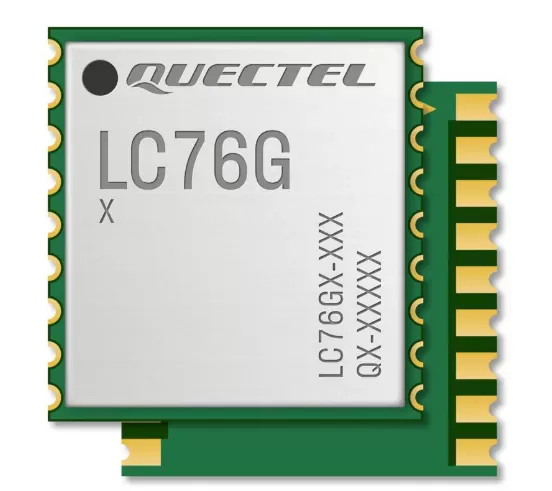
Connectivity: Wi-Fi 6E/7, Bluetooth 5.3, 5G NR modem, GNSS (GPS+GLONASS+BeiDou+Galileo)
Audio DSP: Multi-channel audio with acoustic echo cancellation, beamforming, and active noise cancellation
Display outputs: Multiple DSI/LVDS/eDP outputs driving 3-4 displays simultaneously
3.2 PCB Requirements
The infotainment main PCB is typically 10-16 layers with HDI construction:
| Parameter | Requirement | Notes |
|---|---|---|
| Layer count | 10-16 | HDI 2-2-2 or 2-3-2 build-up |
| Material | Mid-loss (Megtron 4/6) for high-speed digital | LPDDR5 routing at 3200-6400 MT/s |
| BGA pitch | 0.4-0.5mm for SoC, 0.5mm for LPDDR5 | Via-in-pad required |
| RF sections | 50Ω controlled impedance for antenna traces | Wi-Fi, BT, 5G antenna routing |
| Thermal | Heat spreader integration | SoC dissipates 8-15W in a sealed enclosure |
3.3 RF/Antenna PCB Design
The infotainment PCB must integrate multiple RF interfaces, each with precise 50Ω impedance control:
Antenna connector: FAKRA or mini-FAKRA connectors for external shark-fin antennas
On-board antennas: Chip antennas or PCB trace antennas for Bluetooth/Wi-Fi
RF trace routing: Coplanar waveguide or microstrip with 50Ω ±5% impedance, no vias in the RF path, minimal trace length
4. Head-Up Display (HUD) Electronics
4.1 HUD PCB Architecture
Augmented Reality HUD (AR-HUD) systems project navigation arrows, speed, and ADAS alerts onto the windshield, appearing to float 7-15m ahead of the driver. The HUD electronics PCB must drive a high-brightness LED or laser projector while processing AR overlay graphics. Key PCB functions:
Image generator: TFT-LCD or DLP (Digital Light Processing) projector with 854×480 to 1920×720 resolution
LED/laser driver: High-current driver (5-20A) for the illumination source; typically an array of high-power LEDs or RGB laser diodes
Distortion correction: GPU or FPGA warping the image to compensate for the windshield curvature
Light sensor: Ambient light sensor for automatic brightness adjustment
4.2 Thermal Challenges
The HUD is one of the hottest locations in the vehicle cockpit. The projector LED array dissipates 20-40W in a small, sun-exposed enclosure on top of the dashboard. The HUD PCB must:
Use high-Tg materials (Tg >180°C) with aluminum-core sections for the LED driver zone
Route LED power on heavy copper layers (2-3 oz) to minimize I²R heating
Incorporate temperature monitoring with automatic brightness throttling to prevent thermal runaway
In extreme cases, integrate a small fan or Peltier cooler—adding complexity but protecting the expensive optical components
5. Body Control Module (BCM) PCB
5.1 BCM Functions
The Body Control Module is the workhorse of vehicle body electronics, managing dozens of comfort and convenience functions. A modern BCM PCB integrates:
MCU: Mid-range automotive MCU with extensive I/O (typically 100-200 pins of digital I/O and analog inputs)
Relay and MOSFET drivers: High-side and low-side smart power switches (e.g., Infineon PROFET, ST VN-series) for lighting, wipers, washer pump, horn, and door locks
CAN/LIN interfaces: 2-4 CAN channels and 4-8 LIN channels for distributed body electronics
Analog inputs: Light sensor, rain sensor, ambient temperature, cabin humidity
Load diagnostics: Open-load, short-circuit, and over-temperature detection on every driver channel
5.2 PCB Design for BCM
The BCM PCB is typically 4-8 layers and presents several unique challenges:
High current density: A BCM may switch 50-100A aggregate across all channels; power distribution uses 2-4 oz copper on outer layers and wide bus traces on inner layers
Mixed-signal layout: Relays and PWM-switched loads generate significant EMI; analog sensor inputs must be routed away from the high-current switching sections
Connector density: 3-6 large automotive connectors (40-80 pins each) must be placed on the PCB perimeter with robust mechanical anchoring
Fuse integration: Many BCMs integrate blade fuses or resettable PTC fuses directly on the PCB, requiring thermal isolation from temperature-sensitive components
6. Intelligent Lighting Control PCBs
6.1 LED Matrix Headlight PCB
Adaptive driving beam (ADB) headlights with LED matrix technology project precise beam patterns that avoid dazzling oncoming drivers. The headlight control PCB requires:
MCU or FPGA: Controlling an array of 16-84 individually addressable LEDs
LED driver ICs: Multi-channel constant-current LED drivers with 10-12 bit PWM dimming per channel
Aluminum-core PCB: Essential for heat dissipation—the LED array dissipates 20-60W total
Automotive Ethernet interface: For high-bandwidth lighting control data from the ADAS computer
7. Door & Seat Control Module PCBs
7.1 Distributed Body Electronics
Modern vehicles distribute body control intelligence to local modules in each door and seat, communicating via LIN or CAN. A door control module PCB typically includes:
MCU with LIN/CAN: Small automotive MCU controlling window motor (via relay or H-bridge), mirror adjustment motors, mirror heater, and door lock actuator
Anti-pinch detection: Current sensing on the window motor with algorithm to detect obstructions
PCB form factor: Fits inside the door cavity, often mounted to the window regulator or door module bracket
8. Display Interface PCB Technologies
8.1 Display Protocols
Modern automotive displays use several interface standards, each with PCB implications:
| Interface | Max Resolution | Data Rate | PCB Requirement |
|---|---|---|---|
| LVDS (single link) | 1280×480 | ~1.2 Gbps | 100Ω diff, ±5 mil intra-pair |
| LVDS (dual link) | 1920×720 | ~2.5 Gbps | 100Ω diff, tight length matching |
| FPD-Link III/IV | 4K | 6-13 Gbps | 50Ω single-ended coax or 100Ω STP |
| eDP (Embedded DP) | 4K+ | 5.4-8.1 Gbps/lane | 85Ω diff, ultra-low-loss material |
| MIPI DSI-2 | 2.5K | 2.5 Gbps/lane | 100Ω diff, short traces (<15cm) |
9. Cockpit EMC & Thermal Design
9.1 EMC Challenges in the Cockpit
Cockpit electronics sit near the AM/FM/DAB antenna, GPS antenna, and Bluetooth/Wi-Fi module. Electromagnetic emissions from the infotainment SoC, display backlight driver, and switching power supplies can desensitize these receivers. Key mitigation:
Spread-spectrum clocking: On the SoC and memory clocks to reduce peak emissions
Shielded connectors: All display cables use shielded twisted-pair or coax with 360° connector grounding
PCB-level shielding: Shield cans over the SoC, PMIC, and DDR memory sections
9.2 Solar Load Thermal Management
Vehicle interiors exposed to direct sunlight can reach 85-95°C. Cockpit PCBs must:
Use high-temperature rated components (automotive grade, 105°C+ rated)
Employ wide-temperature-range electrolytic capacitors or prefer ceramic/tantalum alternatives
Include thermal throttling in software to reduce SoC power under extreme temperatures
10. AR-HUD, Pillar-to-Pillar Displays & Smart Cockpit Trends
10.1 Pillar-to-Pillar Displays
The newest luxury EVs feature a single glass display spanning the entire dashboard (pillar-to-pillar), integrating the instrument cluster, central infotainment, and passenger display. This requires a single large-format TFT panel driven by multiple display controllers, with the PCB challenges of routing high-bandwidth video across a board that may be 1.2m wide. Solutions include:
Multiple smaller PCBs interconnected by high-speed FPC jumpers
Distributed timing controllers (TCONs) with synchronized frame timing
10.2 AI-Powered Cockpit Assistants
On-device voice assistants and driver monitoring systems add AI inference capability to the cockpit, requiring NPU-enabled SoCs and additional thermal management.
11. Conclusion
Body and cockpit electronics PCBs may not face the extreme voltages of the powertrain or the compute density of ADAS, but they represent the highest-volume and most diverse PCB population in the vehicle. From the simple 2-layer seat heater controller to the 16-layer infotainment main board, each must meet automotive reliability standards while fitting into increasingly constrained and thermally challenging locations. As cockpit electronics evolve toward pillar-to-pillar displays, AR-HUDs, and AI-powered assistants, the PCB density and performance requirements continue their steady climb.