
5G Network Synchronization and Timing System PCB Solutions
Precision PCB Platforms for Phase and Frequency Synchronization in 5G RAN, Transport, and Core Networks
If power is the lifeblood of a telecommunications network, synchronization is its heartbeat. 5G New Radio imposes timing requirements far more stringent than any previous cellular generation. Time Division Duplex (TDD) operation — the dominant 5G deployment mode — requires base stations across a network to align their transmit and receive windows with microsecond precision to prevent cross-link interference. Carrier aggregation and Coordinated Multi-Point (CoMP) transmission demand phase synchronization between radios at the ±65 nanosecond level (for Frequency Range 2, the requirement tightens to ±32 nanoseconds at the antenna connector). Advanced features like Enhanced Inter-Cell Interference Coordination (eICIC) and positioning services push requirements to the sub-10 nanosecond regime. The printed circuit boards that generate, distribute, and validate this synchronization represent a specialized discipline at the intersection of precision analog, RF, and high-speed digital design. This article explores PCB solutions for 5G network synchronization and timing systems.
1. The 5G Synchronization Architecture
The ITU-T and IEEE have defined a comprehensive synchronization architecture for 5G, built around a hierarchy of clock sources and distribution mechanisms:
Primary Reference Time Clock (PRTC): The ultimate source of time within a network domain, typically derived from GNSS (GPS, Galileo, BeiDou, GLONASS) with accuracy better than ±100 nanoseconds relative to UTC
Telecom Grandmaster (T-GM): A PRTC-compliant clock combined with an IEEE 1588v2 Precision Time Protocol (PTP) grandmaster function that distributes timing to downstream clocks
Telecom Boundary Clock (T-BC): An intermediate node that recovers timing from an upstream PTP flow, removes packet delay variation (PDV) through a servo-controlled local oscillator, and regenerates PTP flows to downstream nodes
Telecom Time Slave Clock (T-TSC): The end device (typically the base station DU/RU) that recovers timing from the PTP flow and disciplines its local clock to the network reference
Each of these synchronization functions is implemented on dedicated timing cards or as integrated subsystems on base station and router PCBs.
2. GNSS Receiver and PRTC PCB Design
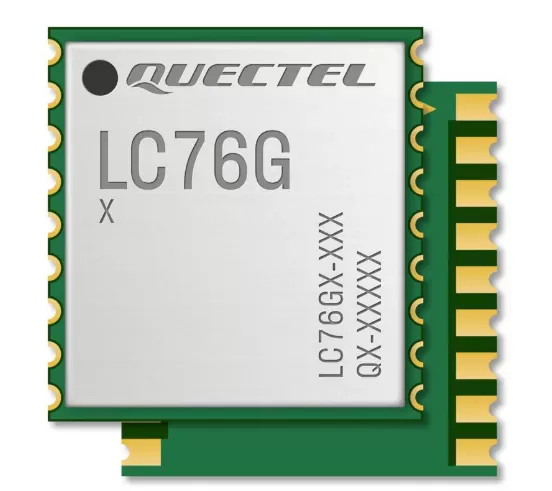
The GNSS receiver PCB is the starting point of the synchronization chain, converting signals received from orbiting navigation satellites into a precise time reference. The GNSS PCB presents several unique design challenges.
2.1 GNSS Antenna Interface and RF Front-End
GNSS signals arrive at the Earth's surface at extremely low power levels — approximately -130 dBm for GPS L1 C/A code, well below the thermal noise floor. The GNSS receiver RF front-end on the PCB must amplify these signals by 40–60 dB while maintaining a noise figure below 2 dB. This demands a carefully designed RF signal chain on the PCB, typically consisting of a pre-filter (SAW or ceramic bandpass filter centered at 1575.42 MHz for GPS L1 with 2–20 MHz bandwidth), an LNA with < 1.5 dB noise figure, and a second filter stage before the GNSS receiver IC.
The PCB layout for the GNSS RF front-end follows LNA design principles with additional constraints. The antenna input trace must be a controlled 50-ohm microstrip with minimal length to the first LNA. The ground plane under the GNSS section must be continuous and unbroken — any slot or gap can couple digital noise into the sensitive RF path. Via stitching along the perimeter of the GNSS section provides additional isolation from adjacent digital circuitry.
GNSS receiver PCBs must also power the active antenna through the same coaxial cable that carries the RF signal. This is achieved through a bias tee circuit that injects DC power (typically 3.3V or 5V at 20–50 mA) onto the RF trace while blocking DC from reaching the receiver input. The bias tee inductor must present high impedance (>500 Ω) at the GNSS frequency while handling the antenna current, and the DC blocking capacitor must have low insertion loss at L-band frequencies. Multilayer ceramic capacitors in 0402 or 0201 packages with C0G/NP0 dielectric provide the best RF performance for this application.
2.2 Holdover Oscillator and Phase-Locked Loop
When GNSS signals are unavailable — due to jamming, building shadowing, or satellite outages — the PRTC must maintain timing accuracy using a local holdover oscillator. The holdover performance depends critically on the oscillator's stability: a rubidium atomic oscillator may maintain ±100 ns accuracy for 24 hours of holdover, while a high-quality oven-controlled crystal oscillator (OCXO) might maintain ±1.5 µs over the same period.
The oscillator PCB design must provide a thermally stable, mechanically isolated, and electrically quiet environment for the frequency reference. OCXOs consume 1–5 watts of power to maintain their internal oven temperature at a precise setpoint (typically 80–90°C), and this heat must be managed on the PCB through thermal relief patterns around the oscillator footprint and adequate copper area for heat spreading. The oscillator's control voltage input — used to discipline the oscillator to the GNSS reference — is typically a high-resolution DAC output (16–20 bits) that must be routed as a quiet analog signal, isolated from digital switching noise.
The phase-locked loop (PLL) that closes the control loop between the GNSS receiver's 1PPS (one pulse per second) output and the local oscillator requires careful PCB design of the feedback path. The 1PPS signal from the GNSS receiver is a low-frequency (1 Hz) digital signal, but its timing edges must be preserved with picosecond-level accuracy through the PCB routing. This requires controlled-impedance routing, minimal stubs and branches, and isolation from other digital signals that could induce timing jitter through crosstalk.
3. IEEE 1588v2 PTP Grandmaster PCB Design
The PTP grandmaster PCB implements the packet-based timing distribution protocol that carries synchronization from the PRTC to downstream clocks. While PTP is primarily a protocol function, its hardware implementation on the PCB directly determines the achievable timing accuracy.
3.1 Hardware Timestamping
Accurate PTP operation requires hardware-based timestamping of PTP event messages at the Ethernet MAC/PHY boundary — software timestamping introduces tens of microseconds of jitter from operating system scheduling variability, which is entirely unacceptable for 5G applications. The hardware timestamping unit is typically integrated into the Ethernet PHY or switch ASIC, and the PCB must route the timestamp clock and trigger signals between the timestamping engine and the local time-of-day counter.
The timestamp clock distribution on the PCB is critical. Any skew between the clock arriving at the timestamping engine and the clock at the time-of-day counter translates directly to timestamp error. The clock trace must be length-matched between multiple timestamping engines across the PCB, typically within ±1 mm (±5 ps on standard PCB materials), and must be routed as a differential signal (LVDS or LVPECL) with continuous ground reference to minimize jitter accumulation.
3.2 Packet Delay Variation Mitigation
PTP accuracy is limited by Packet Delay Variation (PDV) — the variation in network transit time between successive PTP messages. While PDV is primarily a network phenomenon, the PTP grandmaster PCB contributes its own PDV through queuing delays in the Ethernet switch, interrupt latency in the CPU, and PLL jitter in the recovered clock.
To minimize self-induced PDV, the PTP grandmaster PCB typically dedicates a hardware PTP processing engine — either integrated into a PTP-capable Ethernet switch or implemented in an FPGA — that handles PTP message generation and timestamping without CPU intervention. The PCB must isolate the PTP processing path from other traffic processing to ensure deterministic latency through the timestamping pipeline.
| Synchronization PCB Type | Key Components | Timing Accuracy | Layers | Critical PCB Requirement |
|---|---|---|---|---|
| GNSS Receiver / PRTC | GNSS Rx, OCXO/Rb, PLL | ±100 ns (locked) | 6–12 | Low-noise RF, thermal isolation |
| PTP Grandmaster | PTP ASIC/FPGA, PHY, OCXO | ±50 ns (network) | 10–18 | HW timestamping, clock routing |
| Boundary Clock | PTP ASIC, OCXO/TCXO | ±50–100 ns (per hop) | 8–14 | Low PDV processing path |
| Fronthaul Timing Card | SyncE PHY, PLL, buffer | ±10 ns (fronthaul) | 10–16 | Clock fan-out, phase alignment |
| Integrated DU Clock | SyncE + PTP, TCXO | ±65 ns (TDD phase) | 14–22 | Mixed-signal isolation |
4. Synchronous Ethernet (SyncE) PCB Design
Synchronous Ethernet provides physical-layer frequency synchronization by recovering the transmitter's clock from the serial data stream — a technique inherited from SONET/SDH. SyncE delivers frequency accuracy comparable to the PRTC reference (typically ±16 ppb or better) without the packet-level uncertainties that affect PTP.
The SyncE clock recovery chain on the PCB begins at the Ethernet PHY, which recovers a clock from the incoming serial data using a Clock and Data Recovery (CDR) circuit. This recovered clock is passed to a line-timing PLL that filters jitter and selects between multiple reference sources (multiple SyncE ports, an external BITS/SSU reference, or the local oscillator). The cleaned clock then drives the transmit paths of all SyncE ports.
The SyncE clock distribution network on the PCB must maintain ultra-low jitter through multiple stages of buffering and fan-out. A typical SyncE timing card may distribute clocks to 16–32 PHY devices, requiring a clock tree with careful attention to additive jitter at each buffer stage. The clock traces must be routed as controlled-impedance differential pairs (100 ohm for LVDS, 50 ohm single-ended for CMOS clocks at lower frequencies) with continuous ground reference and isolation from high-speed data lanes that could induce crosstalk-induced jitter.
5. Fronthaul Timing Distribution
The 5G fronthaul — the interface between the DU and RU — imposes the most stringent synchronization requirements in the entire network. In an O-RAN Split 7.2 architecture, the DU sends I/Q samples to the RU over eCPRI (Ethernet-based CPRI), and the RU must reconstruct the RF carrier with phase accuracy measured in nanoseconds at the antenna.
The fronthaul timing challenge is addressed through a combination of PTP (for time/phase) and SyncE (for frequency), with the RU's local clock disciplined by the PTP-corrected time. The PCB at the RU must implement a low-noise PLL that locks the local sampling clock to the recovered SyncE frequency and phase-aligns the RF LO to the PTP-derived time reference. Any noise or spurious signals on the PLL reference or feedback paths translate directly to phase error at the antenna, making the PLL loop filter and charge pump circuitry on the PCB performance-critical analog designs.
6. Manufacturing Timing System PCBs
Timing and synchronization PCBs demand manufacturing precision that matches their functional precision. The analog/RF sections require tight impedance control and low-loss materials. The clock distribution traces require consistent dielectric properties to maintain phase matching across the PCB. The overall PCB must maintain flatness and dimensional stability to ensure that mechanical stress does not shift the frequency of sensitive oscillator components.
Superb Tech's timing and synchronization PCB manufacturing capabilities include precision impedance control (±5% on clock traces), ultra-low-loss RF materials for GNSS front-ends, heavy copper for OCXO heater power delivery, and comprehensive electrical testing to verify the integrity of every clock distribution trace on the board.