
Synchronization and Clock Distribution for Coherent Radar Networks
Coherence is the defining characteristic of modern radar. Phase coherence across pulses enables Doppler processing; across array elements enables beamforming; and across distributed platforms enables networked sensing on a scale far beyond any single radar. Achieving and maintaining this coherence requires synchronization and clock distribution systems of extraordinary precision. This article examines the technologies that keep defense radar systems ticking in perfect unison.
GPS-Disciplined Oscillators
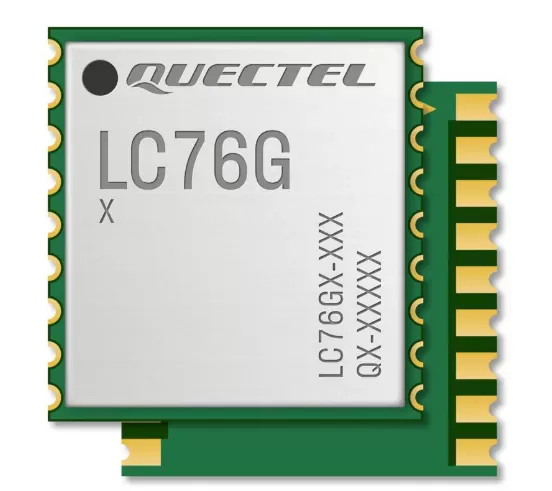
The Global Positioning System provides the backbone of time and frequency distribution for defense systems. GPS-disciplined oscillators (GPSDOs) combine a GNSS receiver’s long-term stability (derived from atomic clocks on the satellites) with a local oscillator’s short-term stability (low phase noise). A control loop steers the local oscillator to track the GPS-derived 1 pulse-per-second (1PPS) reference, achieving frequency accuracy of parts in 10^-12 over extended periods.
For military applications, Selective Availability Anti-Spoofing Module (SAASM) or M-Code receivers provide access to the encrypted GPS signals with enhanced anti-jam and anti-spoof capabilities. In GPS-denied environments, chip-scale atomic clocks (CSACs) or high-performance OCXOs can free-run for hours to days while maintaining sufficient accuracy for most radar operations, though long-term coherent processing across distributed nodes requires periodic re-synchronization.
IEEE 1588 Precision Time Protocol
For networked radar systems where GPS is not available to every node, the IEEE 1588 Precision Time Protocol (PTP) distributes time and frequency over standard Ethernet infrastructure. PTP uses a master-slave hierarchy with timestamp exchange to measure and compensate for path delays. With hardware timestamping at the Ethernet PHY level, PTP achieves sub-nanosecond synchronization accuracy — sufficient for coherent operation at frequencies up to several gigahertz.
The White Rabbit extension to PTP, developed at CERN for particle accelerator timing, pushes synchronization accuracy below 100 picoseconds over fiber-optic links spanning tens of kilometers. White Rabbit combines PTP with synchronous Ethernet (SyncE) for frequency distribution and precise phase measurement using digital dual-mixer time-difference techniques. This level of performance enables distributed coherent radar where physically separated nodes operate as a single virtual aperture.
Fiber-Optic Clock Distribution
For the highest performance and largest arrays, dedicated fiber-optic clock distribution provides the ultimate in phase stability. An intensity-modulated laser transmits the master oscillator signal over single-mode fiber to remote antenna elements or processing nodes. Active phase stabilization compensates for temperature-induced delay variations in the fiber, maintaining phase coherence within a fraction of a wavelength at the radar’s operating frequency.
Within a radar system, the clock distribution tree must serve diverse consumers: ADCs require low-jitter sampling clocks, DACs require clean waveform clocks, FPGAs require reference clocks for SerDes transceivers, and local oscillators require frequency references for upconversion and downconversion. Clock fan-out buffers with low additive jitter, skew-matched outputs, and glitch-free switching between redundant clock sources ensure that every subsystem receives the clean, stable reference it needs.
As radar systems evolve toward distributed, cooperative architectures, synchronization technology is becoming the critical enabler — the invisible glue that binds physically separated elements into a single coherent sensor.