
Published June 21, 2026 • 8 min read • RF Module Insights
The WiFi RF module has undergone a generational leap with the introduction of WiFi 6E (802.11ax extended to 6 GHz) and WiFi 7 (802.11be). These new standards push the envelope on channel bandwidth (up to 320 MHz), modulation order (up to 4096-QAM), and spatial streams (up to 16), demanding a dramatic increase in RF front-end linearity, bandwidth, and efficiency. A modern tri-band WiFi 7 router module must simultaneously support operations across 2.4 GHz, 5 GHz, and 6 GHz bands — often with 4×4 MIMO per band.
Key Takeaway: WiFi 7's 320 MHz channels and 4096-QAM require an EVM floor below −38 dB — nearly 10 dB more stringent than WiFi 6's −29 dB for 1024-QAM. This places unprecedented linearity demands on the entire RF transmit chain.
IEEE 802.11be (WiFi 7) Key RF Parameters
WiFi 7 mandates several RF parameters that define module design: 320 MHz channel bandwidth (single channel or 160+160 MHz aggregation), 4096-QAM modulation (12 bits per symbol, requiring EVM ≤ −38 dB), 16 spatial streams with Multi-Link Operation (MLO), and multi-resource unit (MRU) allocation for OFDMA. The PA module must deliver linear output power exceeding +18 dBm at the antenna port with EVM below −40 dB across 320 MHz — a linearity-bandwidth product unprecedented in consumer wireless.
Multi-Link Operation (MLO) Architecture
Multi-Link Operation is WiFi 7's most innovative feature — allowing a single device to simultaneously transmit and receive across multiple frequency bands or channels. MLO can operate in STR (Simultaneous Transmit and Receive) mode where independent data streams flow on different links, or NSTR (Non-Simultaneous Transmit and Receive) mode. The RF module must support 2–3 independent RF chains operating concurrently, placing extreme demands on inter-chain isolation (>50 dB) to prevent cross-band interference between 2.4 GHz, 5 GHz, and 6 GHz paths.
Tri-Band FEM Design Challenges
Supporting three frequency bands in a single module requires careful RF planning. The 2.4 GHz path is relatively mature, with integrated CMOS PAs delivering +20 dBm with adequate linearity. The 5 GHz path benefits from mature GaAs pHEMT FEMs achieving +22 dBm with EVM below −35 dB. The 6 GHz path (5.925–7.125 GHz) is the new frontier, requiring FEMs optimised for this higher frequency range. BAW filters with<2 1200="" db="" insertion="" loss="" across="" the="" mhz="" bandwidth="" provide="" band="" selection="" and="" out-of-band="" rejection.="" a="" key="" challenge="" is="">shared antenna architecture — diplexers and triplexers must combine all three bands onto 2–4 antenna ports with<1 db="" crossover="" loss.="">
PA Linearity for 4096-QAM
4096-QAM has 16× the constellation points of 256-QAM, requiring the PA to operate with extremely low distortion. The PA's AM-AM and AM-PM characteristics must be exceptionally flat across the signal bandwidth. This demands class-AB biasing with sufficient back-off (typically 6–8 dB from P1dB), advanced on-die linearization (analog pre-distortion), and in some high-end modules, digital pre-distortion (DPD) with memory compensation. GaAs HBT PAs with integrated bias circuits achieving adjacent channel power ratio (ACPR) below −45 dBc across 320 MHz are the current state of the art.
Power Consumption and Thermal Design
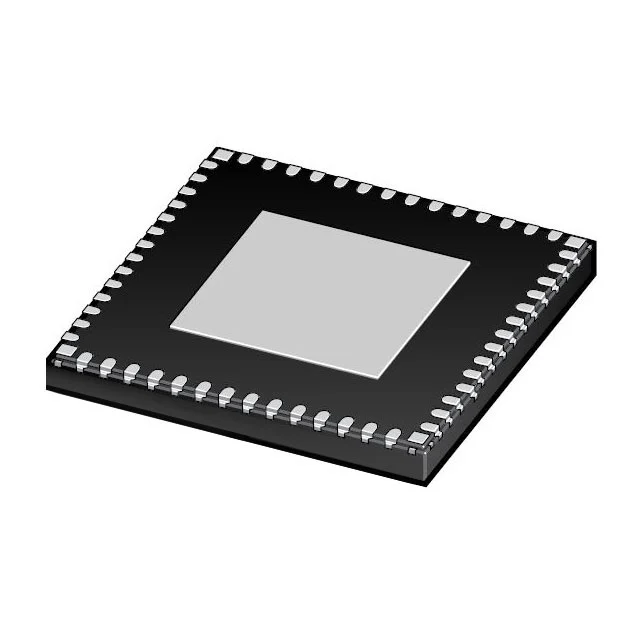
A tri-band WiFi 7 module operating in 4×4 MIMO mode can consume 15–25 W — a formidable thermal challenge for fanless router designs. FEMs employ dynamic power management with multiple bias states (high-power, medium-power, low-power, sleep) to reduce average consumption during idle periods. Advanced QFN packages with exposed thermal pads and module-level heat spreaders are essential. Some designs incorporate temperature-compensated bias that adjusts PA quiescent current to maintain linearity across the −20°C to +85°C operating range.
WiFi RF modules continue to push integration density, with ongoing development of CMOS-based 6 GHz PAs, integrated tri-band FEMs with embedded filters, and advanced digital pre-distortion techniques adapted from cellular infrastructure to consumer WiFi access points.