No-clean paste is sold on a promise: the residue left after reflow is harmless, so the board can skip the wash. The promise holds only inside a process window. Outside it, the same residue absorbs moisture, traps ionic contamination from plating and handling, and quietly lowers the surface insulation resistance of the assembly. The failure appears months later as leakage, corrosion or a coating that lifts in sheets.
This page covers when a no-clean board still has to be washed, which tests settle the argument, and the cleaning mistakes that create worse defects than the residue would have.
What no-clean actually promises
Flux is classified under J-STD-004 by base material and activity. A no-clean paste is normally a low activity, halide-free rosin or resin type, written as ROL0 or REL0, with the L marking the low activity level and the 0 marking halide content below the reporting threshold. The claim is that after the specified reflow profile this residue is non-corrosive and does not need removal.
Three things break that claim: an incomplete reflow that leaves unreacted activator, a paste applied outside its stencil or reflow window, and an environment that gives the residue moisture and voltage to work with. Residue that is harmless on a dry office product is not harmless on a board that sees condensation, salt fog or a 400 V rail.
When a no-clean board has to be washed
| Situation | Why residue becomes a problem | Practice |
|---|---|---|
| Conformal coating over the assembly | Coating bonds to residue, not to laminate or mask, and lifts later | Wash and fully dry before coating, then verify adhesion |
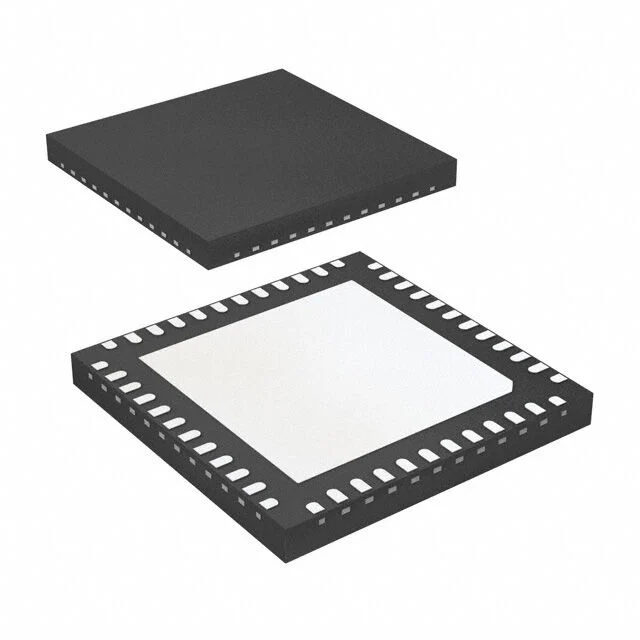
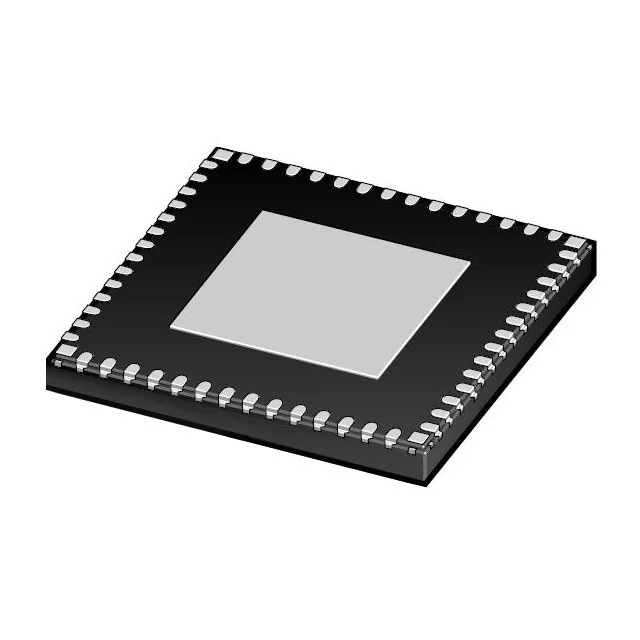
| Low standoff parts: QFN, LGA, bottom terminated, connectors | Residue is trapped under the part where no wash reaches if you wait | Wash soon after reflow, before residue hardens |
| High impedance and high voltage circuits | Ionic residue plus humidity forms a leakage path | Wash, then verify with ionic testing rather than by eye |
| Medical, defense, long field life | Residue is a latent failure mode that no final test catches | Cleaning and cleanliness records written into the build package |
| Water soluble paste used on the line | This flux must be removed; it is not a no-clean material | Wash is mandatory, with a defined gap before the wash |
None of these are opinions. Each one is a case where the residue sits where the environment can reach it, and each can be settled with a test on the actual assembly.
The tests that settle the argument
| Test | What it reports | Limit to agree on |
|---|---|---|
| ROSE, IPC-TM-650 method 2.3.25 | Bulk ionic contamination extracted from the board | A pass limit in micrograms of sodium chloride equivalent per square centimetre, written in the specification |
| Ion chromatography, method 2.3.28 | Individual ions: chloride, bromide, sulfate, weak organic acid | Per ion limits, useful when ROSE passes but a coating still fails |
| Surface insulation resistance | Leakage between test patterns under humidity and bias | Per the build specification, with the test pattern and conditions stated |
| Visual inspection to IPC-A-610 | Residue and its location | Class 2 and Class 3 treat residue differently, so state the class |
ROSE passes on many boards that still fail a coating adhesion test, because bulk conductivity does not see a small activated spot under a component. That is why a build package for a coated or high reliability assembly should name the test, the limit and the sample rate rather than saying "clean" and leaving it to interpretation.
The cleaning traps that create new defects
- Washing a paste that was not made for washing. Some no-clean fluxes are not formulated for removal. A water wash leaves a white, sticky residue that is harder to remove than the original and looks like a defect to every inspector.
- Washing too late. Residue that has baked on for days needs stronger chemistry and more mechanical action, which puts the mask and the marking at risk.
- Incomplete drying. Water trapped under a QFN or inside a connector comes out during coating cure or during reflow of the second side. The defect looks like a coating failure and is actually a drying failure.
- Final rinse water that is not monitored. Rinsing with contaminated water deposits the ions you just removed. Resistivity of the final rinse belongs on the process sheet, not on a hope.
- Cleaning after conformal coating. Once the coating is cured, washing does nothing for the residue underneath and can attack the coating edge.
- Skipping the bake before coating. Even a clean board holds moisture. A 125 C bake to J-STD-033 before coating is cheaper than a field return.
How SUPERB PCBA and SUPERB Assembly handle it
SUPERB PCBA treats cleaning as a decision written into the build package, not a default. Where the drawing calls for a wash, assemblies go through an aqueous process with a monitored final rinse and a defined drying step before any coating. Where the drawing specifies no-clean, incoming paste is checked against the J-STD-004 classification on the certificate, the reflow profile is verified on the 12-zone oven with nitrogen, and boards that will be coated are washed regardless of the paste type.
Coating is applied selectively with Nordson ASYMTEK equipment, and the area is baked and verified before coating starts. Inspection runs to IPC-A-610 Class 2 or Class 3 with 3D AOI and X-ray, ICT or FCT as the drawing requires, and ionic or SIR testing is quoted as a line item when the build package asks for it, so the test is in the price rather than discovered after the first lot.
- PCB testing guide: where cleanliness testing sits next to electrical and visual test.
- Environmental reliability testing: humidity, bias and the tests that expose residue.
- PCBA workshop: the wash, bake, coating and inspection equipment behind the process.
Frequently asked questions
Is no-clean flux residue conductive?
Not by itself in a dry state. It becomes a problem when it holds moisture and ionic material together under bias. That is why the environment and the circuit voltage decide whether a residue matters, not the label on the paste.
Can we skip cleaning if the board is not coated?
Often yes, if the paste is halide-free, the profile is verified, the environment is benign and the visual criteria for the class are met. Put those four conditions in the build package so the answer does not change with the operator.
Why did our coated boards fail adhesion after switching paste?
Because coating adhesion depends on what is underneath. A paste with more solids or a different resin leaves a residue that the coating cannot bond to, even when the board looks clean. Wash before coating, or verify adhesion on a sample from the first lot.
Next step
Send the BOM, the assembly drawing, the workmanship class and the environment the product will see. The reply states whether the build needs a wash, which cleanliness test applies with its limit, and quotes the coating and test steps as separate lines so nothing is assumed.