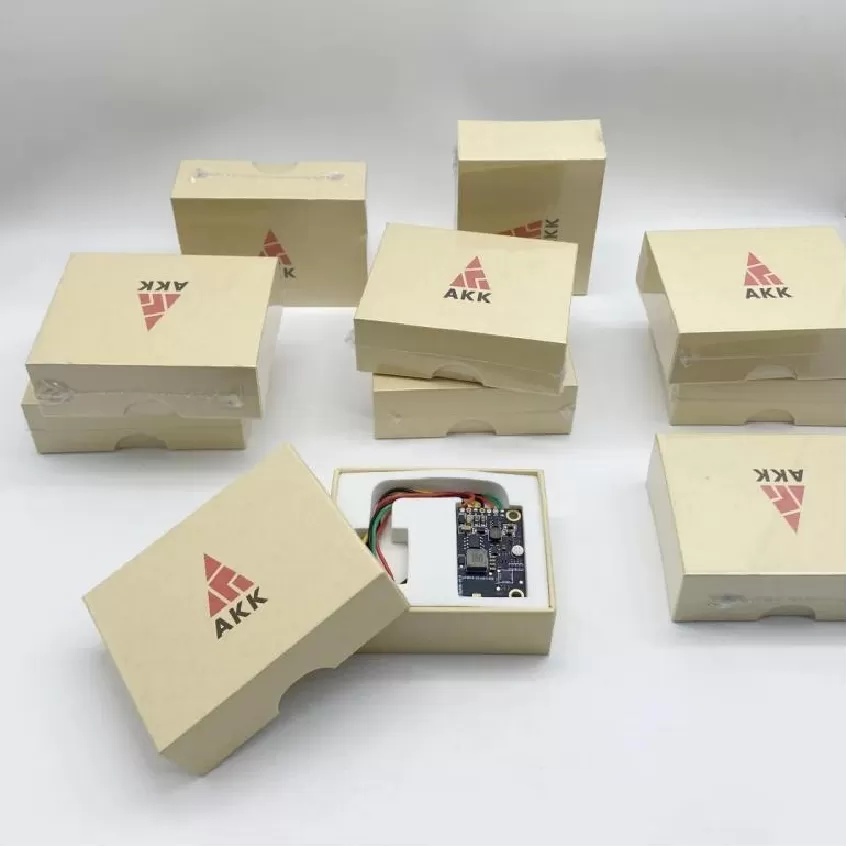



Real-Time Image Processing Board PCBA
Real Time Image Processing Board PCBA. UAV Avionics PCBA, Flight Control Board, FPV Transmitter, Navigation Fusion, Mission Control, Video Transmission, DO
Product Specifications
Real-Time Image Processing Board PCBA
NVIDIA Jetson Orin NX Edge AI Computer — 100 TOPS, 10-Layer — DO-254 / DO-160 / MIL-STD-704
Product Overview
The Real-Time Image Processing Board from Superb Automation is a high-performance edge-computing PCBA that brings artificial intelligence and computer vision capabilities directly onto the UAV, eliminating the latency and bandwidth constraints of cloud-offloaded processing. Built around an NVIDIA Jetson Orin NX or Xavier NX module, the board delivers up to 100 TOPS (trillion operations per second) of AI inference performance within a power envelope of under 25 watts — enabling real-time object detection, classification, tracking, depth estimation, and semantic segmentation directly from the UAV's camera feeds. The board processes multiple simultaneous video streams, running neural network models optimized with TensorRT for maximum throughput at minimum latency. The design follows DO-254 DAL C processes for safety-critical autonomous functions, and the hardware meets MIL-STD-704 power quality and IPC-6012 Class 3 fabrication standards.
The 10-layer PCB is a masterclass in high-speed digital design, routing over 200 differential pairs for the Jetson module's MIPI CSI camera inputs, PCIe Gen4 expansion lanes, and 10 Gigabit Ethernet interfaces. All high-speed traces maintain strict impedance control at 85 Ω or 100 Ω as required by each interface standard, with length matching across byte lanes to within 25 mils for DDR4 and 5 mils for MIPI. The power delivery subsystem employs a multi-phase buck converter topology capable of supplying 60 A peak current to the Jetson module with less than 30 mV of ripple, while an advanced thermal management design uses a copper coin embedded in the PCB stack-up to conduct heat from the module directly to the UAV's airflow or a heatsink. The board includes an M.2 slot for NVMe storage and a microSD slot for model deployment and data logging.
Key Specifications
| AI Performance | Up to 100 TOPS (Orin NX 16 GB) |
| Power Consumption | 10–25 W configurable |
| Camera Inputs | 6× MIPI CSI-2 (4-lane each) |
| Expansion | PCIe Gen4 ×4, M.2 NVMe |
| Memory | 8–16 GB LPDDR5 (module) |
| Networking | 10GbE, USB 3.2, CAN bus |
| PCB | 10-layer, embedded copper coin |
| AI Frameworks | YOLOv8, DeepStream, ROS 2 |
| Standards | DO-254 DAL C, DO-160, MIL-STD-704, IPC-6012 Class 3 |
| Storage | M.2 NVMe + microSD |
PCBA Assembly Challenges
Assembling the 10-layer Jetson carrier board demands precision SMT process control. The high-density Jetson SoM connector requires coplanarity within 0.1 mm across its 260-pin array to ensure reliable contact. The 10-layer board's significant thermal mass, combined with the embedded copper coin, necessitates a carefully optimized reflow profile with a soak zone at 150–170 °C for 90 seconds and a peak temperature of 235–245 °C. The multi-phase power delivery subsystem includes 12 low-ESR ceramic capacitors and high-current inductors placed within 5 mm of the SoM connector pins to minimize PDN impedance. All BGA components undergo 3D X-ray inspection post-reflow, with void rates held below 15% per IPC-6012 Class 3 requirements on all power and ground balls.
Test Strategy
ICT verifies all passive components, power rail sequencing, and isolation resistance per MIL-STD-704. Boundary scan validates interconnects to the SoM connector and peripheral interfaces. Functional testing loads the Jetson module with a stress-test workload running all six MIPI camera inputs, PCIe Gen4 data transfers, and 10GbE throughput simultaneously at maximum bandwidth while monitoring thermal performance, supply rail ripple (<30 mV), and bit error rates (<1×10⁻¹²). AI inference benchmarking using TensorRT-optimized YOLOv8 models verifies that TOPS performance meets specification. Final burn-in runs 48 hours under sustained compute load with thermal cycling from -20 °C to +70 °C.
More information