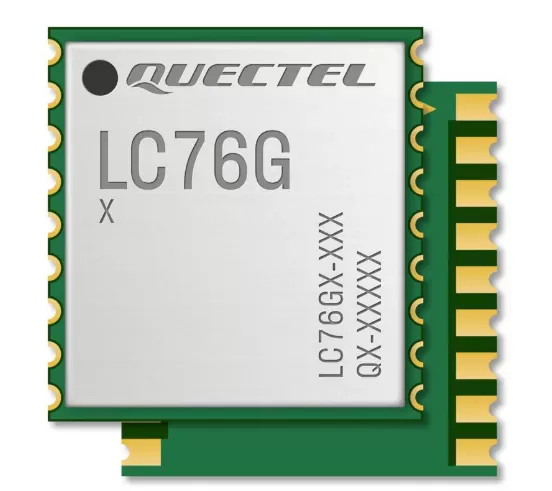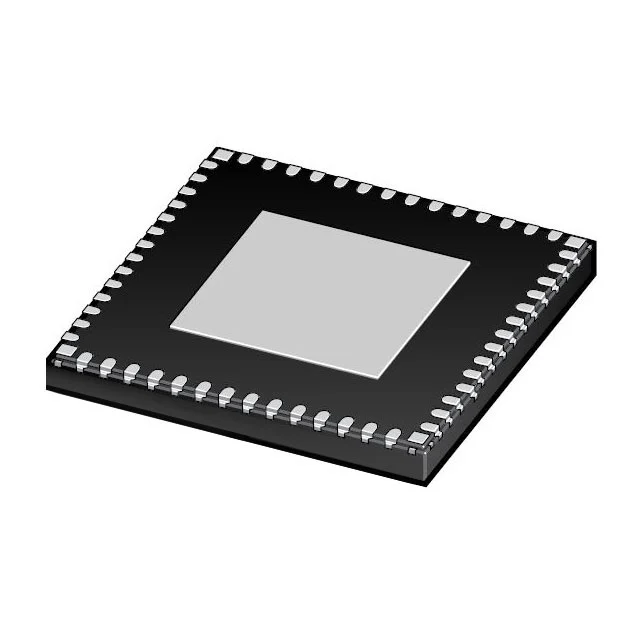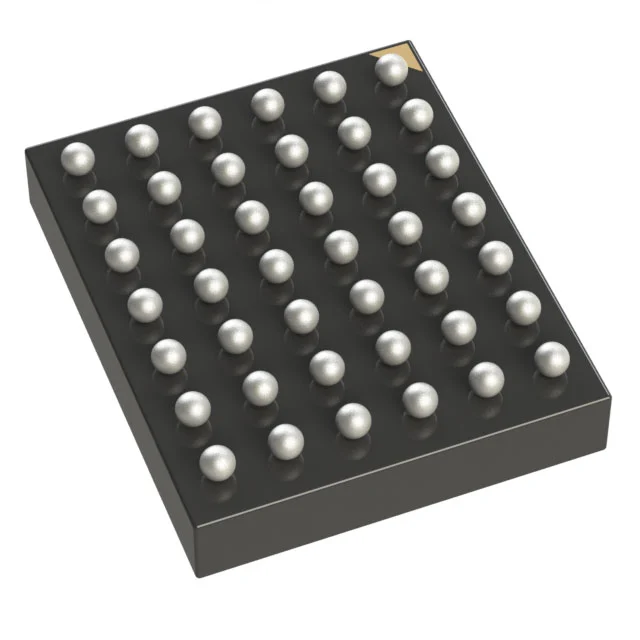

The Navigation Fusion PCB combines multi-constellation GNSS receivers (GPS L1/L2, GLONASS, Galileo, BeiDou) with tactical-grade IMUs in a tightly-coupled architecture that provides continuous position, velocity, and attitude (PVA) even through extended GPS outages. For military UAVs operating in GPS-denied environments, this board enables coasting through jamming with inertial-only navigation drift under 1 nm/hr. For commercial surveying drones, it delivers RTK centimeter-level accuracy. This article examines the PCB-level integration of satellite navigation and inertial sensing.
Multi-Frequency GNSS Receiver Front-End
The navigation fusion board supports dual-frequency (L1/L2 or L1/L5) reception for ionospheric error correction, using a multi-band GNSS receiver such as the u-blox F9P (L1/L2), Septentrio AsteRx-m3 (L1/L2/L5, triple-band), or NovAtel OEM7 series. The receiver's RF front-end section on the PCB includes:
Active antenna power: A bias-tee circuit that injects 3.3–5V DC onto the RF center conductor to power the antenna's built-in LNA. The bias inductor and DC-blocking capacitor must handle 100 mA and maintain <0.5 dB insertion loss at 1.575 GHz.
SAW filter: A GPS/GLONASS SAW filter (TA0675A or B39881) with <2 dB insertion loss in the passband and >40 dB rejection at cell-band frequencies (850/900 MHz) to prevent cellular interference from saturating the receiver LNA.
50 Ω controlled-impedance: The entire RF path from the SMA connector to the receiver IC maintains 50 Ω ±5% with coplanar waveguide topology, verified by VNA measurement at 1.1–1.6 GHz.
Tightly-Coupled GNSS/INS Architecture
Unlike loosely-coupled integration (where GNSS outputs position to the INS filter), tightly-coupled fusion feeds raw GNSS pseudorange and Doppler measurements directly into an Extended Kalman Filter (EKF) running on a dedicated Cortex-M7 or FPGA. This architecture continues to update the INS solution even with only 2–3 satellites visible, and provides integrity monitoring through residual testing.
On the PCB, the IMU and GNSS receiver are co-located within 10 mm of each other, sharing a common clock reference (a 10 MHz TCXO or OCXO) to eliminate the relative timing errors that degrade tight-coupling performance. The IMU-GNSS time synchronization is hardware-assisted: the GNSS receiver's 1PPS output triggers a hardware timer capture on the navigation processor, timestamping IMU samples with sub-100 ns accuracy relative to GPS time.
RTK & PPP Correction Interface
For centimeter-level positioning, the board supports Real-Time Kinematic (RTK) corrections via a dedicated UHF or 4G/LTE modem receiver on the same PCB, or Precise Point Positioning (PPP) via L-band satellite corrections (e.g., Trimble CenterPoint RTX). The correction data stream enters through a secondary UART (921,600 baud) with hardware flow control (RTS/CTS), passing through an ESD-protected level translator before reaching the GNSS receiver.
Anti-Jam & Anti-Spoof Antenna Interface
Military navigation fusion boards incorporate Controlled Reception Pattern Antenna (CRPA) interfaces for GPS anti-jam. A 4-element CRPA array feeds four independent RF channels on the PCB, each with its own LNA, filtering, and downconversion chain. The FPGA implements null-steering beamforming that creates spatial nulls in the direction of jammers while maintaining gain toward satellites. The four RF channels must be phase-matched to within ±2° and amplitude-matched to within ±0.5 dB to achieve >30 dB jammer null depth.
Conclusion
The Navigation Fusion PCB integrates the world's most precise navigation technologies — multi-frequency GNSS, tactical-grade IMUs, RTK/PPP corrections, and anti-jam antenna processing — onto a single board that provides unbroken PVA through the most challenging operational environments. Superb Tech manufactures these navigation fusion boards with precision 50 Ω RF routing, IMU-GNSS time synchronization hardware, and multi-channel phase-matched front-ends.